
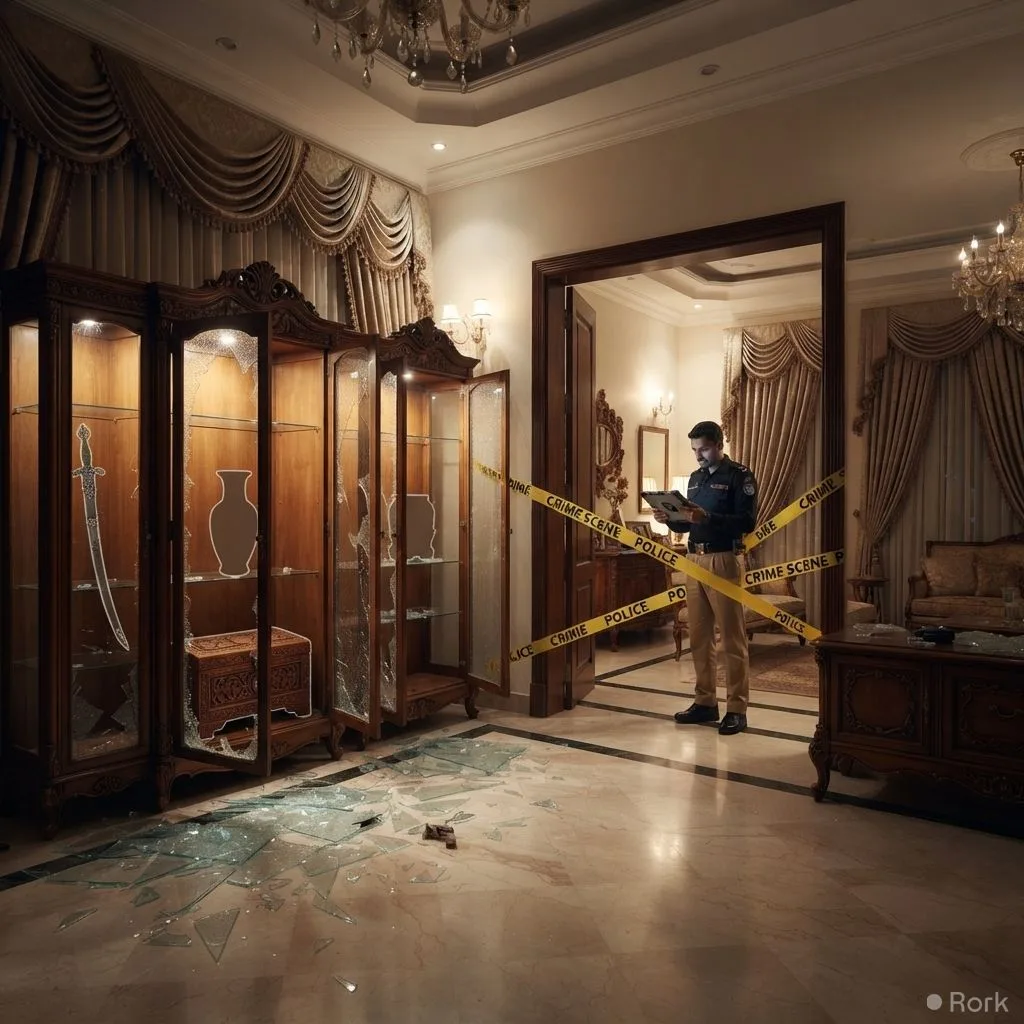
A tranquil evening in Islamabad’s leafy F‑8/3 sector was suddenly disrupted when alarms began to sound at a mansion known for its opulent décor and storied past. Neighbours later reported a flurry of activity as uniformed officers swarmed the property, turning a quiet residential lane into a makeshift crime scene.
Police confirmed that a burglary took place at the home of Prince Bahawal Abbas Khan Abbasi, a scion of the former Nawab of Bahawalpur’s lineage. Investigators have catalogued the loss of historical antiques and family heirlooms estimated to be worth roughly Rs 20 million.
The stolen items included intricately carved wooden furniture dating back to the early 20th century, a collection of porcelain ware bearing the royal seal, and several pieces of silverware that have been passed down through generations of the Bahawalpur dynasty. Such artifacts are not merely valuable in monetary terms; they embody a tangible link to the princely state’s cultural legacy, which was merged into Pakistan in 1955.
Detectives from the Capital Police’s Special Investigation Unit have secured the premises and are now reviewing hours of CCTV footage from both the residence and surrounding streets. Forensic teams have lifted fingerprint prints and examined footprints left at the point of entry, hoping to trace the culprits. A spokesperson urged anyone who may have witnessed suspicious activity on the night of Tuesday to come forward, emphasizing that the case is being pursued with the utmost priority.
The theft underscores a growing concern over the security of Pakistan’s private cultural heritage, which often resides in the homes of historic families rather than in public museums. Authorities have reiterated the need for stronger protective measures for such priceless relics, and the incident has sparked a broader discussion about safeguarding the nation’s artistic and historical patrimony from criminal exploitation.