
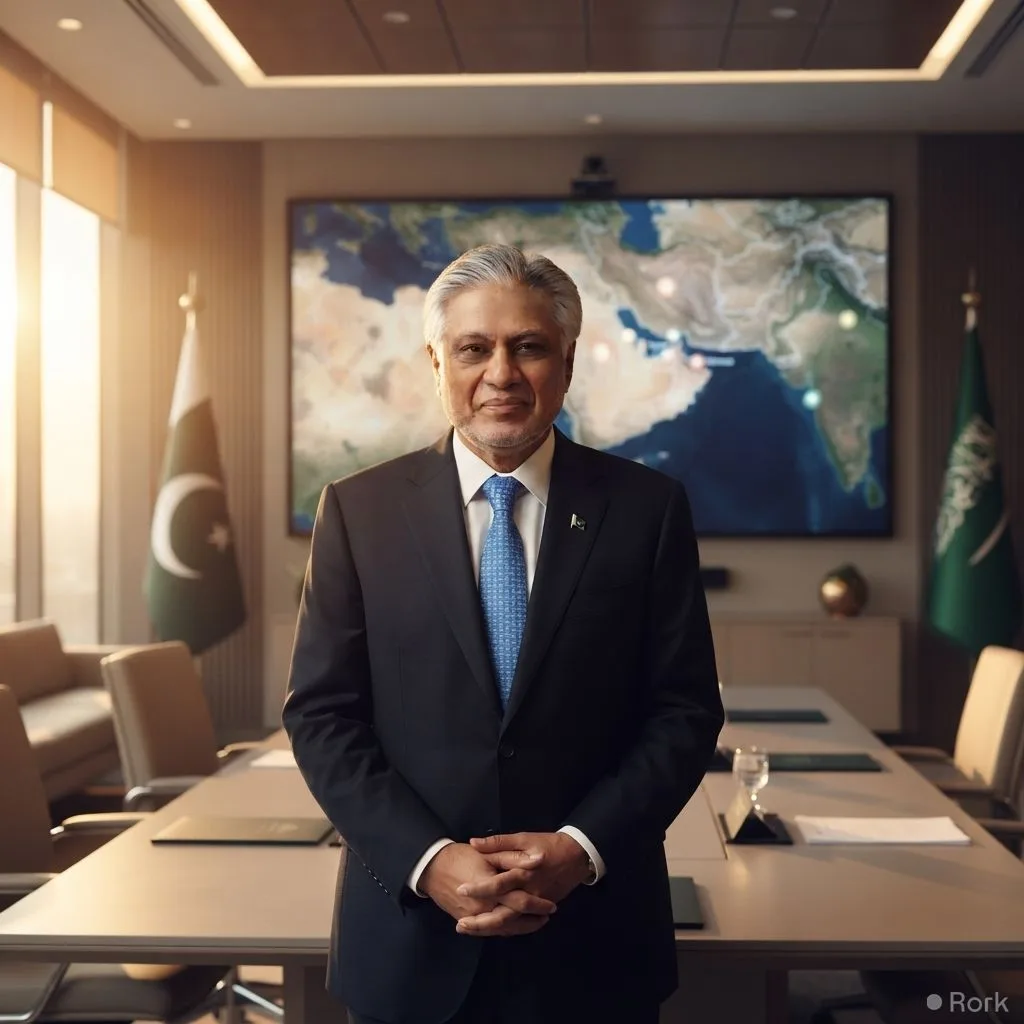
Deputy Prime Minister and Foreign Minister Ishaq Dar announced on Monday that more than six countries have expressed interest in becoming members of the Makkah defence pact, and that an emergency summit on the agreement will be convened next week. He also declared that vessels transiting the Strait of Hormuz will no longer be required to pay any passage fees under the pact’s provisions, underscoring Pakistan’s commitment to safeguarding free navigation in the region.
Dar said the prospective members include a mix of Middle‑Eastern and South‑Asian states, though he did not disclose their names. The rapid expansion of the alliance follows Saudi Arabia’s invitation earlier this year for regional partners to join a collective security framework designed to protect Saudi territory and critical maritime routes from external threats. An emergency meeting has been scheduled for the first week of October to finalise the accession process and to outline the operational mechanisms of the pact.
The decision to waive fees for ships crossing the Strait of Hormuz is intended to promote unhindered trade flow through one of the world’s most vital oil‑transit corridors. By eliminating financial barriers, the signatories hope to deter any attempts at coercion or disruption by hostile actors, a concern that has grown after recent tensions in the Gulf. The move also aligns with Pakistan’s own maritime strategy, which seeks to ensure the safety of its merchant fleet that frequently navigates the Arabian Sea and the Hormuz Strait en route to the Gulf.
Analysts note that Pakistan’s active role in the Makkah defence pact signals a broader shift toward deeper security cooperation with Gulf nations, complementing its existing defence ties with Saudi Arabia and the United Arab Emirates. Participation in the alliance could open avenues for joint naval exercises, intelligence sharing, and coordinated responses to potential crises, thereby enhancing Pakistan’s strategic footprint in the Indian Ocean and beyond.
Domestically, the development is expected to bolster the foreign ministry’s agenda of positioning Pakistan as a reliable partner in regional stability initiatives. It may also provide a diplomatic boost ahead of upcoming elections, as the government can point to tangible contributions to collective security and the safeguarding of vital trade routes that affect the national economy.
The emergency meeting slated for next week will determine the final roster of new members, set the financial and operational guidelines of the pact, and outline the command structure for any joint defensive actions. Observers will be watching closely to see how quickly the alliance can move from diplomatic endorsement to concrete, actionable cooperation.