
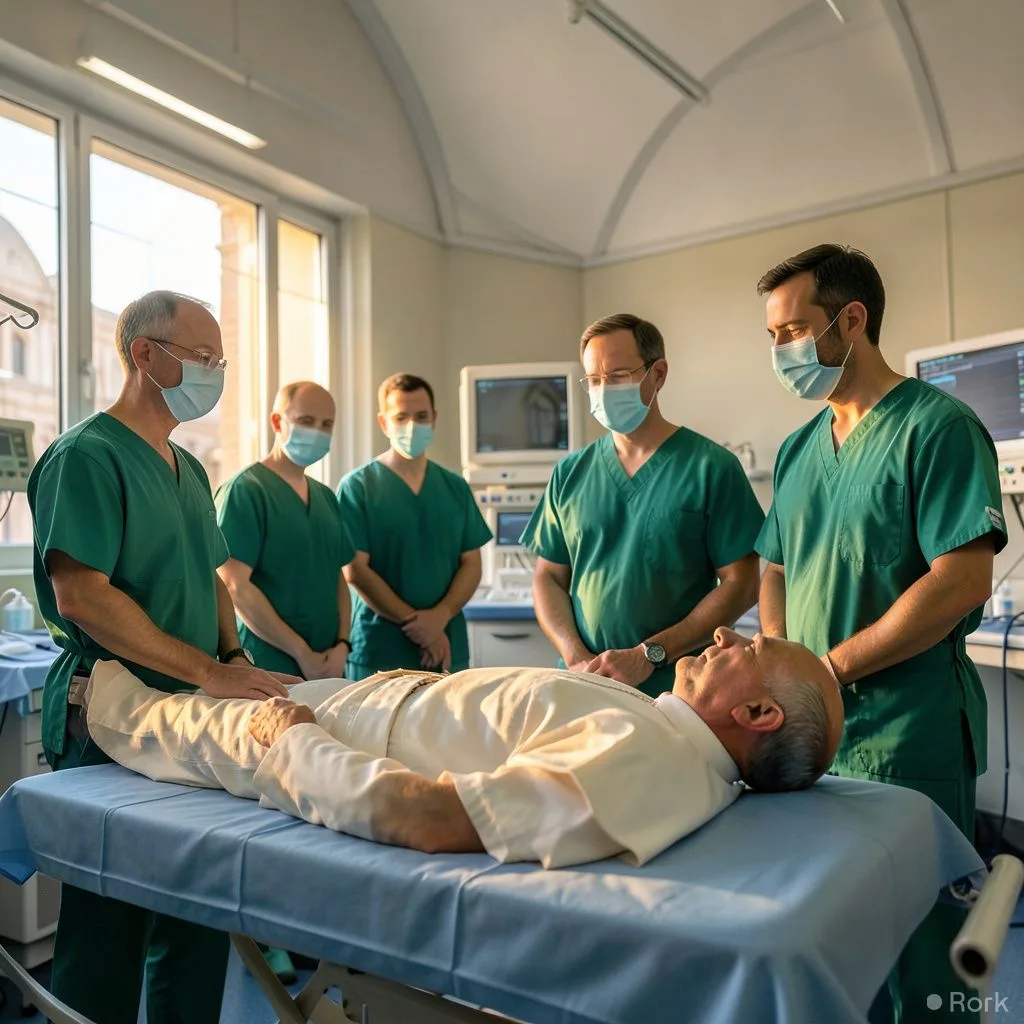
Pope Leo XIV underwent a 90‑minute thoracic operation on Friday in which surgeons excised the lower lobe of his right lung after doctors confirmed the presence of lung adenocarcinoma. The Vatican’s medical team reported that the procedure was completed without any complications and that the pontiff is now in a stable condition under post‑operative care at the Holy See’s own infirmary.
The diagnosis was announced earlier this week by the Vatican’s Directorate for Health Care, which said routine imaging had revealed a malignant growth in the Pope’s right lung. Specialists from the Vatican’s Pontifical Institute of Sacred Sciences performed a lobectomy to remove the affected tissue, a standard treatment for early‑stage non‑small‑cell lung cancer. According to the official statement, the surgery lasted exactly ninety minutes and the patient responded well to anesthesia and immediate post‑surgical monitoring.
In a brief communique, the Holy See expressed gratitude to the surgical staff and asked the global Catholic community to keep the Pope in their prayers. “We are thankful for the expertise and dedication of the physicians who tended to His Holiness,” the statement read. “We trust in God’s mercy and look forward to his continued recovery.” The Pope is expected to remain under observation for several days before any further therapeutic steps, such as chemotherapy or targeted therapy, are considered.
The news arrives at a time when the Catholic minority in Pakistan, estimated at roughly 1.3 million faithful, is closely watching the health of the world’s spiritual leader. Local dioceses have already issued statements urging Pakistani Catholics to pray for the Pope’s swift healing and to reflect on the solidarity that binds the global Church. The Vatican’s outreach to Pakistan’s Ministry of Religious Affairs earlier this year, which focused on interfaith dialogue and humanitarian cooperation, may also take on renewed significance as the Pope’s condition improves.
Medical experts in Pakistan note that lung adenocarcinoma is the most common type of lung cancer in non‑smokers and that early detection—such as the one achieved at the Vatican—significantly improves prognosis. While the Pope’s treatment follows protocols available in high‑technology centers, the case underscores the importance of cancer screening and access to specialized care, issues that remain challenging in many parts of South Asia.
The Vatican has not indicated any immediate changes to the Pope’s schedule of public appearances or diplomatic engagements, but a temporary reduction in travel and a lighter public itinerary are expected in the coming weeks. As the Holy See continues to monitor his recovery, the worldwide Catholic community—and Pakistan’s own faithful—remain hopeful that Pope Leo XIV will resume his duties in good health.