
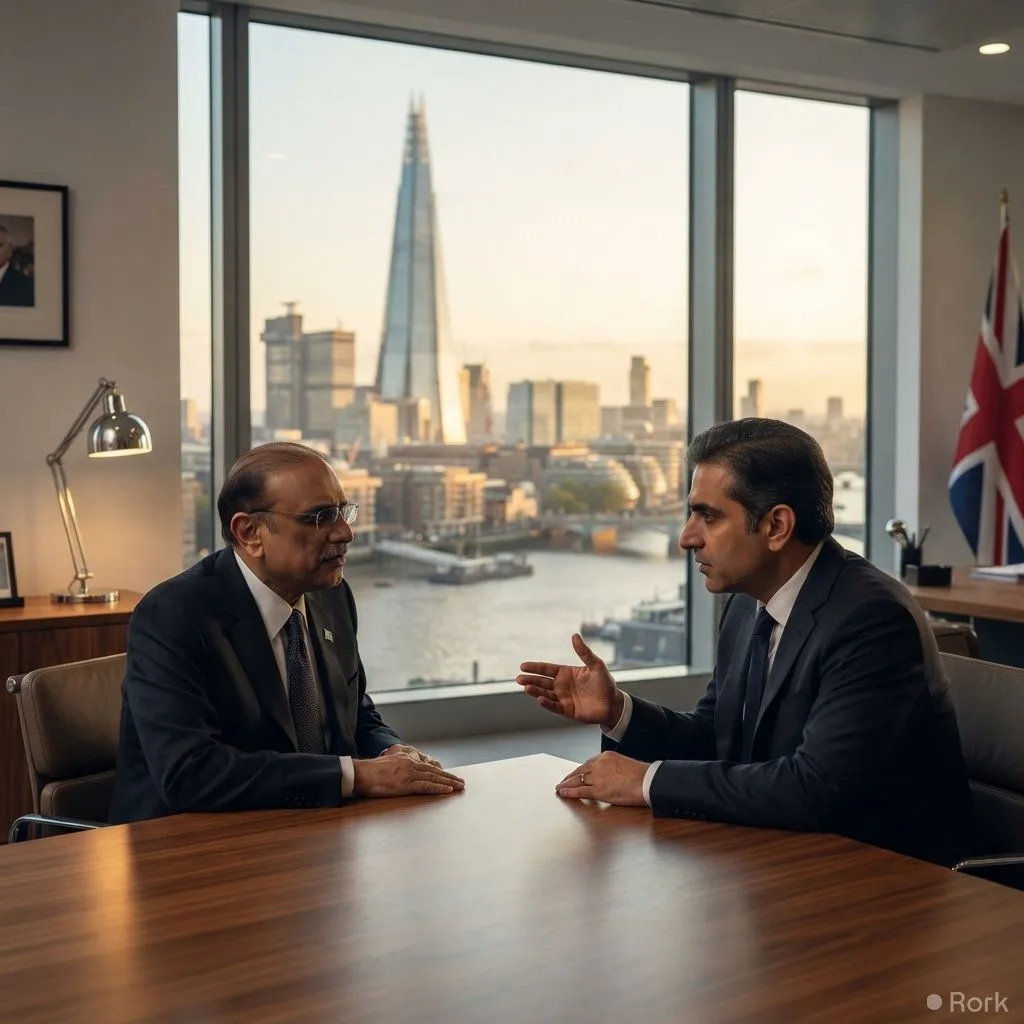
The diplomatic corridors of London once again became a backdrop for high‑level Pakistani politics as senior officials converged to hash out pressing domestic concerns. While the city’s historic streets buzzed with the usual diplomatic traffic, a discreet yet significant meeting unfolded behind closed doors, hinting at the government’s determination to steer the nation through a turbulent period.
President Asif Ali Zardari and Interior Minister Mohsin Naqvi met for roughly an hour at a secure venue in the UK capital. The one‑on‑one session, described by officials as “constructive” and “focused,” covered a spectrum of national issues ranging from internal security challenges to inter‑ministerial coordination. Zardari, emphasizing the need for a unified approach, urged Naqvi to align the interior ministry’s actions with the broader objectives of the federal cabinet.
Both leaders highlighted the importance of maintaining stability amid a backdrop of rising security incidents and a fragile economy. Naqvi, tasked with overseeing law‑enforcement agencies and counter‑terrorism operations, reiterated his ministry’s readiness to implement rapid response measures, while also seeking greater resources to bolster provincial policing efforts. The dialogue reportedly touched upon recent spikes in urban crime, the resurgence of militant activity in border regions, and the upcoming parliamentary elections that could reshape the political landscape.
Analysts note that the London venue reflects a growing trend of Pakistani officials conducting strategic talks abroad, a practice that allows for candid exchanges away from the intense scrutiny of domestic media. The meeting underscores the presidency’s continued involvement in shaping interior policy, a dynamic that some observers argue is essential for cohesive governance, especially when ministries face overlapping mandates.
As the discussion concluded, Zardari and Naqvi affirmed their joint commitment to advancing governance reforms and safeguarding the nation’s stability. The outcomes of their conversation are expected to feed into upcoming policy directives, with particular attention to strengthening coordination between federal and provincial authorities, enhancing intelligence sharing, and accelerating reforms within the interior ministry’s operational framework.