
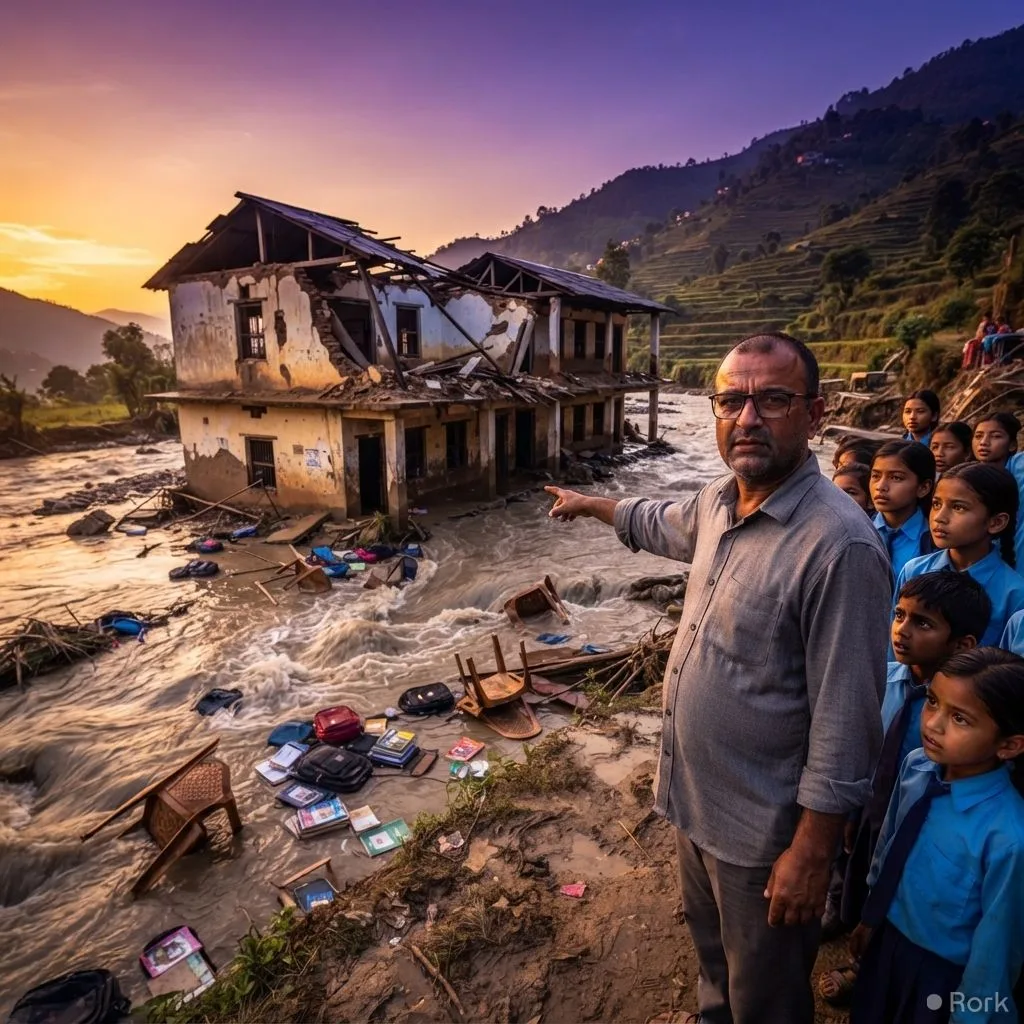
Monsoon clouds gathered over the quiet town of Bidur in central Nepal, turning the normally gentle Trishuli River into a roaring torrent within hours. As residents scrambled to secure their homes, the waters surged toward the campus of Tribhuvan Trishuli Secondary School, threatening the lives of nearly a thousand children who had just finished their afternoon classes.
Principal Rajendra Dawadi received a frantic phone call at 2 p.m. on 26 August warning that flash floods were racing down the valley. Without hesitation, he ordered an immediate evacuation, marshaling teachers, support staff and volunteers to usher the pupils out of the threatened classrooms. In a matter of minutes, roughly 900 students were gathered on the school’s front grounds and guided to higher ground, away from the encroaching deluge.
The flood, described by local officials as one of the most severe in recent memory, overwhelmed the school’s modest two‑storey building, sweeping it away as the river burst its banks. Miraculously, none of the children or staff suffered injuries, a testament to Dawadi’s swift decision‑making and the coordinated effort of the school community. Emergency crews later found the ruined structure submerged under several feet of water, its roof torn off and walls scattered downstream.
Authorities from the district education office have begun assessing the damage and are already arranging temporary learning spaces—large tents and community halls—to ensure that education can resume without prolonged interruption. Relief agencies from neighboring provinces, as well as volunteers from Kathmandu, have dispatched supplies and psychosocial support teams to help the displaced families cope with the sudden loss of both home and school.
The incident reverberates beyond Nepal’s borders, reminding Pakistan’s disaster‑management agencies of the critical need for robust flood‑risk planning in schools, especially in the monsoon‑prone north‑western districts. As both nations confront increasingly erratic weather patterns, the heroism displayed by Principal Dawadi underscores the importance of early warning systems and decisive leadership to protect vulnerable children in times of crisis.