
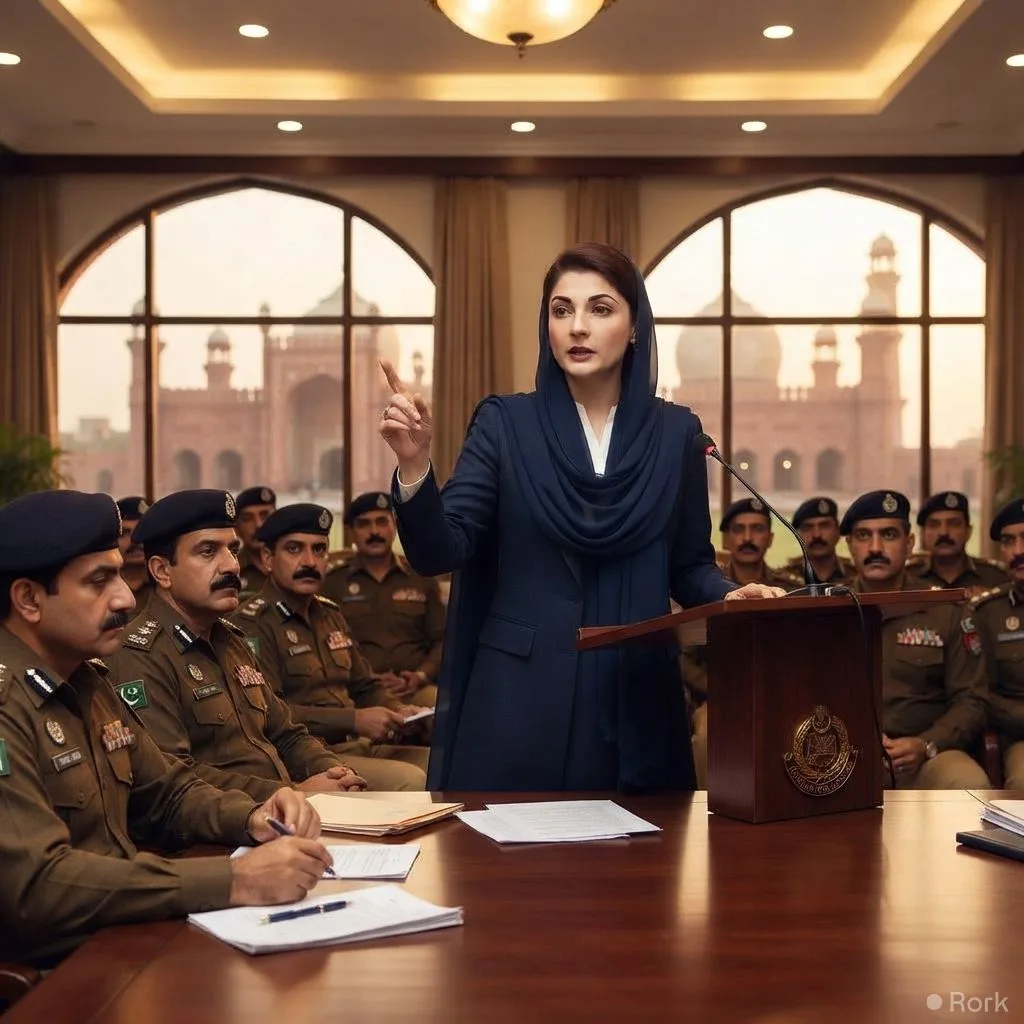
Lahore’s law‑and‑order briefings have become a barometer for the province’s security climate, and this Tuesday’s high‑level gathering underscored a growing impatience with lingering misconduct inside the police ranks. As officials debated traffic management, crime statistics and the upcoming provincial elections, a decisive tone emerged from the chief minister’s podium.
Punjab Chief Minister Maryam Nawaz Sharif instructed the Inspector General of Police to compile a definitive list of corrupt officers and to dismiss them within seven days. The directive, delivered in a closed‑door session of senior bureaucrats and senior police officials, left no room for delay, emphasizing a “zero‑tolerance” stance and warning that excuses would not be entertained.
The move arrives amid mounting public criticism over alleged graft, extortion and abuse of power by elements within the Punjab Police. Transparency International’s latest Pakistan report flagged the province as one of the most vulnerable to police‑related corruption, a sentiment echoed by civil‑society groups that have long demanded sweeping reforms. By setting a one‑week deadline, the chief minister hopes to signal a break with the past and to restore confidence among commuters, business owners and ordinary citizens who rely on a trustworthy law‑enforcement apparatus.
In her address, Maryam Nawaz highlighted that the upcoming provincial assembly session and the approaching local‑government elections make it imperative for the police to project integrity. “The people of Punjab deserve a police service that serves, not one that extracts,” she said, adding that the administration will monitor the removal process closely and that any attempt to sidestep the order will be met with strict disciplinary action.
The Inspector General, who has been under pressure since the previous administration’s anti‑corruption drive faltered, pledged full cooperation. Sources close to the police headquarters indicated that a rapid audit team has already been mobilised to sift through pending complaints, internal investigations and pending disciplinary files. While the short timeframe raises questions about due‑process safeguards, officials assert that the measure targets only those already substantiated by evidence, aiming to avoid wrongful dismissals.
If executed as announced, the crackdown could reshape Punjab’s policing landscape ahead of the 2027 electoral cycle, potentially influencing voter sentiment in key constituencies. Analysts note that a visible purge of corrupt elements may bolster the ruling party’s image of good governance, while also prompting other provinces to consider similar timelines. The coming days will reveal how quickly the administration can translate its zero‑tolerance promise into concrete personnel changes on the ground.