
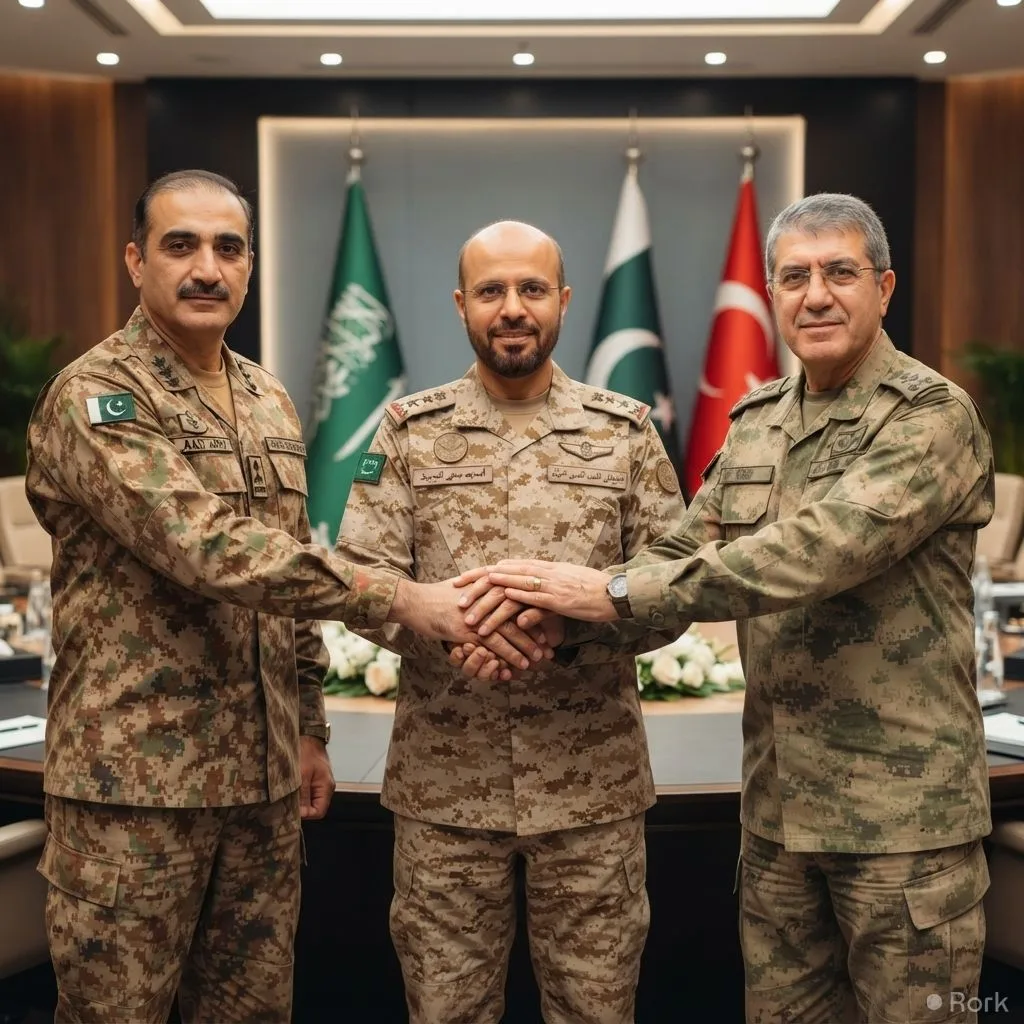
What happened?
The chiefs of the armed forces of Saudi Arabia, Pakistan and Turkey convened in Makkah and affirmed that the defence obligations set out in their trilateral “Makkah Pact” will be put into effect without delay. They praised the vigilance and professionalism of Saudi troops and pledged to boost intelligence sharing and joint military coordination among the three countries.
Why does it matter?
The agreement signals a deepening of security ties in a region facing heightened geopolitical tension, reinforcing Saudi Arabia’s deterrence posture while offering Pakistan and Turkey a platform for broader strategic cooperation. By formalising rapid implementation, the pact moves beyond symbolic gestures to concrete operational readiness.
What does it mean for Pakistan?
For Islamabad, the pact opens avenues for expanded joint exercises, technology transfer and access to Saudi defence procurement channels, which could help modernise its armed forces. It also aligns with Pakistan’s broader effort to diversify security partnerships beyond traditional allies, potentially attracting increased economic and military assistance from the Gulf.
What are the next steps?
All three militaries are set to establish joint command structures and initiate regular intelligence exchanges within weeks, while senior officers will draft detailed operational plans for coordinated responses to any threat against Saudi territory. Follow‑up meetings in Riyadh and Islamabad are expected later this year to monitor progress and address logistical challenges.