
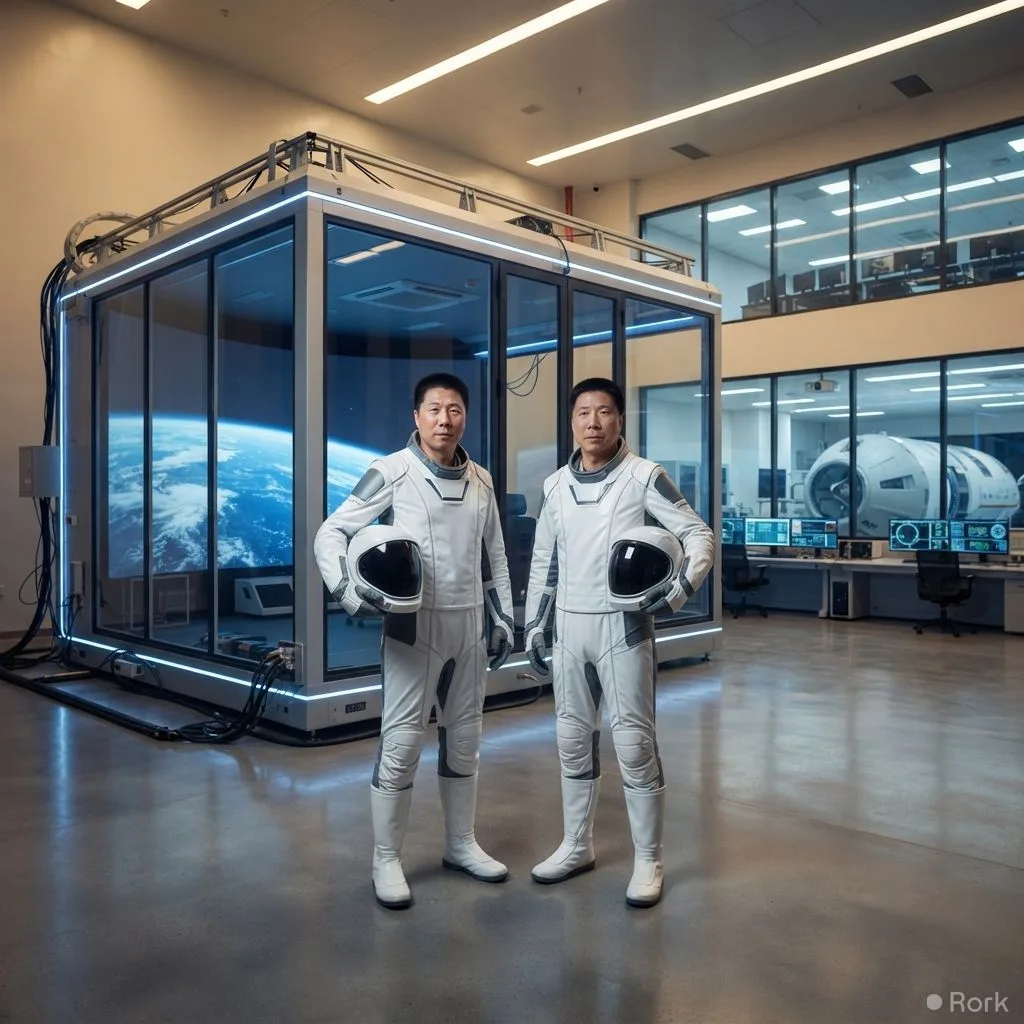
For months, engineers and scientists at Pakistan’s SUPARCO have been fine‑tuning a modest but ambitious roadmap for human spaceflight. The buzz that has filled Islamabad’s scientific circles this week turned into concrete progress when two of the country’s first astronaut candidates stepped onto the training grounds of China’s Astronaut Research and Training Center in Beijing.
The pair, selected through a joint Pakistan‑China initiative, have begun an intensive curriculum that covers orbital mechanics, spacecraft systems, extravehicular activity protocols and the survival techniques required for long‑duration stays aboard a space station. Their training is being tailored for a prospective flight to China’s newly‑named Tiangong station – officially the Yang Liwei Space Station after the nation’s pioneering astronaut.
Both trainees will spend several weeks in high‑G centrifuges, mock‑cockpit simulators and neutral‑buoyancy pools that replicate the micro‑gravity environment of orbit. Instructors from the China Manned Space Agency are overseeing the program, ensuring the Pakistani crew acquire the technical proficiency and physical resilience demanded by crewed missions. Successful completion could see the duo launch aboard a Shenzhou vehicle within the next two years, marking Pakistan’s first foray into crewed spaceflight.
The collaboration builds on a decade of bilateral projects, from the launch of Pakistani communication satellites on Chinese rockets to joint research in remote sensing and navigation. By embedding its astronauts in China’s established training pipeline, Pakistan hopes to accelerate the development of indigenous expertise, stimulate its nascent aerospace industry, and inspire a new generation of engineers, pilots and scientists. The experience is also expected to feed back into SUPARCO’s plans for a domestic crewed programme, potentially leading to home‑grown hardware and future missions beyond low Earth orbit.
If the mission proceeds as envisioned, Pakistan would join an exclusive group of nations that have sent humans into space, a milestone that could reshape its scientific standing regionally and open doors for further international partnerships in exploration, technology transfer and education.