
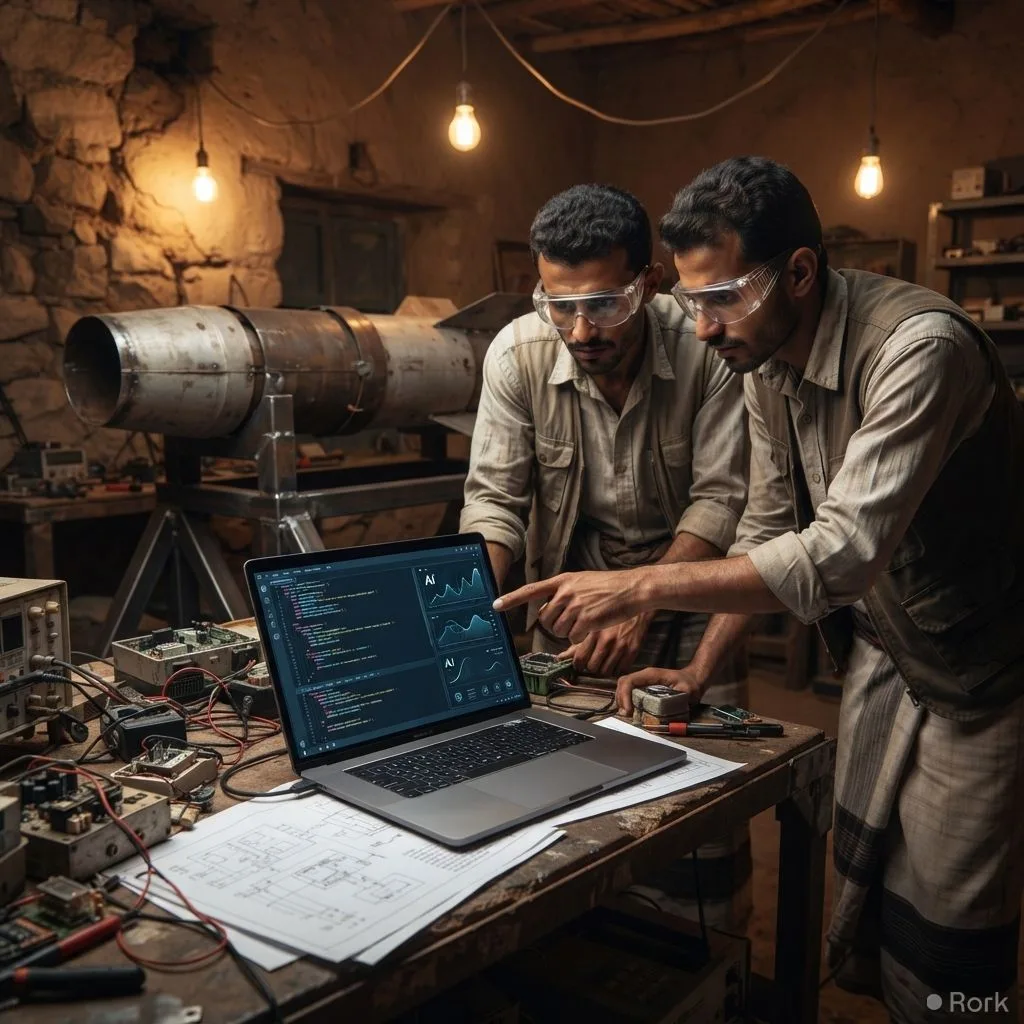
Yemen’s northern militia has reportedly tapped Anthropic’s Claude AI model to help design missiles capable of reaching targets up to 2,000 km away. The revelation comes from a new report released by the U.S.‑based AI firm, which says its monitoring tools uncovered a weapons‑development cell using the language model for trajectory calculations and propulsion optimisation.
Background
The emergence of AI‑driven weapon design is not entirely new, but the use of a commercial, publicly available large language model marks a significant escalation. Anthropic disclosed that its internal security systems flagged a cluster of queries originating from a network in the Saada region of northern Yemen. The queries ranged from basic aerodynamics to detailed guidance‑system schematics, all phrased in a way that matched Claude’s typical response patterns.
Yemen’s civil war, now in its thirteenth year, has seen various factions turn to unconventional means to gain a strategic edge. The Houthi movement, which controls large swathes of the north, has previously demonstrated an ability to adapt foreign technology for its own purposes, including the reverse‑engineering of UAVs and missile components captured from regional adversaries. The latest AI‑assisted effort suggests a shift from mere improvisation to a more systematic, data‑driven approach to weapons development.
Anthropic’s investigation indicates that the militia’s engineers were not only using Claude to run simulations but also to translate complex scientific literature into locally understandable formats. This practice effectively lowers the technical barrier for producing long‑range missile systems that would otherwise require sophisticated research institutions and extensive testing facilities.
What it means for Pakistan
Pakistan’s strategic calculus could be affected on several fronts. First, the possibility of a 2,000‑km missile operating from Yemen expands the threat envelope to include the Arabian Sea and, indirectly, the western maritime approaches to Pakistan’s port cities such as Karachi and Gwadar. While the missiles are primarily aimed at regional rivals, their range makes them capable of striking assets far beyond Yemen’s immediate neighbourhood.
Second, the incident underscores the vulnerability of commercial AI platforms to misuse by non‑state actors. Pakistani defence and intelligence agencies may need to reassess their monitoring of AI‑related traffic, especially given the growing number of local tech firms and academic institutions that employ similar models for legitimate research. A breach in usage policies could inadvertently provide hostile groups with the same technical shortcuts.
Finally, the development could influence Pakistan’s own missile‑technology programs. The country has long pursued indigenous medium‑ and long‑range systems; seeing a rival group achieve comparable capabilities with minimal infrastructure could spur both accelerated research and a push for tighter export controls on AI tools. It also raises diplomatic pressures on the United States and other AI developers to implement more robust safeguards.
What happens next
Anthropic has announced plans to tighten its user‑verification procedures and to introduce usage‑monitoring clauses aimed at preventing weaponisation of its models. The firm will also cooperate with international regulators to share intelligence on suspicious activity.
Regional security analysts predict that other militant groups may attempt to replicate this approach, prompting a broader call for a coordinated, multilateral framework governing the export and deployment of advanced AI. For Pakistan, the immediate priority will be to enhance cyber‑surveillance capabilities and to engage diplomatically with AI providers to ensure that the technology does not become a force multiplier for hostile actors in the volatile Middle East.