
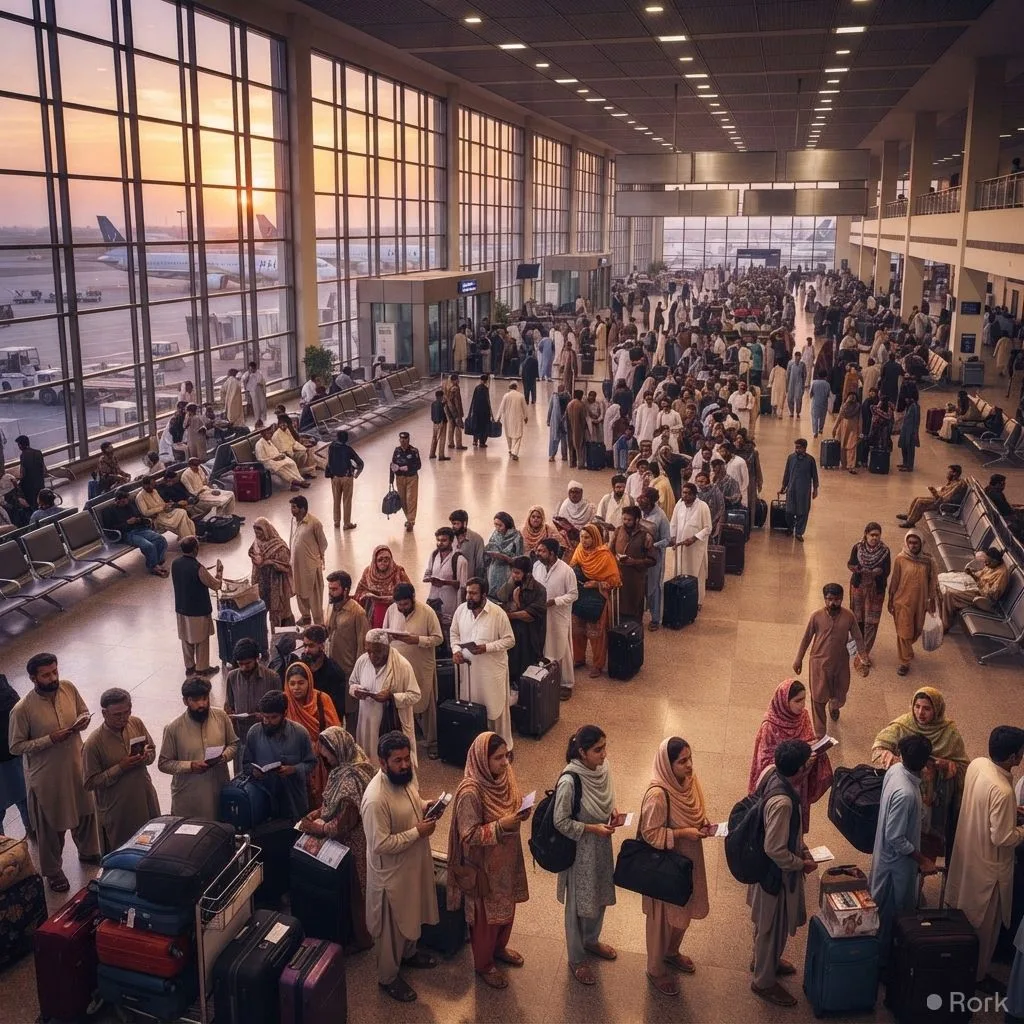
The summer months have long been a window of opportunity for Pakistani workers seeking better wages beyond the country’s borders. In the two‑month span of July and August 2026, a fresh wave of more than 66,000 citizens set off for overseas employment, underscoring the enduring pull of foreign job markets.
Most of these labour migrants are heading to the traditional Gulf destinations—Saudi Arabia, the United Arab Emirates, Qatar and Oman—where construction, domestic services and hospitality continue to absorb large numbers of Pakistani hands. Smaller yet noticeable streams are also moving toward Europe, particularly the United Kingdom and Italy, where demand for skilled technicians and healthcare aides remains high.
The exodus comes at a time when remittance inflows are a lifeline for many Pakistani households. According to the State Bank of Pakistan, overseas earnings accounted for roughly 12 % of the nation’s foreign exchange earnings last year, cushioning families against soaring inflation and dwindling local job prospects. Each new worker abroad translates into additional foreign currency, which not only supports household consumption but also contributes to the country’s balance of payments.
Economic pressures at home are driving the surge. Persistent high food prices, a weakening rupee and a slowdown in domestic manufacturing have left many job‑seekers disillusioned with the local market. In response, recruitment agencies have intensified outreach in provincial cities, offering pre‑departure training and facilitating visa processes to meet the growing demand for overseas placements.
Policy‑makers are watching the trend closely. The Ministry of Overseas Pakistanis has pledged to streamline documentation and negotiate better labour agreements with destination countries, aiming to protect workers’ rights while ensuring a steady flow of remittances. As the summer season draws to a close, the scale of this migration wave signals that Pakistan will remain heavily reliant on its diaspora for economic stability in the months ahead.