
Key points:
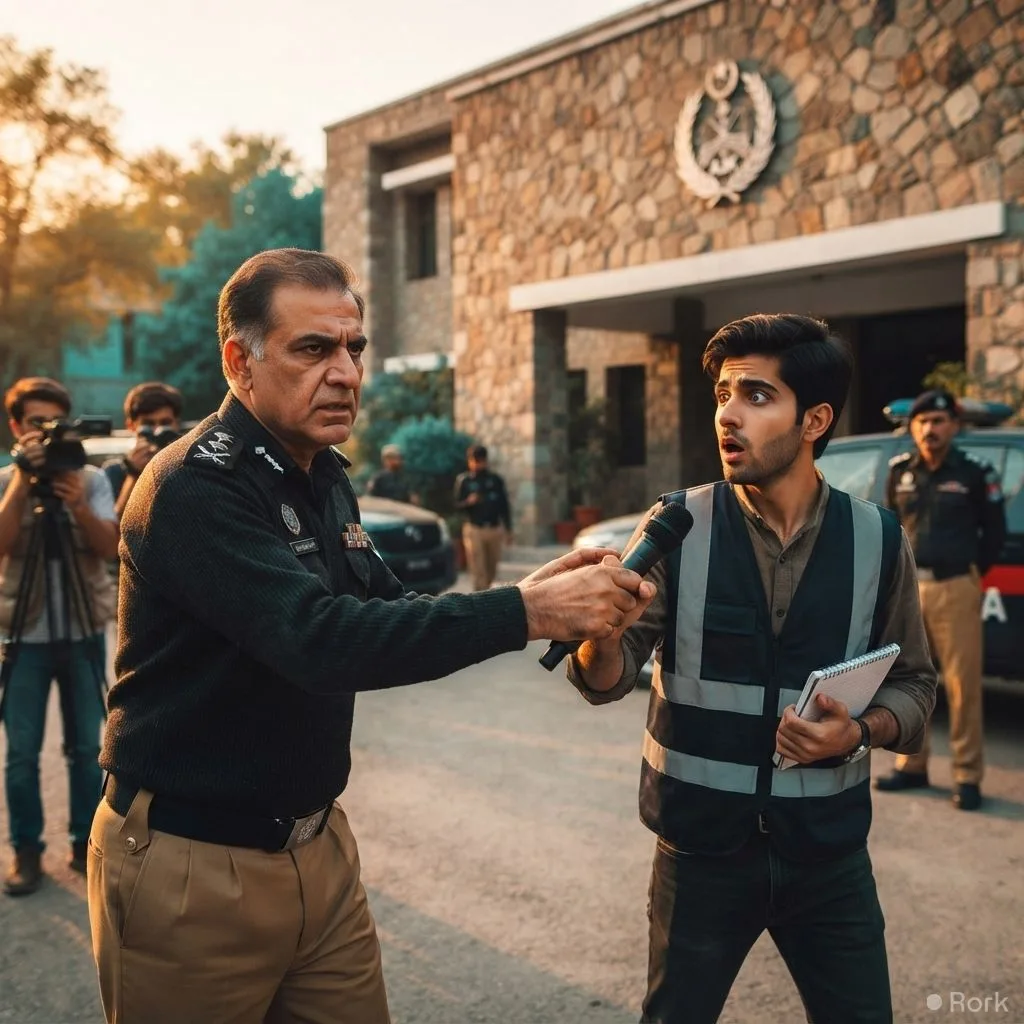
- Azad Jammu and Kashmir’s Inspector General of Police, Liaqat Ali Malik, forcibly took a reporter’s handheld microphone during a press‑briefing‑type exchange.
- The confrontation occurred after journalists questioned the police chief about the recent deaths of demonstrators in the region.
- No physical injuries were reported, but the incident has triggered criticism from media watchdogs and civil‑society organisations demanding a probe.
- The episode adds to growing concerns over press freedom and police accountability in AJK amid heightened public dissent.
The altercation unfolded on the outskirts of Muzaffarabad when a local reporter, equipped with a portable microphone, asked IG Malik to clarify the circumstances surrounding the fatalities of several protesters who were detained during a recent rally. As the journalist pressed for details, the police chief raised his hand, seized the mic and held it briefly before security staff escorted the reporter away from the scene. Eyewitnesses said the exchange was tense but did not result in any bodily harm.
The deaths of the demonstrators have already become a flashpoint in Azad Jammu and Kashmir, where citizens have been voicing grievances over perceived political marginalisation and economic hardships. The police force’s handling of the protest, including the alleged use of excessive force, has been under scrutiny, and the IG’s abrupt reaction to a routine media query is being interpreted by many as an attempt to curb further questioning.
Local journalist bodies, including the Pakistan Federal Union of Journalists’ AJK chapter, condemned the act as an infringement on the right to report and called for an immediate, independent investigation. Human‑rights NGOs have echoed the demand, emphasizing that a free press is essential for transparent governance, especially in a region where law‑enforcement actions are already under public watch.
If the incident is not addressed, it could deepen mistrust between the police and the media, potentially discouraging journalists from covering sensitive issues in AJK. Stakeholders argue that establishing clear protocols for interactions between law‑enforcement officials and the press would help safeguard both public safety and the essential role of journalism in democratic accountability.