
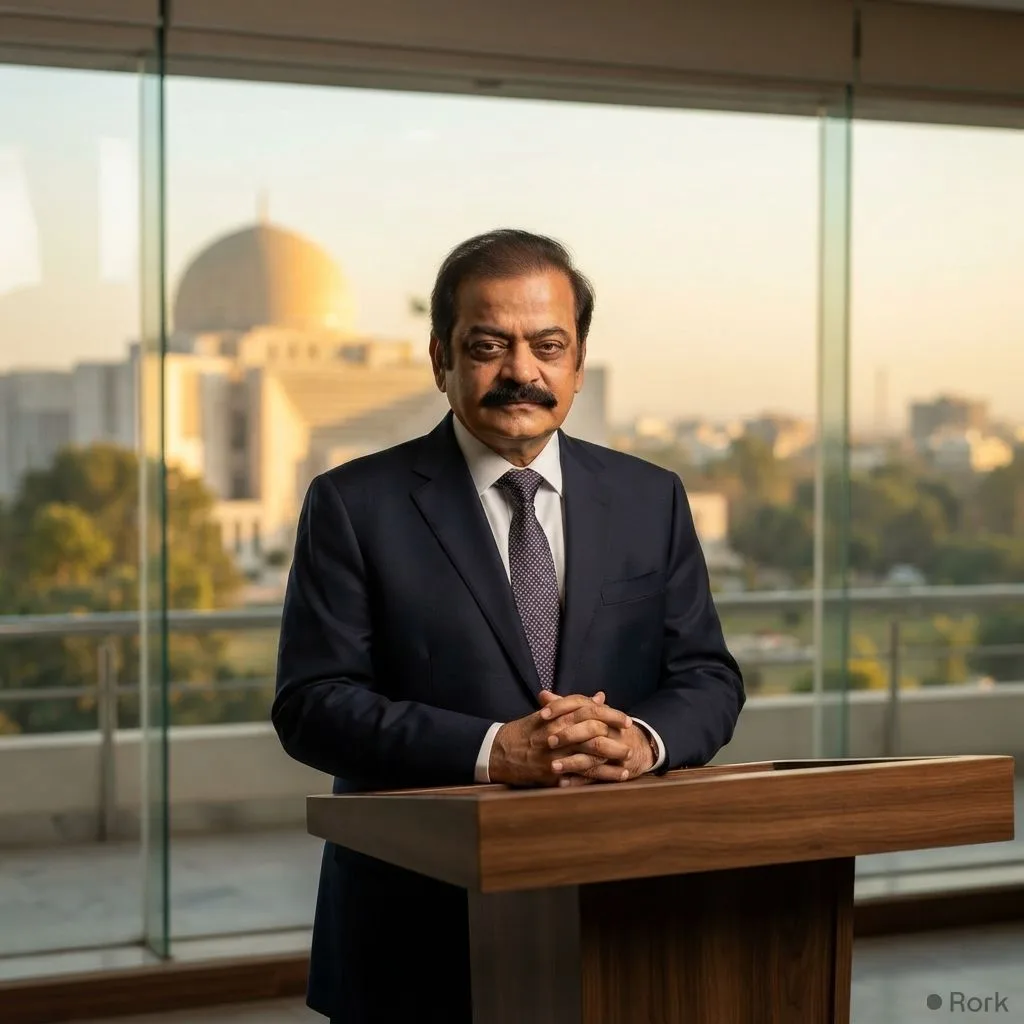
Prime Minister’s adviser on political affairs Rana Sanaullah warned reporters on Thursday that the federal administration may resort to constitutional measures, including the declaration of a state of emergency, if the Pakistan Tehreek‑e‑Insaf (PTI) march reaches Islamabad on 4 October.
Background
The PTI has been mobilising supporters for a large‑scale rally in the capital since late September, following a series of high‑profile arrests of party leaders and the filing of corruption cases that the opposition says are politically motivated. The scheduled protest comes just weeks after a failed sit‑in in Lahore that was dispersed by police, leaving dozens injured and heightening mistrust between the government and Imran Khan’s supporters.
Rana Sanaullah, who heads the prime minister’s political affairs portfolio, has been the public face of the government’s response to the growing dissent. In recent days his office has issued a series of statements urging demonstrators to remain peaceful while simultaneously signalling that the state is prepared to invoke “constitutional options” if the situation escalates.
The reference to an emergency draws on provisions in the constitution that allow the president, on the advice of the cabinet, to suspend certain fundamental rights and grant the armed forces broader powers to maintain public order. Pakistan has invoked such powers twice in the past—most recently in 2023 during a wave of sectarian violence—so the threat is not merely rhetorical.
What it means
If the government decides to declare an emergency, the immediate impact would be a curtailment of freedoms such as freedom of assembly, speech, and movement in the capital and possibly in other provinces where the protest spreads. Police and, potentially, the military could be authorised to conduct searches, impose curfews, and detain participants without the usual judicial safeguards.
For ordinary citizens, especially those living and working in Islamabad, the measure could mean disruptions to daily life: public transport may be limited, commercial activity could be halted, and schools might close. Businesses that rely on uninterrupted logistics—ranging from local vendors to multinational firms with regional offices—could face losses, and investors may view the move as a destabilising signal for the broader economy.
Politically, an emergency declaration would raise the stakes ahead of the upcoming general elections scheduled for early 2027. PTI supporters would likely portray the step as evidence of authoritarian overreach, potentially galvanising further anti‑government sentiment. Conversely, the ruling coalition could argue that it is a necessary safeguard to prevent chaos, positioning itself as the defender of law and order.
Legally, any emergency order would be subject to judicial review. Pakistan’s Supreme Court has, in previous instances, struck down emergency proclamations that were deemed disproportionate. Hence, a court challenge is probable, which could prolong uncertainty and keep the nation’s political discourse in a heightened state of tension.
What happens next
Security agencies have already deployed additional forces around key government installations and major thoroughfares in Islamabad. The interior ministry announced that checkpoints will be set up to monitor the influx of protesters, and traffic diversions are being planned to minimise disruptions.
Negotiations behind the scenes are also under way. Senior officials from the prime minister’s office have reportedly been in contact with PTI representatives to explore a possible compromise, such as limiting the march’s route or agreeing on a joint oversight committee for the protest. Whether these talks will avert an emergency remains uncertain, but the next 48 hours will likely determine whether Islamabad braces for a peaceful demonstration or prepares for a more forceful state response.