
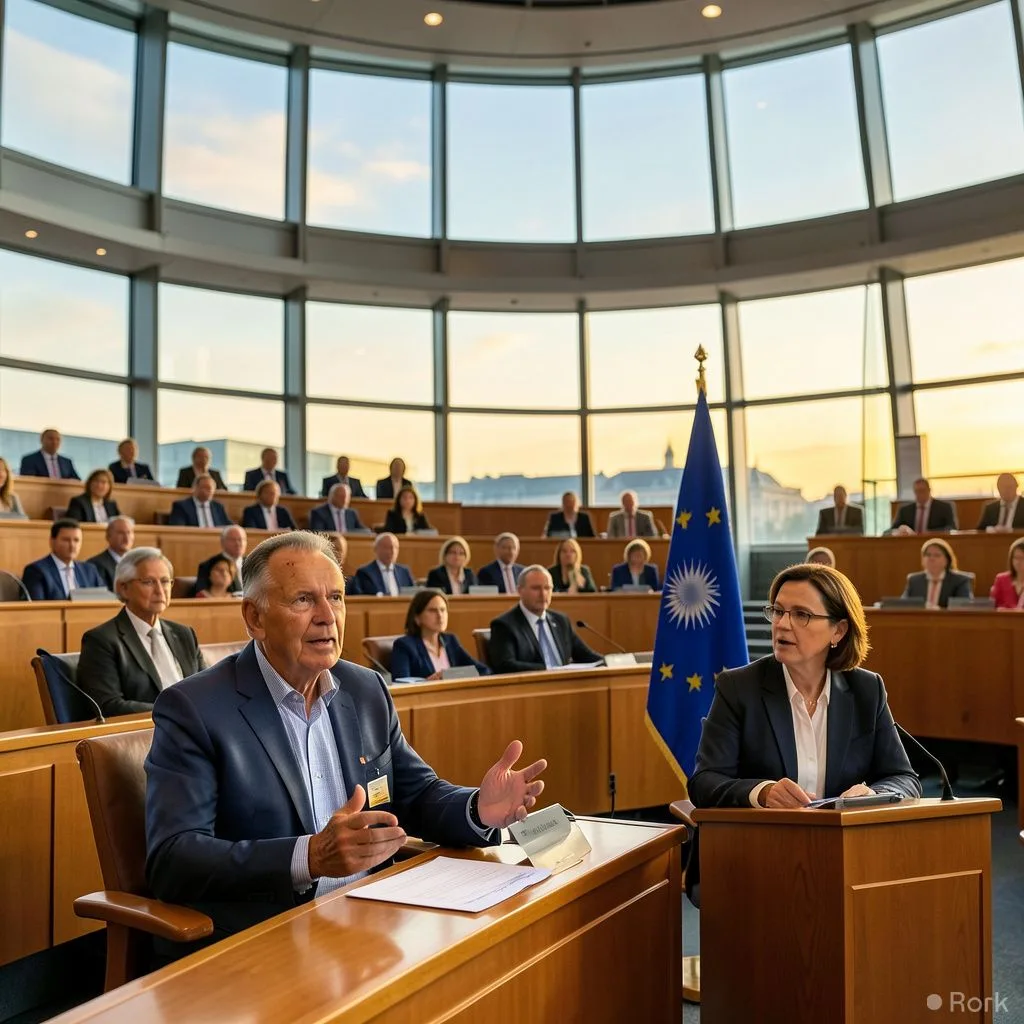
European parliamentarians publicly endorsed Pakistan’s position on the Indus Waters Treaty during a governance meeting in Brussels on Friday, with the Pakistani delegation urging the international community to address the Kashmir dispute in line with United Nations resolutions. Czech Member of the European Parliament Andrej Dostál praised Pakistan’s stance, while German MEP Michael von der Schulenburg called for broader multilateral cooperation to protect water rights in the region.
The gathering, organised by the European Parliament’s Committee on International Trade, brought together legislators from more than a dozen EU member states to discuss trans‑boundary water management and regional stability in South Asia. Pakistan’s envoy, Ambassador Syed Zafar Maqsood, highlighted that the unresolved Kashmir issue continues to undermine the spirit of the 1960 Indus Waters Treaty, which has governed the allocation of the Indus River basin’s waters between India and Pakistan for over six decades.
Andrej Dostál, representing the Czech Republic’s Progressive Alliance of Socialists and Democrats, commended Pakistan for insisting on a “fair and equitable” interpretation of the treaty and urged European partners to lend diplomatic weight to Islamabad’s calls for a peaceful settlement of Kashmir. He noted that water scarcity and climate‑induced variability have heightened the treaty’s relevance, making external support crucial for maintaining regional water security.
German MEP Michael von der Schulenburg, a member of the European People’s Party, echoed the sentiment, stressing that water resources are a shared global concern that transcends bilateral disputes. He appealed for a coordinated international framework that would monitor compliance with the treaty, facilitate data sharing, and provide technical assistance to both riparian nations.
Analysts say the European backing could bolster Pakistan’s negotiating position in upcoming talks with India, where both countries have recently raised concerns over alleged violations of water‑sharing norms. For Pakistan, the treaty underpins the water supply for major agricultural zones in Punjab and Sindh, as well as hydro‑electric projects that feed the national grid. Any perceived shortfall in flow could jeopardise food security for millions and strain already‑tight energy resources.
The meeting also examined the broader geopolitical context, noting that climate change is expected to intensify river flow fluctuations and exacerbate tensions over water allocation. European officials suggested that joint research initiatives and investment in climate‑resilient infrastructure could mitigate future disputes, while urging both South Asian neighbours to honour the treaty’s provisions without politicising water.
While the EU’s statements carry moral weight, concrete diplomatic action remains pending. Pakistan hopes that the public endorsements will translate into tangible support at forthcoming multilateral forums, such as the United Nations water conference and the South Asian Association for Regional Cooperation (SAARC) meetings, where the Kashmir question and water sharing are likely to feature prominently.