
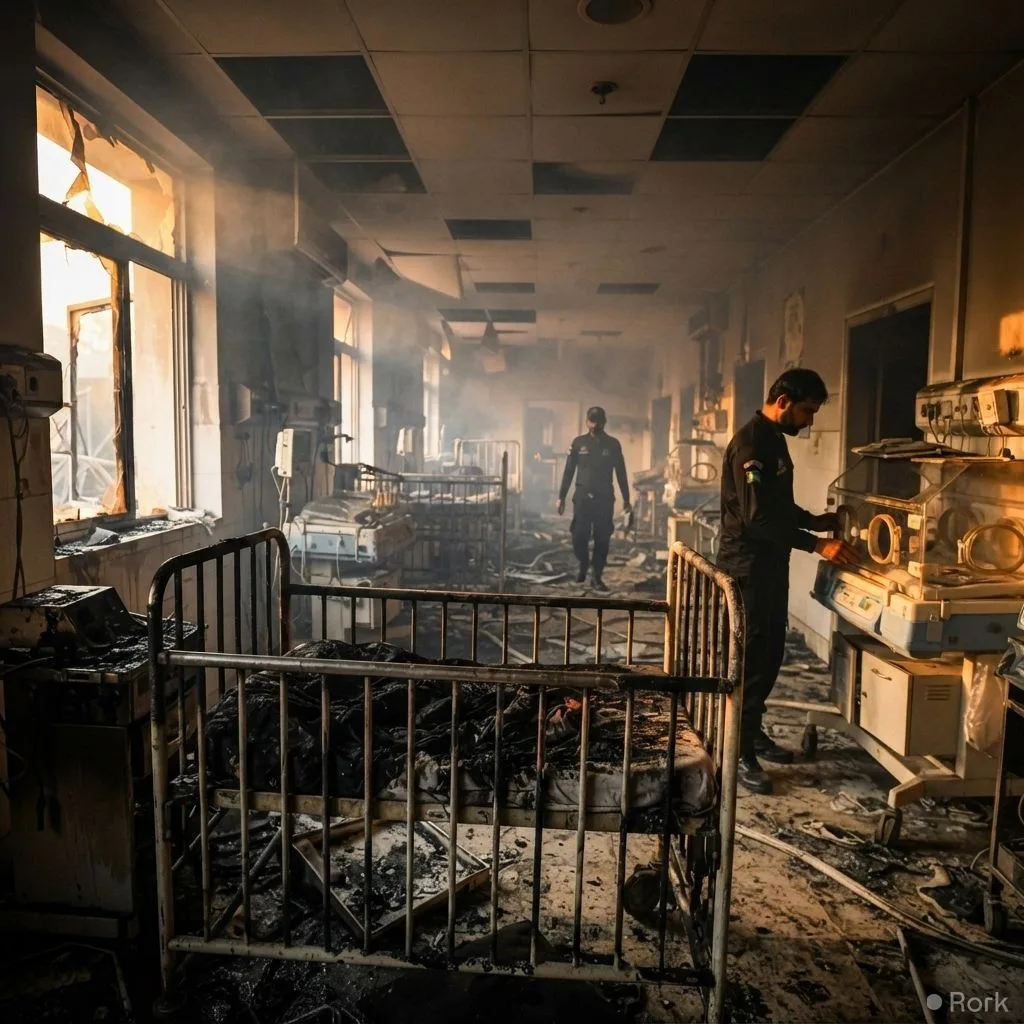
The early‑hour bustle of the Mother and Child Health Care Centre at Pakistan Institute of Medical Sciences was a picture of routine care: tiny cribs lined the nursery, a handful of nurses tended to the newborns, and families whispered prayers for their infants’ wellbeing. That fragile calm was shattered when a sudden blaze erupted in the gynaecology ward, engulfing the unit that housed sixteen newborns.
Hospital officials confirmed that the fire claimed the lives of fourteen infants, leaving only two survivors who were rushed to intensive care. The incident, which broke out on Wednesday, prompted an immediate evacuation of the ward and a swift response from emergency services, but the flames spread too quickly for the vulnerable babies to be rescued.
Federal authorities have opened a formal inquiry into the cause of the fire, and the Ministry of Health has announced a review of safety standards across all tertiary hospitals. Inspectors will examine electrical installations, fire‑suppression systems, and the adequacy of emergency evacuation protocols, with a view to preventing a repeat of this tragedy.
The disaster comes at a time when the federal budget has earmarked fresh funding for the PIMS Mother and Child Health (MCH) Centre as part of this year’s health‑sector allocations. While the exact figure has not been disclosed in public statements, the investment was intended to upgrade neonatal facilities, improve equipment, and strengthen staff training. The juxtaposition of newly allocated resources with the loss of so many newborn lives has amplified calls from medical professionals and civil‑society groups for rapid implementation of those improvements.
Families of the victims, many of whom traveled from remote districts to access PIMS’s specialised care, now face profound grief alongside uncertainty about compensation and support. The tragedy also raises broader concerns for Pakistan’s already strained neonatal health system, where infant mortality remains a critical indicator of public‑health performance. As the investigation proceeds, stakeholders are urging the government to translate budgetary promises into concrete safety upgrades, ensuring that the nation’s most vulnerable patients are protected from preventable hazards.