
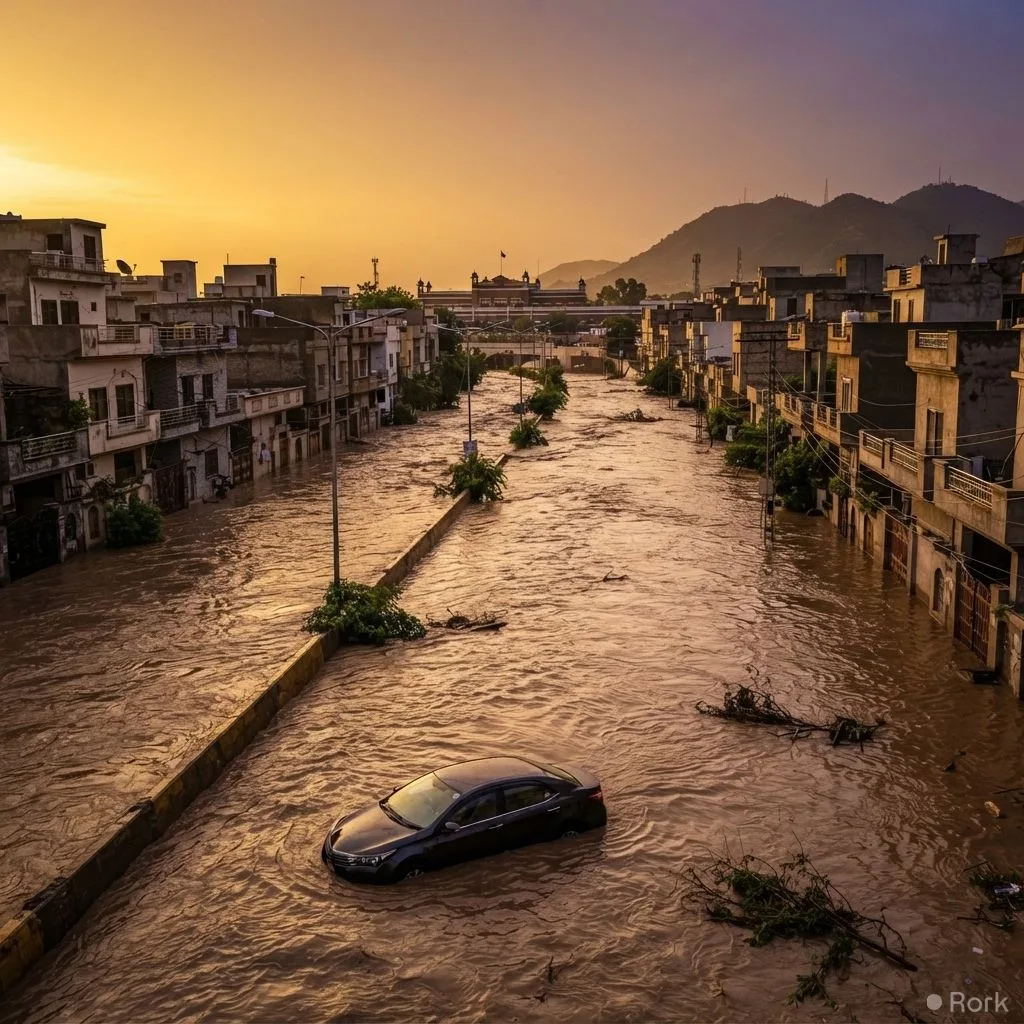
Lai Nullah’s water surged to 4.2 metres, crossing the officially‑designated danger level.
Heavy downpours battered the twin cities of Rawalpindi and Islamabad in the early hours of Tuesday, turning several low‑lying neighborhoods into temporary lakes. Streets along the Lai Nullah corridor were quickly swallowed by fast‑rising water, while adjacent colonies reported streets becoming impassable within minutes of the first showers.
Motorists who found themselves trapped in the sudden flood were forced to abandon their vehicles as the water surged past the tyre line. Rescue teams from the Capital Development Authority and the provincial emergency service (1122) were dispatched to the most affected zones, using inflatable boats to evacuate stranded families and retrieve abandoned cars. Local police have cordoned off the most hazardous stretches and are directing traffic away from inundated routes.
District officials have issued an urgent advisory urging residents to stay clear of the flood‑prone areas until water levels recede. The Rawalpindi Water and Sanitation Authority (RWASA) is closely monitoring the Nullah’s flow and has warned that additional rainfall could exacerbate the situation, potentially leading to further flash‑flood incidents.
Lai Nullah has a notorious track record of breaching its banks during the monsoon season, a problem compounded by encroachment and inadequate drainage infrastructure. The recent surge threatens homes built along its banks, disrupts daily commutes for thousands of workers, and puts pressure on small businesses that rely on the main thoroughfares now submerged. With the city’s annual cultural festival slated to begin later this week, authorities are scrambling to safeguard venues and ensure public safety.
Meteorological services have forecast intermittent showers for the next 48 hours, prompting a continued state of alert. Citizens are advised to keep abreast of updates from local news outlets, heed official warnings, and cooperate with rescue personnel as the city works to mitigate the flood’s impact and prevent loss of life.