
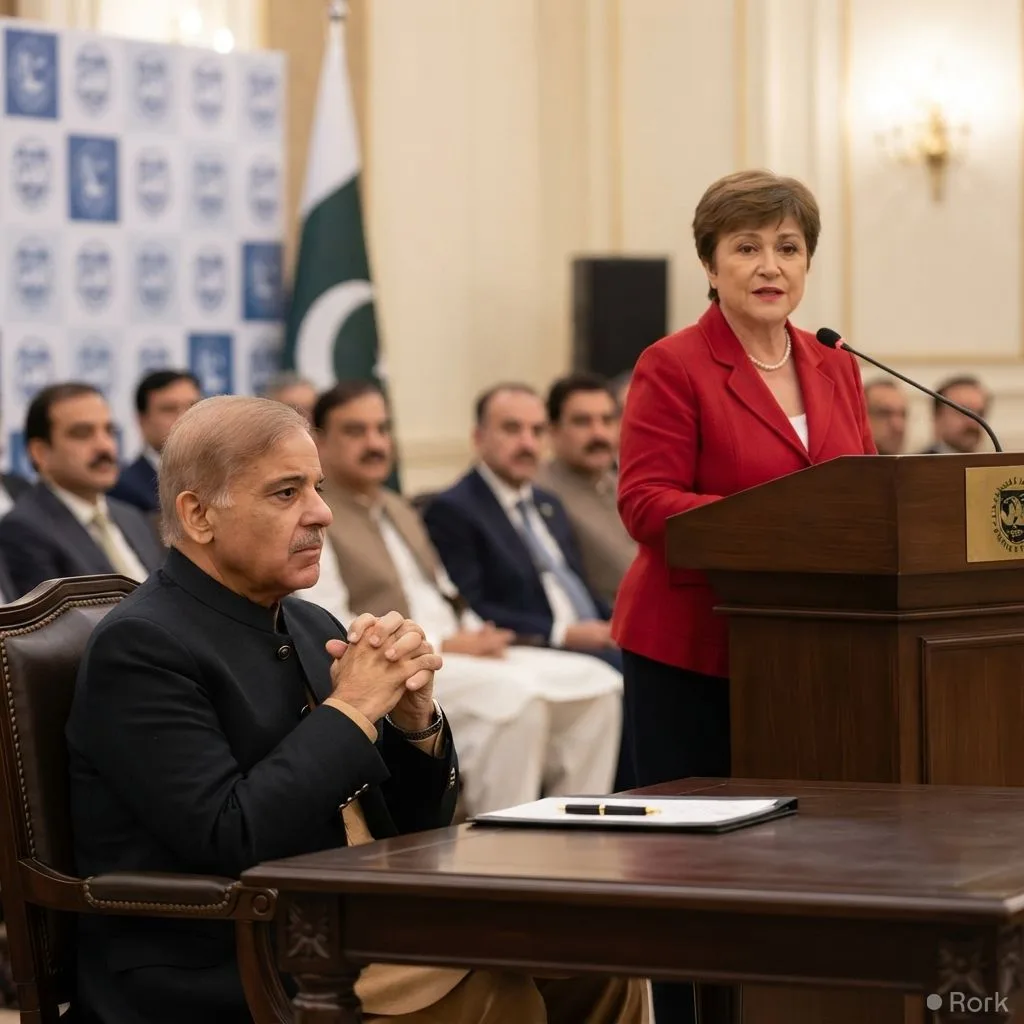
The Managing Director of the International Monetary Fund lauded Pakistan’s recent reform drive on Thursday, saying the decisive steps taken by the government have helped keep the country’s macro‑economic situation stable and that persisting with the reform agenda will be key to reviving growth and raising living standards. Prime Minister Shehbaz Sharif, speaking later the same day, reiterated his administration’s full commitment to the IMF‑backed programme and confirmed that Pakistan will “stay the course” on the agreed reform slate.
Khalid Adrian, the IMF chief, made the remarks during a press briefing in Washington, noting that the implementation of robust fiscal and structural measures over the past months has prevented a further deterioration of the balance‑of‑payments outlook. He added that maintaining momentum on these policies is essential for translating short‑term stability into sustained economic expansion and tangible benefits for ordinary Pakistanis.
Shehbaz Sharif, addressing a gathering of cabinet officials and senior economists, emphasized that the government will continue to meet the programme’s targets, which include tightening fiscal deficits, improving tax collection, and reforming the energy sector. He warned that any deviation could jeopardise the remaining disbursements from the IMF and delay the country’s recovery path.
Analysts point out that policy continuity is critical at this juncture, as investors have begun to reassess Pakistan’s risk profile. The reaffirmation of the reform trajectory is expected to bolster confidence among both domestic and foreign capital providers, potentially unlocking additional financing and encouraging private‑sector participation in key growth‑driving sectors such as manufacturing and services.
The IMF‑Pakistan programme, which was launched earlier this year after a series of negotiations, is designed to restore external credibility, curb inflationary pressures and lay the groundwork for a resilient fiscal framework. Successful implementation will also affect ordinary citizens, with the prospect of reduced price volatility, more reliable electricity supply and improved public services.
While the immediate outlook appears steadier, economists caution that the reform agenda remains ambitious and will require disciplined execution across ministries. Continued monitoring by the IMF, coupled with transparent reporting, will be essential to ensure that the promised benefits materialise and that Pakistan can transition from crisis management to a sustainable growth trajectory.