
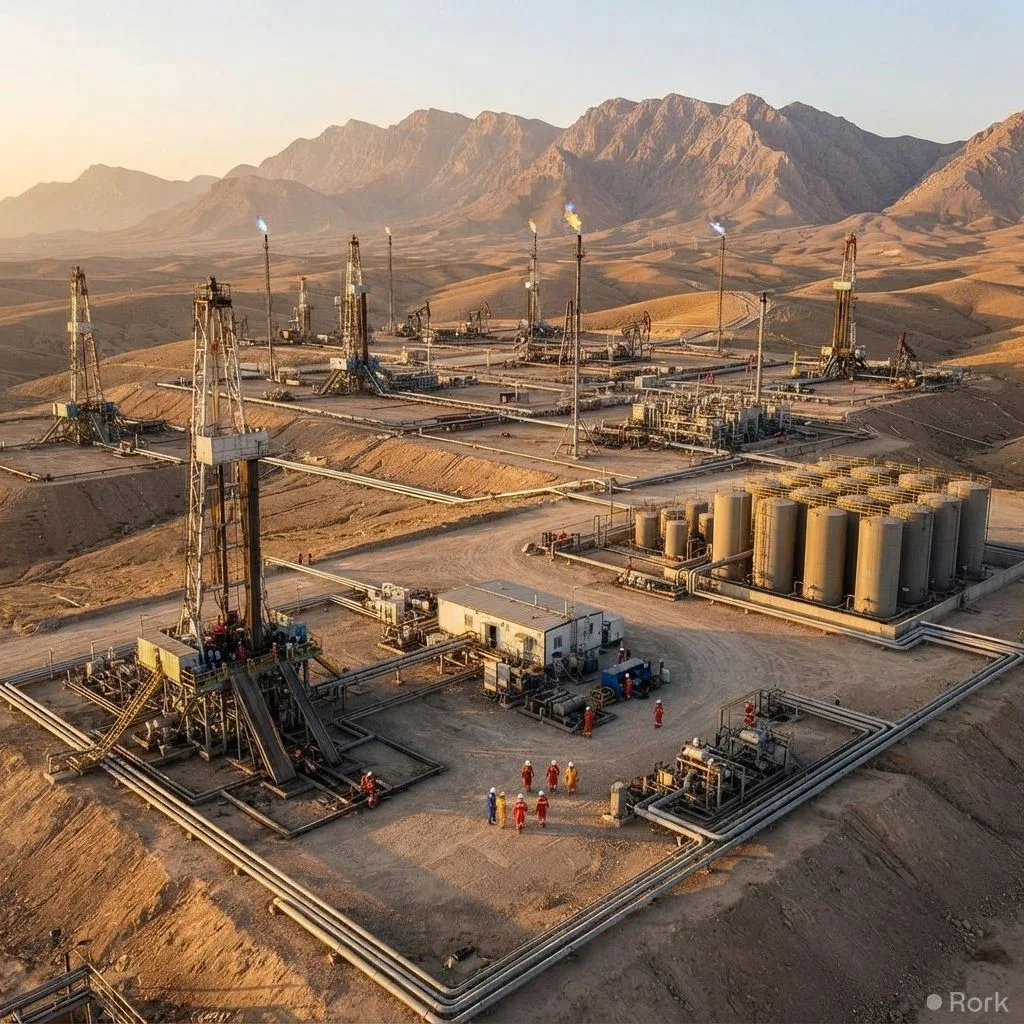
Iran’s oil and gas ministry announced on Saturday that a new natural‑gas field in the southern Fars province holds more than 7.5 trillion cubic feet (tcf) of resources, with roughly 5.7 tcf considered technically recoverable. The find is being hailed domestically as a “jackpot” for the nation’s economy.
Background
The discovery comes after a series of exploratory drills carried out by the National Iranian Oil Company (NIOC) in partnership with several international firms over the past two years. The Fars basin, historically known for its oil reservoirs, has only recently been targeted for gas exploration as Iran seeks to diversify its energy portfolio and reduce reliance on aging fields in the south‑west.
Iran’s gas sector has struggled with chronic under‑investment, sanctions‑induced technology gaps, and a growing domestic demand that outpaces production. In 2025, the country imported an estimated 3 billion cubic meters of liquefied natural gas (LNG) to plug the shortfall, while also facing reduced export volumes to traditional markets in Europe and Asia.
The newly identified reserves were mapped using 3‑D seismic imaging and confirmed through a series of appraisal wells. Although the total resource estimate exceeds 7.5 tcf, the ministry’s technical team projects that about 5.7 tcf can be extracted with existing drilling and processing technology, pending further feasibility studies and financing.
What it means for Pakistan
Pakistan, which imports roughly 1.5 billion cubic meters of natural gas annually, could view the Iranian find as a potential new source of supply, especially under the framework of the Iran‑Pakistan gas pipeline (IPGP) that has been under discussion for years. Even a modest increase in Iranian export capacity could translate into lower spot prices for Pakistani utilities, easing the chronic load‑shedding problem that has plagued major cities.
The added volume may also influence regional gas pricing benchmarks, such as the Oman/Dubai hub, which Pakistani traders use to hedge against price volatility. If Iran can bring the recoverable portion to market within the next few years, the resulting supply boost could soften competition from Russian and Qatari LNG shipments that currently dominate Pakistan’s import portfolio.
Beyond pricing, the discovery may revive diplomatic momentum on cross‑border energy projects. Pakistan’s Ministry of Energy has repeatedly signaled interest in securing long‑term contracts with Iran, contingent on the latter’s ability to guarantee stable output. A proven reserve of this size strengthens Iran’s negotiating hand and could accelerate the finalization of pipeline agreements, contingent on the easing of international sanctions.
What happens next
The next phase will involve detailed field development plans, including the design of compression stations, processing facilities, and potential tie‑ins to existing pipeline networks. Iran is expected to seek foreign investment and technical expertise, which may open avenues for Pakistani firms specializing in engineering, procurement, and construction (EPC) to participate in the project.
Meanwhile, regional analysts caution that sanctions relief and geopolitical stability will be decisive factors. If Iran can secure the necessary financing and equipment, the recoverable 5.7 tcf could start flowing within five to seven years, providing a tangible boost to both its own economy and, indirectly, Pakistan’s energy security. Stakeholders on both sides are now watching the upcoming feasibility reports closely, as the outcome will shape the contours of South‑Asian gas trade for the remainder of the decade.