
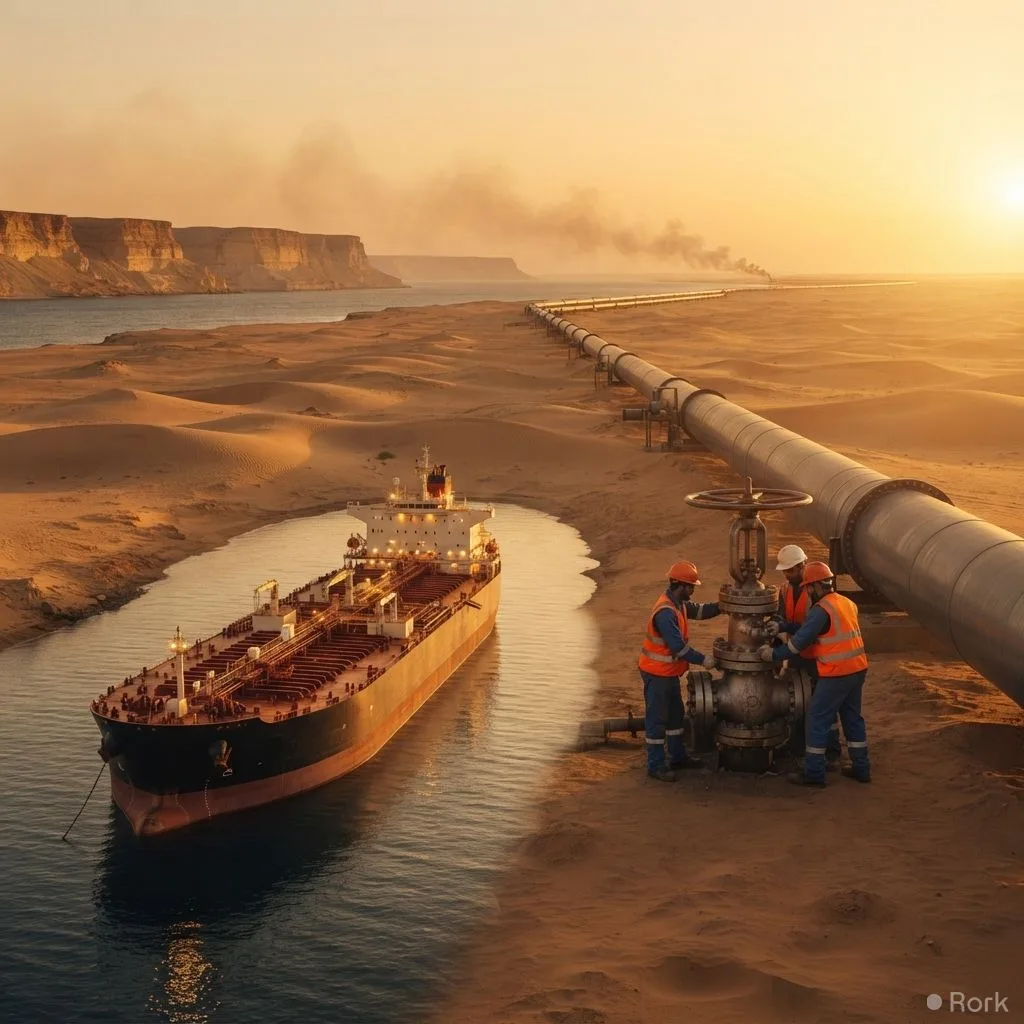
The sudden loss of a key artery that carries Saudi crude from the Persian Gulf to its Red Sea ports has sent a ripple through world markets, nudging the benchmark price of oil past the $107‑per‑barrel mark. At the same time, the strategic Bab el‑Mandeb choke‑point, already on alert after a series of maritime attacks, faces fresh danger as Houthi fighters have moved onto Perim Island, a vital waypoint that guards the narrow passage.
Saudi Arabia announced the temporary shutdown of its 1,200‑kilometre East‑West crude pipeline on Monday, citing safety concerns after a series of unexplained incidents near the line’s inland segment. The pipeline normally transports roughly 5 million barrels per day – about four percent of the global oil supply – from the kingdom’s prolific eastern fields to the ports of Yanbu and Jeddah, where shipments join the Red Sea route. With the conduit offline, crude that would have taken a relatively short overland trek now has to be rerouted through longer, costlier sea legs, tightening an already fragile supply chain.
The disruption comes amid a broader flare‑up in the Gulf and Red Sea region. Earlier this week, a planned Gulf‑Iran ministerial dialogue on the Strait of Hormuz was postponed, with Omani officials confirming the delay amid rising security worries. In the Red Sea, Houthi militants have seized Perim Island, heightening the risk to vessels transiting Bab el‑Mandeb – one of the world’s busiest maritime corridors that handles roughly 20 percent of global oil seaborne trade. Shipping companies have already warned of possible delays and higher insurance premiums, further feeding price pressures.
Analysts say the twin shocks could keep oil prices elevated for weeks. “When a pipeline that moves up to four percent of the world’s oil is out of service, markets react quickly, especially when that loss coincides with heightened geopolitical tension in adjacent shipping lanes,” noted a senior trader at a multinational brokerage. The added uncertainty around Bab el‑Mandeb could force tankers to take longer detours around the Cape of Good Hope, a move that adds days to delivery times and raises freight costs.
For Pakistan, which imports roughly 60 percent of its petroleum needs – mainly from the Gulf – the price surge translates into higher fuel costs at the pump and increased pressure on the balance of payments. The government’s ongoing efforts to secure stable supplies through long‑term contracts and strategic reserves will be tested as global markets remain volatile. Energy‑intensive sectors such as textiles and fertilizers may also feel the pinch, potentially feeding through to consumer prices and inflationary trends in the coming months.