
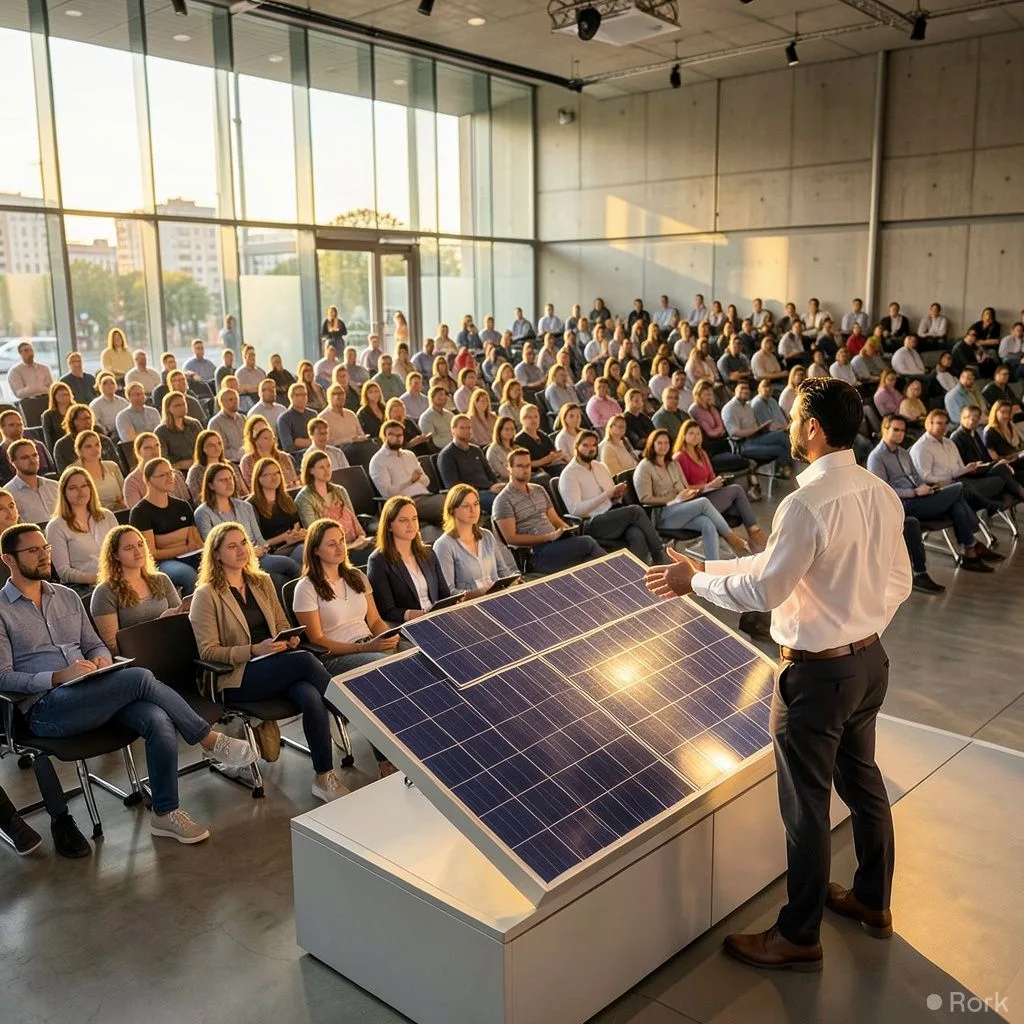
SAJ, one of the country’s leading solar‑energy firms, staged a series of five high‑profile gatherings in October 2026 that drew packed audiences at every venue, bringing together industry experts, government officials, investors and everyday consumers eager to learn about the latest solar solutions.
The events, held in Karachi, Lahore, Islamabad, Peshawar and Quetta, each reached capacity, with seating ranging from 150 to 300 participants depending on the location. Organisers highlighted live demonstrations of next‑generation photovoltaic panels, battery‑storage systems and smart‑grid technologies, while also presenting a suite of financing packages designed to lower the upfront cost barrier for households and small businesses.
SAJ’s chief executive, Aamir Hussain, told attendees that the overwhelming turnout underscores a “growing hunger for clean, reliable power” across Pakistan. He noted that the company’s outreach program aims to translate interest into tangible installations, citing a projected 12 percent increase in residential solar uptake over the next twelve months if current momentum is maintained.
Policy‑makers present at the forums, including representatives from the Ministry of Energy and the National Electric Power Regulatory Authority, used the platform to discuss recent amendments to the Renewable Energy Policy that introduce tax incentives and streamlined approval processes for solar projects. The consensus was that such regulatory support, combined with private‑sector initiatives like SAJ’s, could accelerate the nation’s target of generating 30 percent of its electricity from renewables by 2030.
Market analysts observe that the series of full‑house events reflects a broader shift in Pakistan’s energy landscape, where escalating load‑shedding and rising fossil‑fuel import bills are prompting both consumers and businesses to seek alternatives. By showcasing affordable financing and hands‑on technology, SAJ is positioning itself to capture a larger share of an industry that the International Renewable Energy Agency estimates could be worth more than $10 billion in the country by 2035.
The cumulative effect of the gatherings is expected to boost public awareness, spur investment and ultimately contribute to a reduction in carbon emissions. As SAJ continues its outreach, industry insiders anticipate that similar large‑scale educational drives will become a staple of Pakistan’s renewable‑energy rollout, helping the nation move closer to energy independence and a cleaner future.