
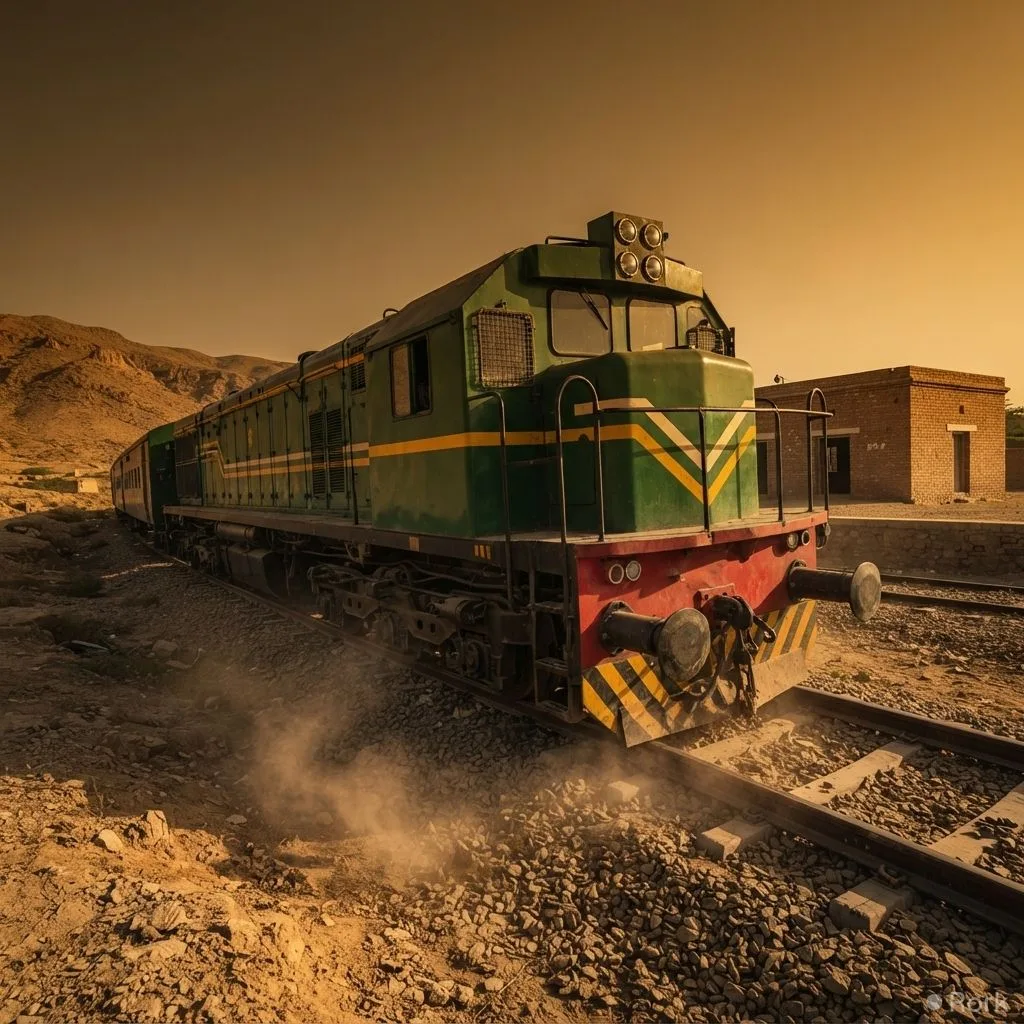
The engine of the newly‑launched Jinnah People’s Train left the rails near Kuchlak Railway Station in Quetta on Sunday, just days after the service began operating. Railway officials said the derailment caused no injuries among the passengers on board.
Background
The Jinnah People’s Train was unveiled on 29 September as a flagship passenger link intended to boost mobility across Balochistan, a province where long‑distance travel has traditionally relied on sparse bus routes and aging rail lines. The launch, attended by the federal minister for railways, was billed as a milestone for regional development, promising faster connections between Quetta, the provincial capital, and smaller towns along the line.
Construction of the new stretch of track and the procurement of modern locomotives were part of a broader federal push to upgrade Pakistan Railways’ infrastructure, especially in the under‑served western wing of the country. The project received funding from the national budget as well as a modest grant from the Asian Development Bank aimed at improving transport corridors that feed into the China‑Pakistan Economic Corridor (CPEC).
Only a week after the inauguration, the train’s diesel‑electric engine slipped off the rails as it approached Kuchlak, a small town about 30 km north of Quetta. According to statements from Pakistan Railways, the train was traveling at a moderate speed when the derailment occurred, and the crew managed to bring the consist to a stop without evacuating passengers.
What it means
For commuters in Balochistan, the incident raises immediate safety concerns. The region’s sparse public‑transport network means that any disruption to rail services can leave residents with few alternatives, especially in remote districts where road conditions are poor. A loss of confidence in the new service could depress ridership, undermining the government’s goal of providing a reliable, affordable option for daily travelers and traders.
The derailment also puts pressure on the railway authority to demonstrate that the newly procured rolling stock meets the rugged demands of Balochistan’s terrain. If technical faults are identified, the cost of remedial work could strain an already tight budget for Pakistan Railways, which has been grappling with aging equipment and chronic under‑investment.
Politically, the mishap arrives at a sensitive time. The federal government has been promoting infrastructure projects as evidence of its commitment to balanced development across provinces. A high‑profile failure so soon after a ceremonial launch may invite criticism from opposition parties and civil‑society groups that have long warned about rushed projects lacking adequate safety audits.
What happens next
Railway officials have opened an investigation to pinpoint the exact cause of the derailment, involving engineers from the Ministry of Railways, independent safety auditors, and, if necessary, external consultants. Preliminary checks will focus on track geometry, signalling systems, and the condition of the locomotive’s braking and suspension components.
In the meantime, Pakistan Railways has announced that the Jinnah People’s Train will resume service after a thorough safety clearance, but with reduced speed limits in the vicinity of Kuchlak until the probe concludes. Commuters are being advised to monitor official announcements for any schedule adjustments.
The episode serves as a reminder that expanding rail connectivity in challenging environments requires not only capital investment but also rigorous testing, continuous maintenance, and transparent oversight. How quickly the authorities address the findings will shape public trust in future rail initiatives across the country.