
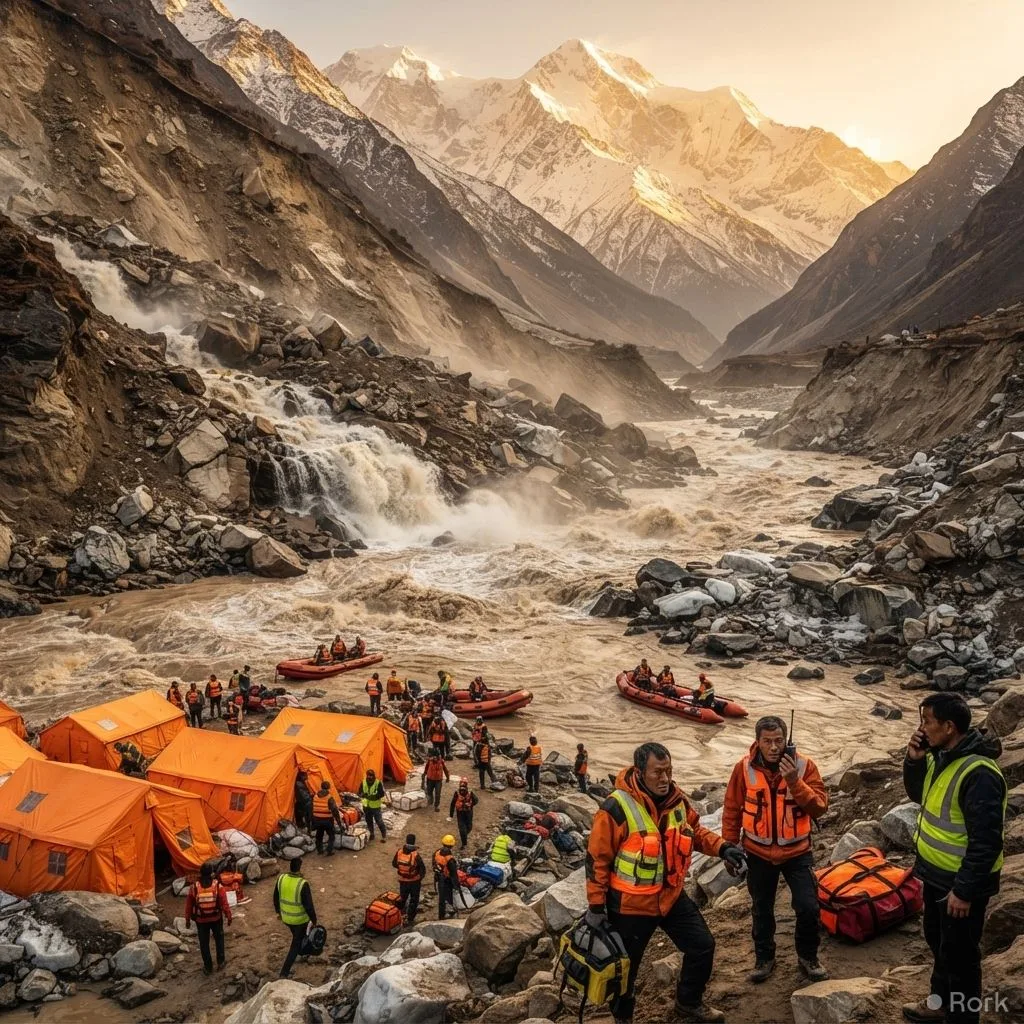
The early monsoon clouds that have cloaked the Himalayas for weeks finally gave way to a roar of water and earth on Tuesday, when a massive landslide cascaded down the slopes of the Langtang‑Koshi basin. The torrent of rocks, mud and frozen ice slammed into the river’s channel, unleashing a flash flood that surged across remote valleys in Nepal and spilled over into the Tibetan plateau.
Preliminary reports from the Nepalese disaster management authority indicate that nearly 1,500 individuals are now unaccounted for. Of these, 826 are missing within Nepal’s borders, a tally that includes a significant number of foreign tourists who were trekking the region’s popular routes. Chinese officials in Tibet have confirmed a parallel surge of displaced residents, though exact figures are still being compiled.
Rescue agencies have mobilised a multi‑modal response. The Nepalese army deployed several helicopter units to air‑lift survivors from isolated hamlets, while the Nepal Police and local fire‑brigade teams navigate the debris‑strewn river in inflatable boats. In Tibet, the People’s Liberation Army’s engineering corps are clearing blocked roadways and establishing temporary shelters for those forced to abandon their homes. The scale of the slide and the continuing rise in water levels are hampering search‑and‑rescue crews, forcing officials to postpone certain operations until the waters recede.
International humanitarian groups have already set up aid corridors. The Red Cross, Médecins Sans Frontières and several NGOs are air‑dropping food, clean water and medical kits to cut‑off villages. Pakistani travel operators, many of whom organise adventure tours to the Himalayas, have issued urgent advisories to clients and are coordinating with embassies to repatriate stranded nationals. The incident has revived concerns in Pakistan about the safety of outbound tourism to the region, prompting the Ministry of Foreign Affairs to review emergency response protocols for citizens abroad.
Climatologists warn that the extreme precipitation that triggered the landslide is consistent with shifting monsoon dynamics linked to global warming. “We are witnessing more intense, erratic rainfall patterns across the sub‑continent,” said Dr. Ayesha Khan, a senior researcher at the Pakistan Meteorological Department. She added that the heightened risk of such disasters underscores the need for stronger cross‑border early‑warning systems and coordinated disaster‑risk reduction strategies. Humanitarian organisations continue to appeal for donations to sustain relief efforts for the affected communities in Nepal, Tibet and beyond.