
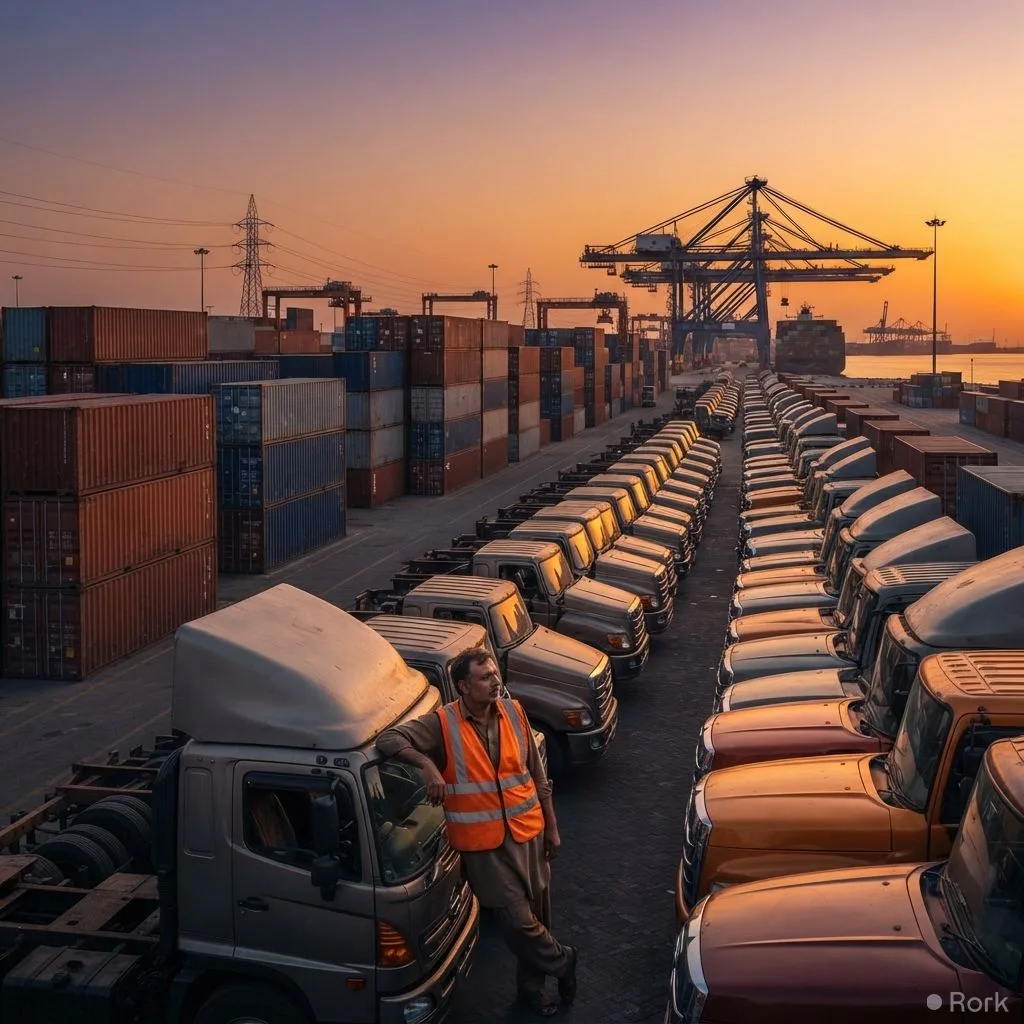
Over 2,000 freight trucks were confiscated by security forces in the days leading up to a planned protest in Islamabad, prompting many truck operators to avoid routes that head toward Punjab and the northern provinces. The seizure, which took place this week, has left a sizable portion of the country’s commercial fleet immobilised and has caused a noticeable backlog of cargo at the Port of Karachi as transporters fear further interdictions.
Authorities say the massive vehicle roundup is part of heightened security preparations for the upcoming demonstration, which is expected to draw thousands of participants to the capital. Police and paramilitary units conducted raids in several key logistics hubs, targeting vehicles suspected of being used to transport protest‑related materials or to block potential protest corridors. The operation has sparked anxiety among independent hauliers and large trucking firms alike, many of whom now deem the risk of losing their remaining trucks too great to continue dispatching loads toward the heartland.
The immediate fallout is being felt most acutely in the supply chain that links Karachi’s seaports with the interior of the country. With trucks rerouted, parked, or temporarily grounded, containers destined for major distribution centers in Lahore, Faisalabad and Gujranwala are stacking at berth, inflating dwell times and raising handling costs. Local manufacturers and importers have reported delays in receiving raw materials such as steel, chemicals and agricultural inputs, while retailers fear shortages of finished goods during the peak shopping season.
Transport unions have condemned the seizures, arguing that the sweep disproportionately impacts commercial operators who are not involved in the political protest. They warn that prolonged disruption could push freight rates upward, strain the already tight logistics capacity, and ultimately translate into higher prices for consumers across the country. The Pakistan Freight Association has called for a transparent review of the operation and for the swift release of seized vehicles that are proven to be unrelated to any illicit activity.
Economists note that Pakistan’s trade‑to‑GDP ratio is heavily reliant on efficient overland movement of goods, especially between the port city and the industrial belt of Punjab. Any sustained bottleneck in this corridor risks reverberating through regional markets, potentially affecting export‑oriented sectors such as textiles and automotive parts. Moreover, the uncertainty may deter foreign investors who monitor logistics reliability as a key indicator of business climate stability.
While the protest organizers have not yet disclosed the exact date of the rally, officials maintain that security measures will remain in place until the event concludes. In the meantime, trucking companies are exploring alternative routes through Sindh and Baluchistan or temporarily shifting cargo to rail corridors, though capacity constraints limit the viability of such measures. The situation underscores the delicate balance between ensuring public order and preserving the flow of commerce that underpins Pakistan’s economy.