
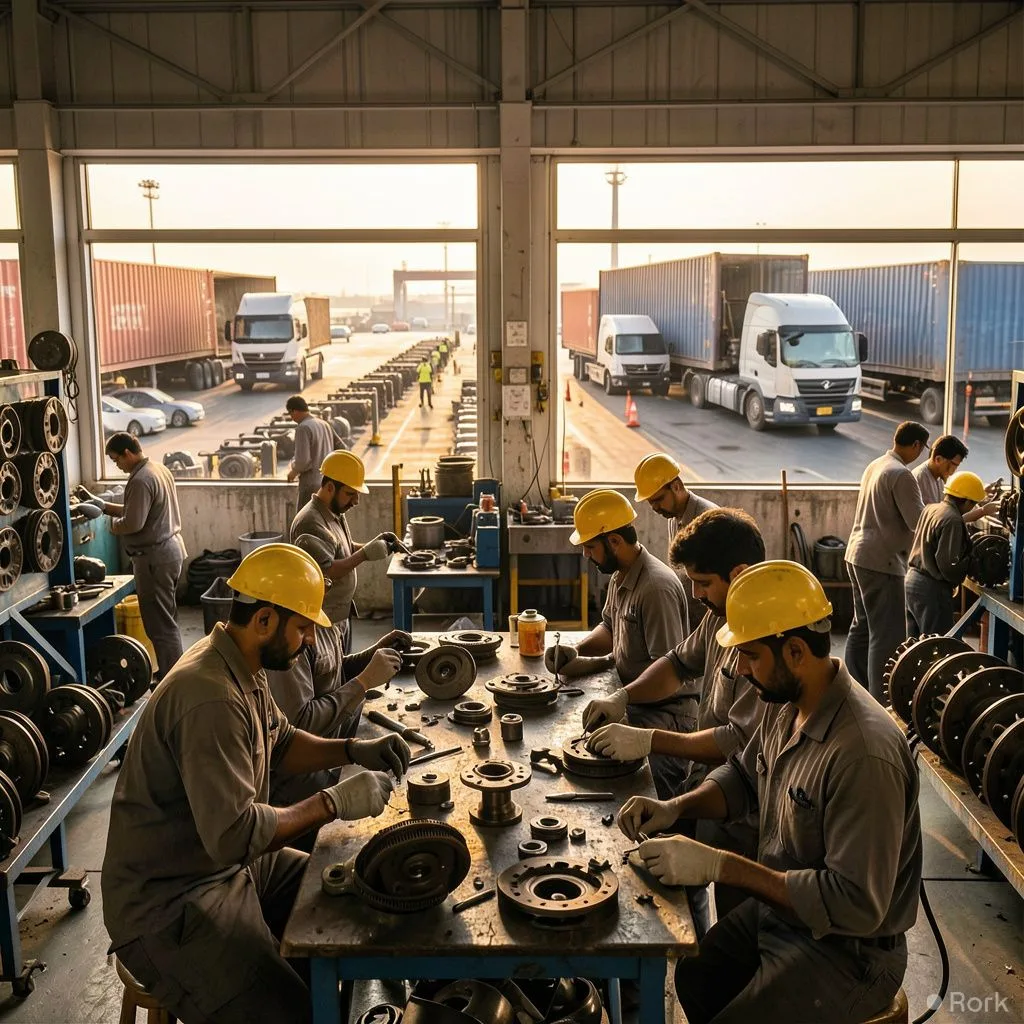
The federal government’s decision to ease restrictions on the import of used cars has sparked an alarm from the Pakistan Association of Automotive Parts and Accessories Manufacturers (PAAPAM), which says the move could erase up to 300,000 direct jobs in the auto‑parts sector and jeopardise another 1.5 million indirect positions across the country’s supply chain.
Background
Since 2019, Pakistan has pursued a “Make‑in‑Pakistan” agenda that seeks to transform the automotive industry from a predominantly assembly‑only model into a full‑fledged manufacturing ecosystem. Incentives such as reduced customs duties on completely knocked down (CKD) kits and a 10‑year tax holiday for local parts producers helped raise the number of component manufacturers from under 200 in 2015 to more than 800 today. The sector now contributes roughly 2 % of GDP and accounts for a sizeable share of the nation’s export basket, especially in brake systems, filters and wiring harnesses.
The government’s original policy on used‑vehicle imports imposed a steep duty of 50 % plus a surcharge, intended to protect the nascent parts industry and to curb a flood of cheap second‑hand cars that could undermine local assembly volumes. In the latest amendment, announced in early October 2026, the duty has been reduced to 30 % and certain age‑based restrictions have been relaxed, allowing a larger pool of imported used cars to enter the market.
PAAPAM argues that this policy shift reverses years of progress. Its latest analysis, based on production data from 2022‑2025, estimates that a 20 % drop in domestic demand for components—driven by cheaper imported vehicles that require fewer locally sourced parts—would translate into the loss of 300,000 factory jobs. The ripple effect would touch logistics firms, raw‑material suppliers, and ancillary services, inflating the total employment risk to around 1.5 million workers.
What it means
For the average Pakistani worker, the figures translate into concrete threats: assembly plants in Karachi and Lahore could see reduced output, leading to layoffs of line workers and supervisors. Smaller parts workshops in industrial belts such as Gujranwala and Faisalabad, which rely heavily on steady orders from big OEMs, may face order cancellations, forcing them to either downsize or shut down entirely.
Consumers may initially benefit from lower‑priced used cars, but the broader economy could suffer as reduced domestic production drives down ancillary incomes and tax revenues. With fewer locally made parts, the country’s ability to export automotive components to markets like the Middle East and Africa could erode, weakening a source of foreign exchange that the state has been eager to expand.
The policy also risks widening regional disparities. Provinces that host the bulk of parts manufacturers—Punjab and Sindh—would feel the brunt of job losses, while the import‑dependent markets of Khyber Pakhtunkhwa and Balochistan might see a short‑term influx of cheaper vehicles without corresponding employment gains.
What happens next
PAAPAM has called for an immediate review of the import‑rule amendment, urging policymakers to reinstate higher duties or introduce counter‑vailing measures such as export incentives for locally produced components. Industry groups are preparing a joint memorandum to present to the Ministry of Industries and Production, highlighting the sector’s contribution to employment and export earnings.
The government, which is under pressure to make transportation more affordable for a growing middle class, may consider a calibrated approach—maintaining a protective duty level while offering subsidies for new‑car buyers or expanding financing schemes for locally assembled vehicles. Until such a balance is struck, the auto‑parts industry remains poised for a potentially severe contraction, with far‑reaching implications for Pakistan’s industrial diversification agenda.