
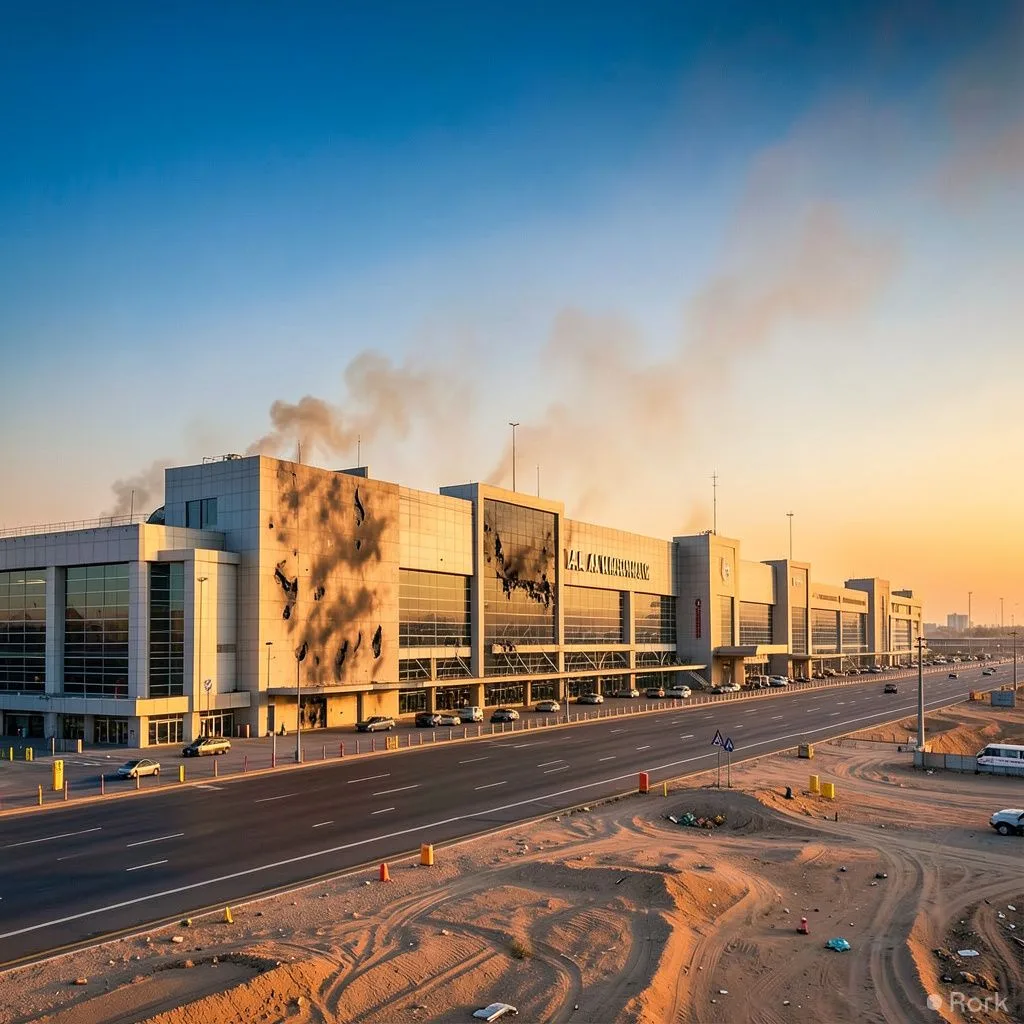
Pakistan’s foreign ministry on Sunday issued a forceful condemnation of the Houthi missile strike that hit Riyadh’s King Khalid International Airport, labeling the assault on civilian infrastructure “unacceptable.” The statement also extended condolences to the families of those injured and reaffirmed Islamabad’s steadfast support for Saudi Arabia’s security.
Background
The Houthi movement, based in Yemen, has stepped up its missile and drone campaign against Saudi targets since the escalation of the Yemen war in 2015. Over the past year the group has increasingly focused on high‑profile civilian sites, aiming to pressure Saudi Arabia and its allies by disrupting air travel, trade routes and the flow of pilgrims to the holy cities. The recent attack on Riyadh’s main airport damaged terminal facilities and caused a number of casualties, prompting a wave of diplomatic protests from nations that maintain close ties with the Gulf kingdom.
Pakistan and Saudi Arabia share a relationship that stretches back decades, anchored by religious affinity, a sizable Pakistani expatriate workforce, and extensive defence and economic cooperation. The two countries have signed multiple memoranda of understanding covering joint counter‑terrorism training, oil trade, and the deployment of Pakistani troops for the Saudi‑led coalition in Yemen. Islamabad’s reaction therefore reflects both a moral stance against attacks on civilians and a strategic effort to preserve a partnership that underpins significant portions of Pakistan’s foreign‑policy and trade agenda.
What it means
For ordinary Pakistanis, the condemnation signals that the government will continue to back Saudi security initiatives, which could translate into renewed military assistance, intelligence sharing, and possibly the renewal of Pakistani personnel stationed in Saudi bases. Such cooperation often brings economic benefits, including contracts for Pakistani defence firms and employment opportunities for skilled workers seeking jobs in the Gulf.
The strike also raises concerns for the millions of Pakistani pilgrims who travel to Saudi Arabia each year for Hajj and Umrah. Heightened security measures at Saudi airports could lead to stricter visa processing, additional screening procedures, and possible schedule disruptions—issues that the Ministry of Religious Affairs will need to monitor closely to safeguard the smooth passage of worshippers.
On the trade front, Saudi Arabia remains one of Pakistan’s top oil suppliers, and any destabilisation of its aviation hubs can ripple through global oil logistics, potentially affecting fuel prices in Pakistan’s domestic market. By publicly supporting Saudi security, Islamabad hopes to ensure a stable supply chain and avoid any punitive measures that could arise from a perceived lack of solidarity.
What happens next
The foreign ministry indicated that Islamabad will work with Riyadh and international partners to hold the perpetrators accountable, urging the United Nations and regional bodies to label attacks on civilian infrastructure as violations of international law. In the coming days, Pakistani diplomats are expected to engage with their Saudi counterparts to discuss enhanced coordination on border surveillance, maritime security, and joint counter‑terrorism drills.
Analysts suggest that the episode may also prompt Islamabad to reassess its own security posture against spill‑over threats, particularly in the context of the broader Red Sea crisis. While no immediate policy shift has been announced, the government is likely to keep a close watch on Houthi capabilities and may consider bolstering its own air‑defence assets as part of a broader regional stability strategy.