
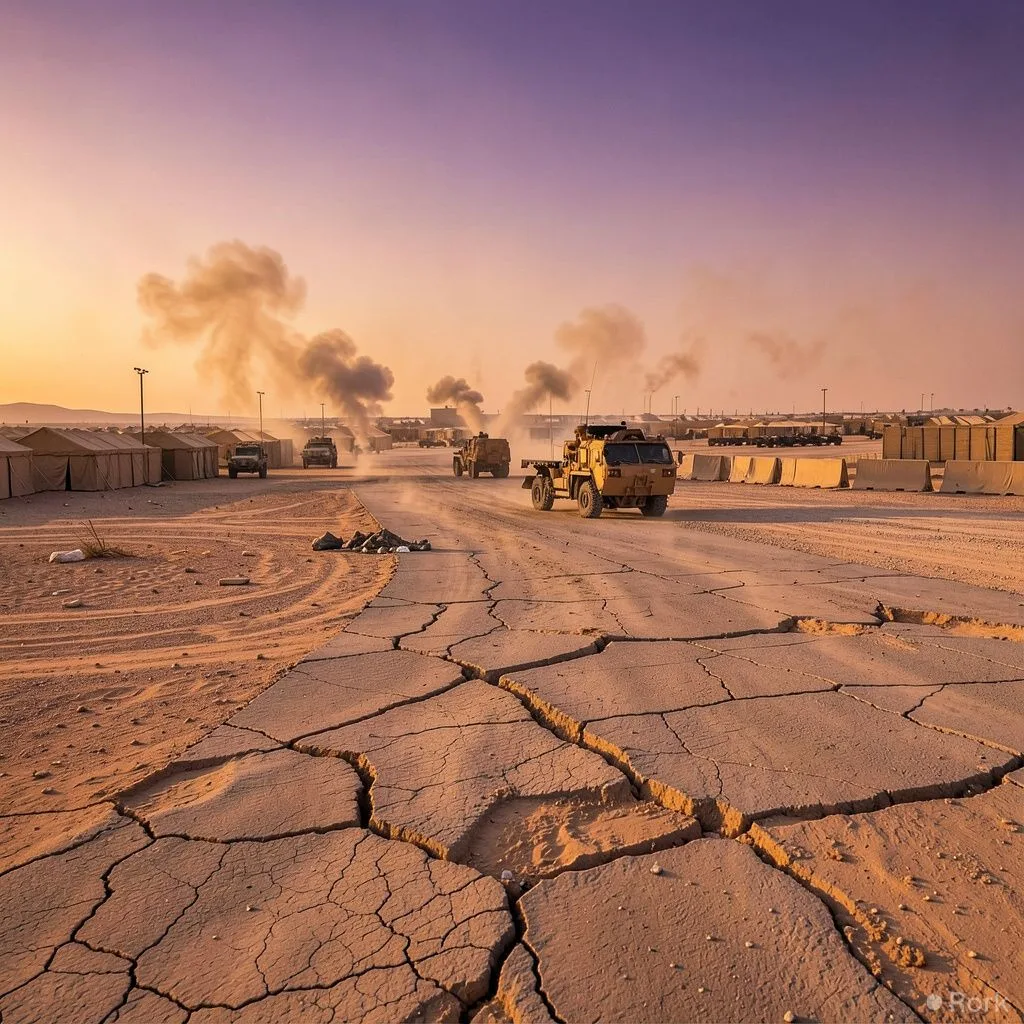
The United States has begun pulling the bulk of its personnel out of Camp Buehring, the forward‑operating base in Kuwait, after a series of Iranian missile and drone strikes inflicted visible damage on the installation, CBS News reported on 7 October 2026. The evacuation, which started on Friday and is expected to continue through the weekend, will leave only a small security detail to guard remaining equipment while the majority of troops are relocated to safer facilities in the Gulf region.
Video released by the network shows several craters gouging the runway, smoke billowing from shattered structures and a convoy of US vehicles departing the base under armed escort. The footage confirms that at least two Iranian‑launched missiles and multiple loitering drones struck the base over the past 48 hours, prompting commanders to deem the site “operationally compromised.”
Camp Buehring, which houses roughly 3,500 American service members and serves as a logistical hub for operations across the Middle East, has been a linchpin of the US‑led coalition that monitors the Strait of Hormuz. Its partial evacuation marks the most significant reduction of US forces in Kuwait since the 1990s, signaling a shift in Washington’s posture amid Tehran’s intensified campaign against coalition assets.
The withdrawal follows a broader pattern of Iranian aggression that began in early October, when the Revolutionary Guard launched a wave of missile and drone attacks on US and allied facilities in the Persian Gulf. In response, US Central Command has redistributed forces to bases in Qatar, Bahrain and Saudi Arabia, while reinforcing air‑defense networks to protect critical infrastructure and commercial shipping lanes.
For Pakistan, the development carries several implications. The country’s sizable expatriate workforce in the Gulf, estimated at over 2 million workers, could face heightened uncertainty if the security environment deteriorates further. Moreover, any disruption to oil flows through the Strait of Hormuz would likely push global oil prices higher, tightening Pakistan’s already strained balance‑of‑payments position. Islamabad, which has traditionally balanced its ties with both Washington and Tehran, is expected to monitor the situation closely and may press for diplomatic de‑escalation to safeguard its economic and strategic interests in the region.
U.S. officials have declined to disclose the exact timeline for the complete drawdown, but they emphasized that the move is a precautionary measure aimed at preserving personnel safety while maintaining the ability to respond swiftly should the conflict expand. The small contingent that remains at Camp Buehring will continue to secure vital equipment and sustain limited operational capabilities until a longer‑term solution is determined.