
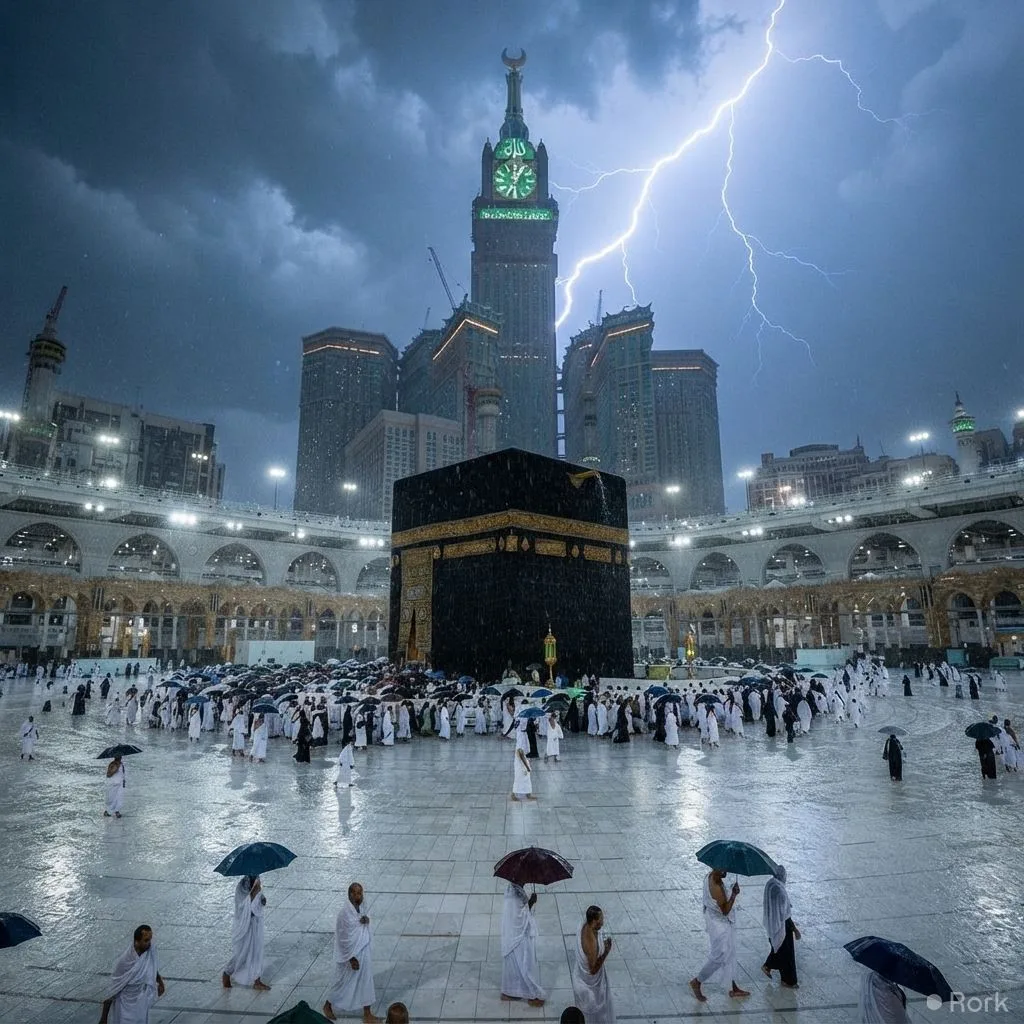
The sky over the holy cities of Makkah and Madinah turned a tumultuous shade of slate on Friday, as a sudden downpour accompanied by thunderclaps and flashes of lightning rolled across the region. While the storm rattled the iconic Abraj Al‑Bait complex, a bolt struck the towering clock‑tower, momentarily illuminating the sanctified precincts of the Grand Mosque.
Despite the deluge and the dramatic strike, thousands of pilgrims in white ihram pressed on with their circumambulation of the Ka‘aba. Inside the Masjid al‑Harām, the sound of rain drummed on the vast dome, yet the rhythm of the Tawaf remained unbroken, the believers’ focus fixed on their devotion rather than the weather’s fury.
Saudi authorities quickly activated emergency protocols, deploying additional security personnel and fire‑safety units around the clock‑tower and the mosque’s perimeters. Temporary shelters were erected to protect worshippers from the heavy rain, while medical teams stood ready for any injuries. The swift response ensured that the strike caused no casualties, allowing the rites to proceed without interruption.
The incident has resonated with the Pakistani Ummah, many of whom are on the pilgrimage this year. Travel agencies in Karachi and Lahore reported that the storm prompted a surge in last‑minute inquiries about safety measures and accommodation arrangements for pilgrims returning home. Religious scholars in Pakistan have used the episode to emphasize the spirit of patience (sabr) taught in Islam, urging the faithful to maintain steadfastness even when nature tests their resolve.
As the rain subsided and the clouds cleared, the white cloaks of the pilgrims emerged glistening, a visual testament to their perseverance. The episode stands as a reminder that the sacred rituals of Hajj and Umrah endure beyond the elements, and that the collective resolve of the Muslim community—whether in Saudi Arabia or Pakistan—remains unshaken in the face of adversity.