
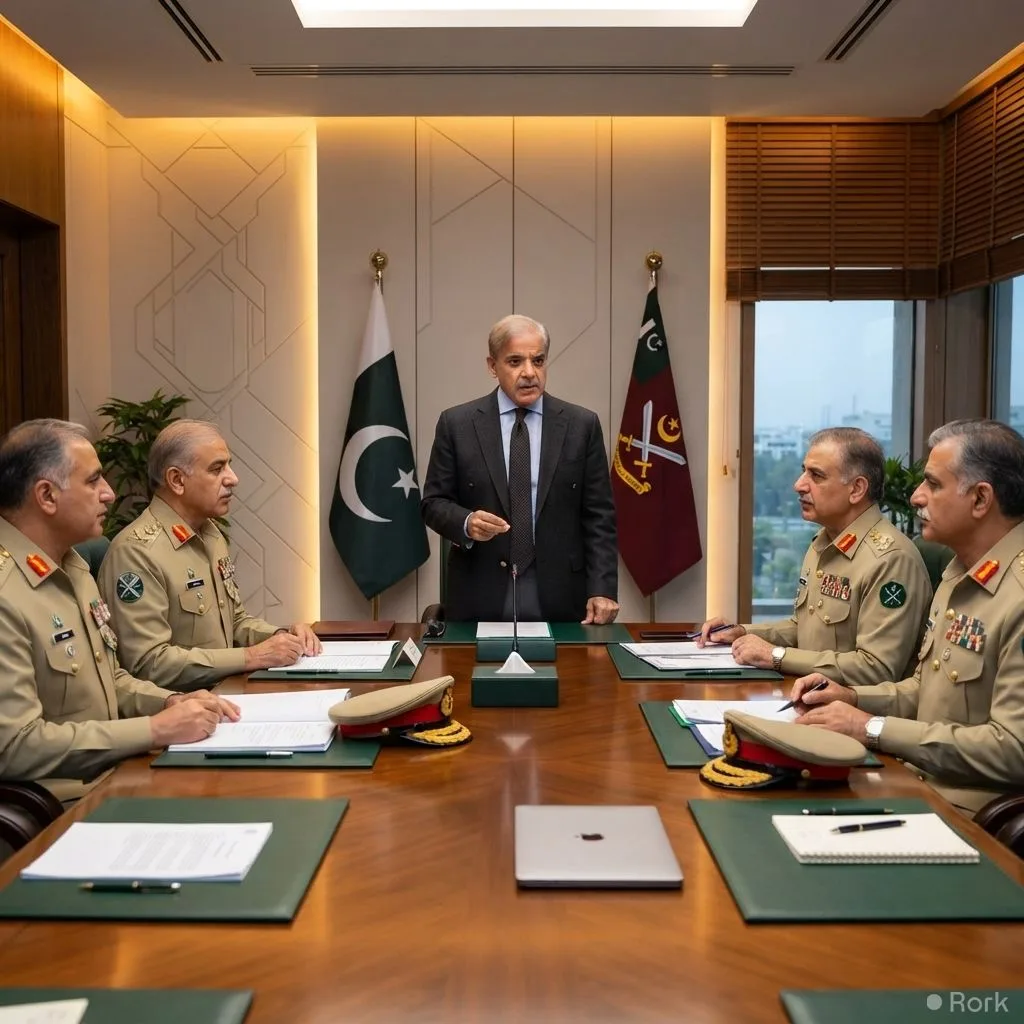
Prime Minister Shehbaz Sharif announced that Pakistan’s civilian administration and the armed forces have begun a coordinated drive to reinforce the nation’s faltering economy, while also reiterating the country’s condemnation of the violence unfolding in Lebanon and its diplomatic push to calm tensions in the Middle East.
Background
Pakistan has been wrestling with a multi‑year economic crisis marked by high inflation, a widening current‑account deficit, and a chronic shortage of foreign exchange. Successive governments have struggled to implement structural reforms, and the public sector has suffered from chronic inefficiencies, especially in the energy and transport sectors. In recent months, the civilian leadership has sought greater collaboration with the military establishment, whose logistical expertise and institutional capacity have historically been called upon during periods of national emergency.
Against this backdrop, Prime Minister Sharif convened a series of high‑level meetings with senior officers of the Pakistan Army, the Navy and the Air Force. The talks produced a joint action plan that targets three priority areas: stabilising public finances, attracting both domestic and foreign investment, and closing critical infrastructure gaps. The plan calls for reforms in the power sector to curb load‑shedding, streamlining customs procedures to boost trade, and improving the efficiency of state‑run enterprises through performance‑based management.
What it means
If the civil‑military partnership translates into concrete policy steps, consumers could see a gradual easing of price pressures as energy‑price subsidies are rationalised and power generation capacity is expanded. A more reliable electricity supply would lower production costs for manufacturers, potentially reviving the textile and automotive clusters that account for a large share of export earnings. Moreover, the joint effort is expected to present a more stable investment climate to overseas financiers, which could accelerate the release of pending projects under the China‑Pakistan Economic Corridor and other bilateral initiatives.
For the average Pakistani, the collaboration may also bring short‑term job creation. The government has hinted at fast‑track procurement for road and rail upgrades, projects that typically require sizable labour forces. In addition, a more efficient public‑sector payroll and reduced bureaucratic bottlenecks could free up fiscal space for social safety‑net programs, offering relief to vulnerable households still coping with high food prices.
What happens next
The Prime Minister indicated that the next phase will involve the formulation of detailed legislative proposals, which will be presented to Parliament within the next quarter. These proposals are likely to focus on energy market deregulation, tax reforms aimed at broadening the revenue base, and the establishment of a joint oversight committee to monitor the implementation of agreed‑upon measures. Civil‑society groups and opposition parties have called for transparency, urging that any military involvement be limited to advisory roles rather than direct management of civilian ministries.
Simultaneously, Sharif’s remarks on Lebanon and the broader Middle‑East situation signal that Pakistan will continue to play an active diplomatic role in the region, seeking to balance its historical ties with Arab states while protecting its own security interests. The foreign ministry is reportedly preparing a series of high‑level engagements with Gulf partners to ensure that any regional escalation does not spill over into Pakistan’s economic recovery efforts.