
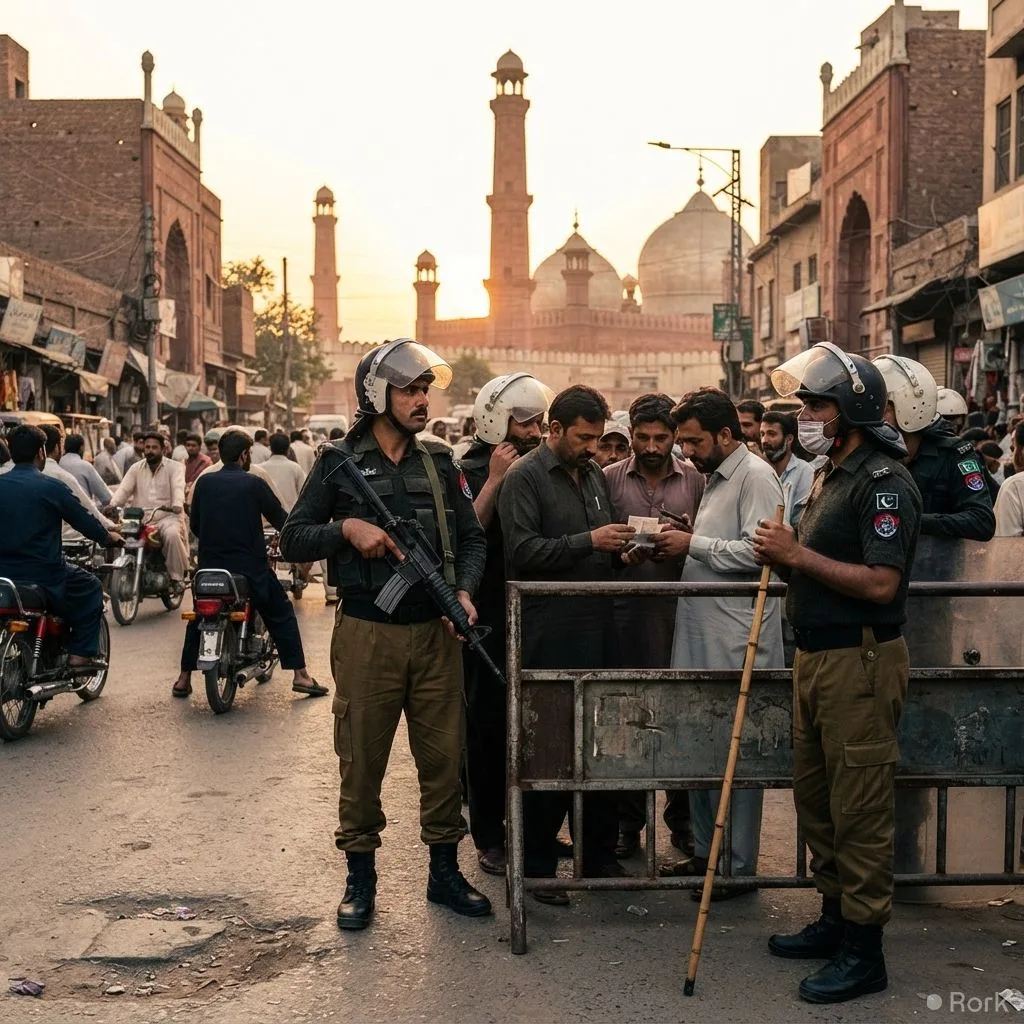
Punjab has invoked Section 144 across all its districts after intelligence agencies warned of imminent suicide bombings and vehicle‑borne improvised explosive device (VBIED) attacks.
The provincial administration issued the order late Tuesday night, prohibiting public assemblies except for weddings, funerals, religious services, court proceedings and officially sanctioned government events. Carrying, displaying or brandishing any weapon in public spaces is now expressly forbidden, and violators may face arrest under the preventive law. The directive applies to every city, town and village in Punjab, the country’s most densely populated province, affecting millions of commuters, market vendors and students who now face heightened security checks.
Law‑enforcement agencies—including the police, the Counter Terrorism Department (CTD) and district administrators—have been tasked with implementing a range of preventive measures. Checkpoints are being set up on major highways, arterial roads and at entry points to urban centers, while additional patrols will monitor crowded areas such as bus terminals, bazaars and educational institutions. Authorities have also ordered the deployment of bomb‑detection squads and the activation of emergency response teams to ensure rapid action should any suspicious activity be reported.
The move comes amid a spate of terror alerts that have rattled Pakistan’s security apparatus over the past year, with several high‑profile attacks targeting public gatherings in Karachi, Quetta and the Islamabad‑Rawalpindi corridor. While Punjab has largely escaped large‑scale bombings, the province’s strategic importance—hosting the national capital’s hinterland, key industrial zones and a bulk of the country’s transport network—makes it a potential target for militants seeking maximum impact. By imposing Section 144, the government aims to disrupt any plans for coordinated assaults and to buy time for intelligence services to trace the origins of the threats.
Residents are urged to remain vigilant, report any unattended packages or suspicious behaviour, and cooperate fully with security personnel at checkpoints. The provincial government has promised regular briefings to keep the public informed and to lift the restrictions once the threat level is reassessed. In the meantime, everyday activities such as commuting to work, attending school or shopping for essentials will continue under the added layer of security, reflecting the authorities’ priority to safeguard civilian life while preserving public order.