
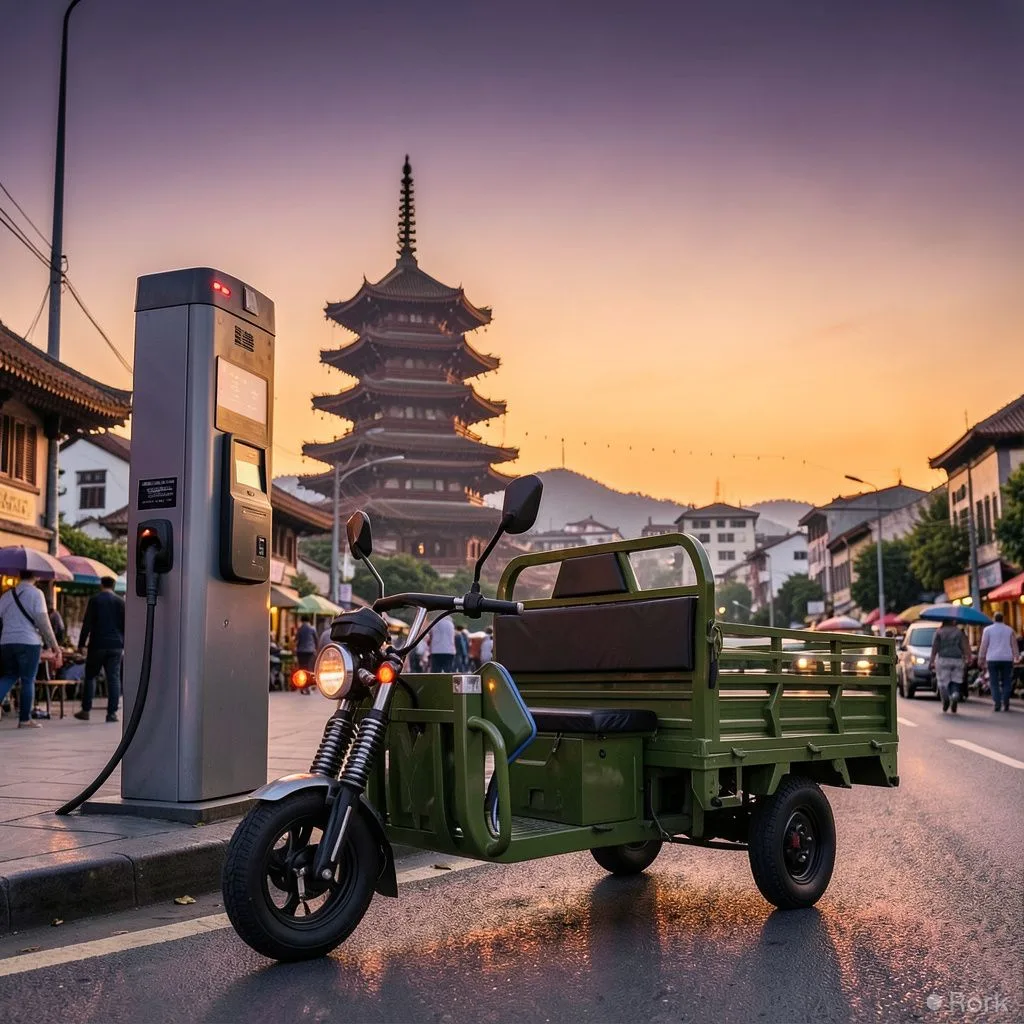
Electric three‑wheelers have now become the dominant vehicle type in Yanshi, a district of Luoyang that accounts for more than one‑third of China’s total three‑wheeler capacity, according to data released in October 2026. For the first time, battery‑powered models outnumber their gasoline‑powered counterparts, signalling a decisive shift toward zero‑emission mobility for the iconic “chingchi” fleet.
The three‑wheeler, a staple of Chinese urban and rural transport, has long been prized for its low purchase price and ability to navigate narrow streets while carrying passengers or small cargo. Nationwide, the sector numbers in the tens of millions, contributing significantly to both traffic flow and local economies, but also to air‑pollution and fuel consumption.
Local authorities in Yanshi have accelerated the transition by offering generous subsidies for electric vehicle (EV) purchases, waiving registration fees and providing tax incentives to operators who replace diesel or petrol units. In addition, the district has introduced preferential loan rates through state‑backed banks, making the higher upfront cost of an electric model more affordable for small‑business owners.
To support the growing fleet, Yanshi has invested heavily in public charging infrastructure, installing over 1,200 fast‑charging stations within the district’s municipal boundaries during the past year. These stations are strategically placed near markets, transport hubs and residential areas, reducing downtime for drivers and eliminating the need for home‑based charging setups that were previously a barrier to adoption.
Drivers have responded positively, citing a sharp decline in operating expenses. With electricity prices in the region roughly one‑quarter of the per‑kilometre cost of gasoline, a typical rickshaw operator can save up to 40 percent on fuel bills while also benefitting from lower maintenance requirements, as electric drivetrains have fewer moving parts than internal‑combustion engines.
Beyond the wallet, the electric rollout has noticeably quieted the streets of Yanshi. The characteristic roar of gasoline engines has been replaced by a near‑silent hum, contributing to a reduction in noise pollution and improving the quality of life for residents living along busy thoroughfares.
The Yanshi experience offers a practical model for Pakistan, where three‑wheelers—locally known as “rickshaws”—form a critical part of urban transport and are responsible for a sizable share of the nation’s fuel imports and air‑quality challenges. Policymakers in provinces such as Punjab and Sindh are already debating incentive schemes and charging‑network rollouts that mirror Yanshi’s approach, hoping to replicate the cost savings and environmental gains observed in China. If similar measures are adopted, Pakistan’s rickshaw operators could see a comparable drop in operating costs while cities benefit from cleaner, quieter streets.