
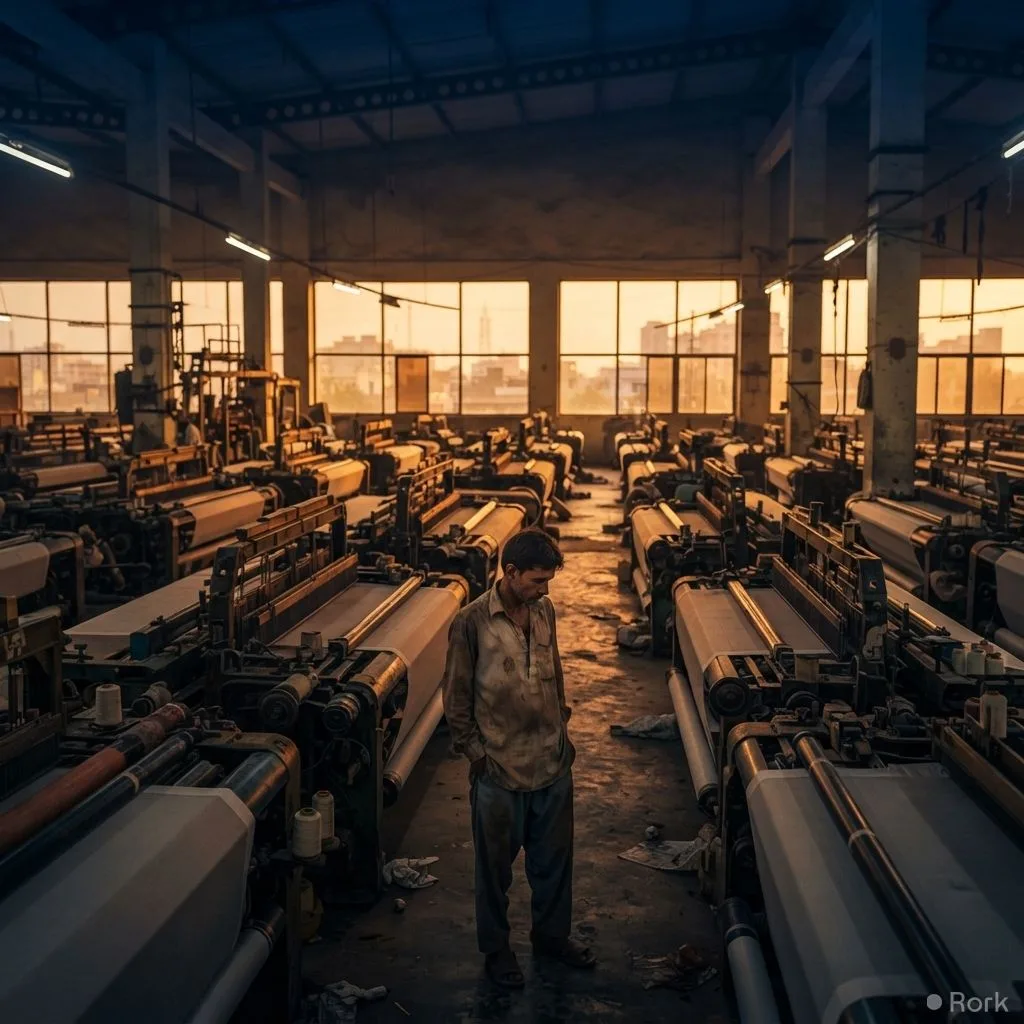
Faisalabad’s bustling textile corridors, once the proud backbone of Pakistan’s export engine, now echo with the hum of idle machines. After years of steady growth, the city’s power‑loom sector is confronting an unprecedented contraction.
According to industry sources, roughly four out of every ten power‑loom units operating in Faisalabad and its neighboring towns have been forced to cease production. The shutdown has displaced more than one‑hundred‑thousand workers, many of whom rely on the looms as their sole source of income.
The collapse is being driven by a confluence of pressures. Inexpensive finished fabrics flooding the market from Chinese manufacturers have undercut local pricing, while soaring electricity tariffs have inflated operating costs beyond what many small‑scale owners can absorb. On top of that, recent hikes in commercial taxes have further eroded profit margins, leaving many entrepreneurs with no viable alternative but to shut down their lines.
The fallout extends far beyond the looms themselves. Families that depend on daily wages are now confronting food‑security concerns, while ancillary businesses—spinning mills, dye houses, transport firms, and local traders—are feeling the ripple effect of reduced orders. The region’s unemployment rate, already higher than the national average, is poised to climb sharply, threatening the socio‑economic stability of a city that accounts for a significant share of Pakistan’s textile exports.
Industry bodies, labour unions and local politicians have called on the federal and provincial governments to intervene urgently. Proposals on the table include targeted subsidies for energy‑intensive manufacturers, temporary tax relief for affected enterprises, and a review of the electricity pricing mechanism to align it with international benchmarks. Stakeholders argue that without swift policy action, the once‑vibrant loom clusters could become permanent ghosts, eroding a sector that contributes billions of rupees to the national economy each year.