
Key points:
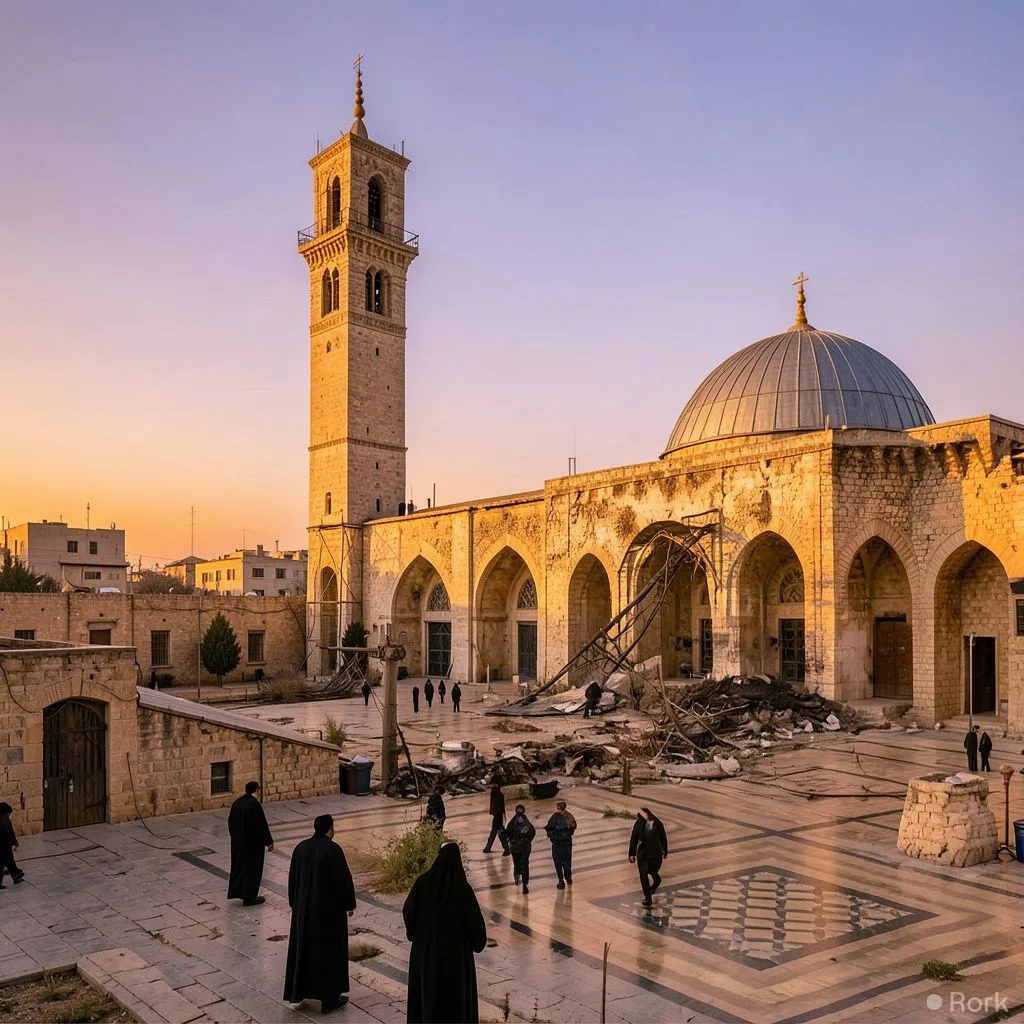
- The 12th‑century Great Umayyad Mosque in Ale Aleppo was officially reopened on Thursday after extensive restoration work.
- The collapsed minaret, which fell in 2013, has been rebuilt using many of the original stones recovered from the site.
- The ceremony was attended by Syrian officials, religious leaders and local residents, marking a symbolic step in the country’s heritage revival.
- The reopening offers new opportunities for cultural tourism and collaborative conservation projects, including interest from Pakistani heritage organisations.
The historic complex, a UNESCO World Heritage landmark, lay silent for more than a decade following fierce battles that devastated large parts of Aleppo. Over the past several years, a team of Syrian architects, international experts and local craftsmen painstakingly repaired damaged arches, mosaics and the iconic courtyard, while preserving the site’s original character. The reconstructed minaret, now soaring again over the prayer hall, incorporates a substantial amount of the stonework salvaged from the rubble, demonstrating a commitment to authenticity rather than a purely modern replica.
A modest but solemn gathering marked the reopening. President Bashar al‑Assad’s representative, the director of the Syrian Directorate-General of Antiquities and Museums, and senior imams addressed the crowd, emphasizing the mosque’s role as both a place of worship and a testament to the resilience of Syrian culture. Residents, many of whom had witnessed the building’s destruction, expressed relief and pride, describing the moment as a “sign of hope” after years of hardship.
For Pakistan, the revival of Aleppo’s Great Umayyad Mosque carries relevance beyond regional news. Pakistani scholars of Islamic art and architecture have long studied the Umayyad style, and several Pakistani NGOs involved in heritage preservation are keen to exchange expertise with Syrian counterparts. The restored site is expected to attract tourists from South Asia, potentially boosting travel links and fostering deeper cultural ties between the two nations. Moreover, the project underscores the importance of international cooperation in safeguarding shared Islamic heritage, a cause that resonates with many in Pakistan’s academic and civil‑society circles.