
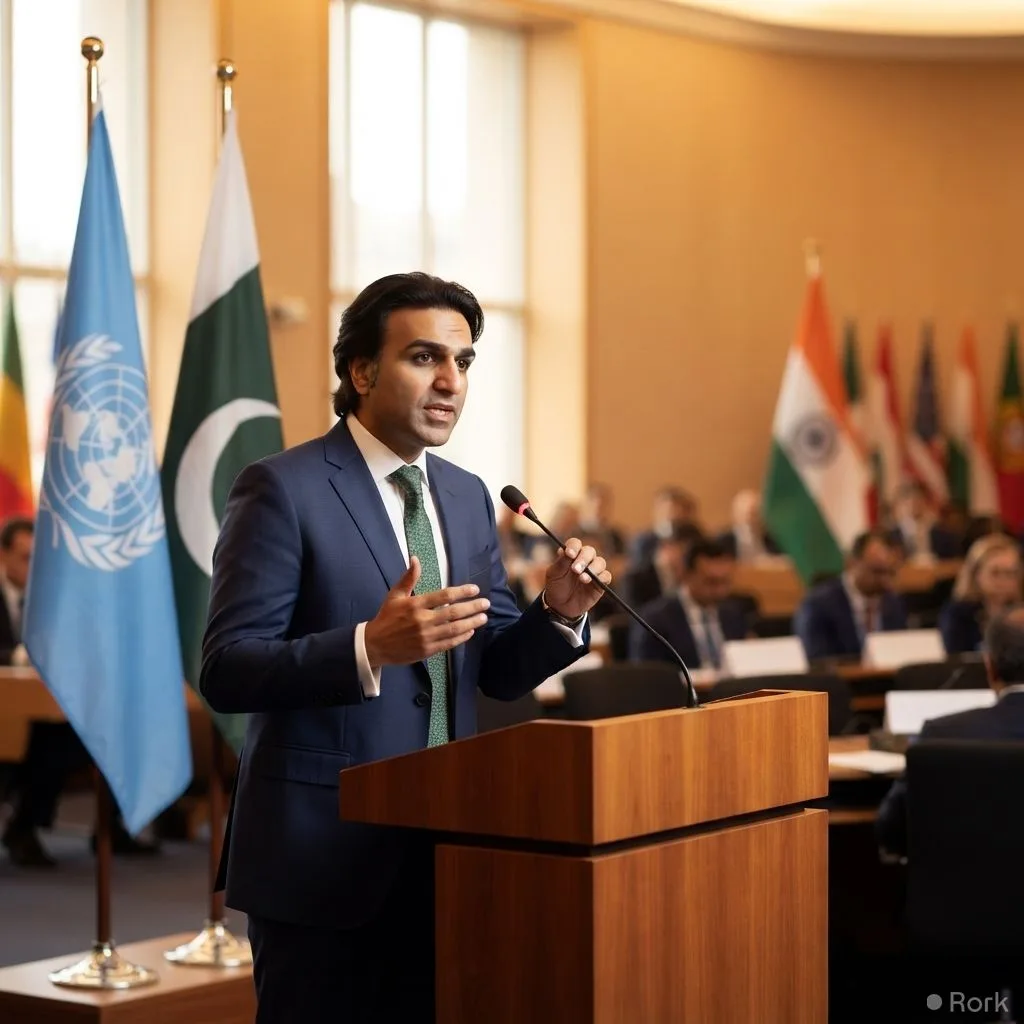
**“Water must never be used as a tool of political pressure,” warned Pakistan’s first secretary to the UN Human Rights Council.
Pakistan’s envoy raised the alarm at the UN Human Rights Council, accusing New Delhi of “weaponising” the shared rivers of the Indus basin. The statement, delivered on 6 October, warned that any attempt to leverage water supplies for political ends would breach the mutual responsibilities enshrined in the 1960 Indus Waters Treaty and undermine regional peace.
The Indus system, which feeds the agricultural heartland of both nations, is already strained by rising temperatures, erratic monsoons and dwindling glacier melt. Pakistan, home to over 20 million farmers who rely on irrigation from the Indus, the Jhelum and the Chenab, fears that unilateral water maneuvers could exacerbate scarcity, depress crop yields and trigger socio‑economic unrest in the Punjab and Sindh provinces.
While Islamabad called for adherence to existing agreements and a cooperative management framework, New Delhi emphasized its support for “trans‑boundary water cooperation” in a separate diplomatic note, seeking to anchor future dialogue within the language of a forthcoming UN resolution. The Indian side, however, has not detailed specific measures, leaving Pakistani officials sceptical about the sincerity of the overture.
Both capitals face mounting domestic pressure to secure water for growing populations, and the UN forum has become a new battleground for the dispute. Analysts warn that if political rhetoric continues to frame water as a bargaining chip, the fragile balance maintained by the Indus Waters Treaty could be jeopardised, threatening not only bilateral ties but also the broader stability of South Asia’s water‑dependent economies.