
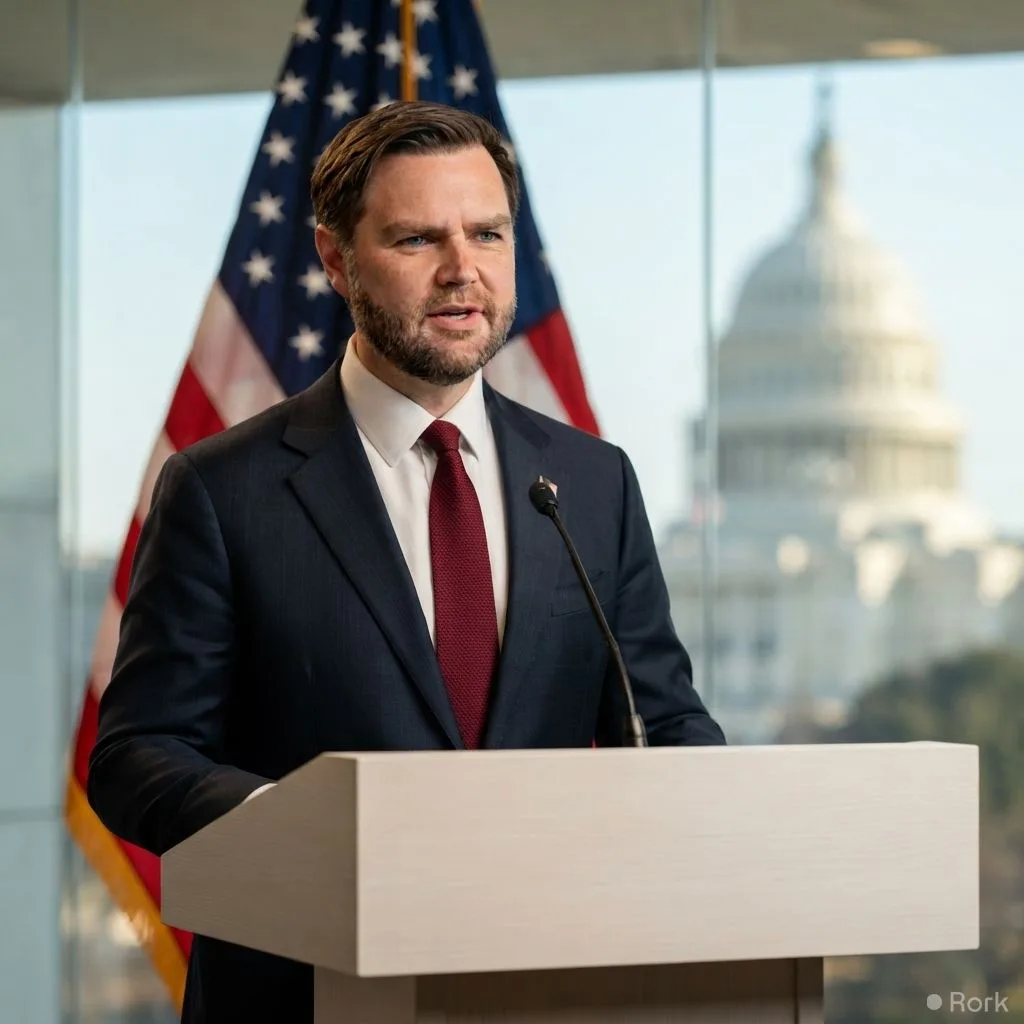
U.S. Vice President JD Vance told reporters on October 7, 2026 that Washington will maintain diplomatic and economic pressure on Tehran until Iran delivers concrete, verifiable actions to stop rebuilding its nuclear programme, stressing that promises alone will not be enough for any further concessions.
Vance’s remarks came during a press briefing in Washington, where he emphasized that the United States expects clear, measurable steps—such as halting uranium enrichment and allowing unfettered inspections—before considering any easing of sanctions or revival of a broader nuclear deal. He warned that the U.S. will continue to “push hard” on Tehran until it demonstrates a genuine shift in policy.
The statement reflects a hardening U.S. stance after recent intelligence reports indicated that Iran has resumed activities previously halted under the 2015 Joint Comprehensive Plan of Action (JCPOA). While the Biden administration has signaled openness to renegotiating the accord, Vance made it clear that any new framework will be contingent on Tehran’s willingness to provide transparent, on‑the‑ground evidence of compliance.
For Pakistan, the development carries strategic implications. Islamabad has long navigated a delicate balance between maintaining economic ties with Iran and aligning with U.S. non‑proliferation objectives. A renewed U.S. push could affect regional energy projects, cross‑border trade, and security cooperation, prompting Pakistani officials to monitor the situation closely and prepare contingency plans for potential shifts in sanctions regimes.
Analysts note that the U.S. approach mirrors tactics used in previous non‑proliferation negotiations, where incremental, verifiable actions were demanded before any diplomatic breakthroughs. They argue that Tehran’s response will hinge on both internal political calculations and the pressure exerted by its regional allies, particularly Russia and China, who have historically opposed stringent U.S. measures.
The next steps are likely to involve intensified inspections by the International Atomic Energy Agency (IAEA) and possible multilateral talks aimed at restoring a more robust agreement. Vance underscored that Washington remains “ready to engage” but only if Iran can prove, beyond doubt, that its nuclear programme is no longer being revived.