
The early morning mist lifts over the vast wheat fields of Punjab, where countless farmers still rely on aging machinery to till the soil. As the sun climbs higher, the hum of diesel engines mixes with the chatter of market stalls, underscoring a pressing need for fresh, affordable equipment that can keep pace with a growing population.
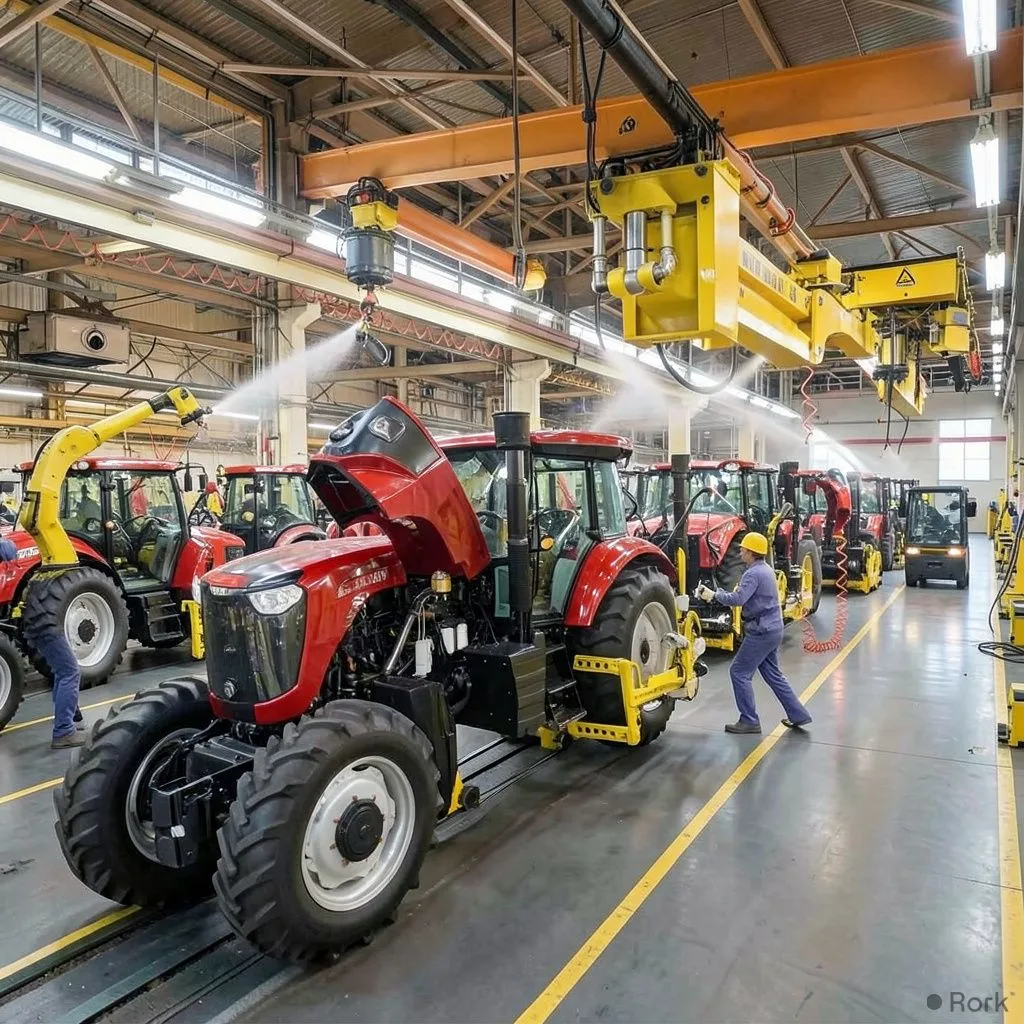
In the heart of central China, the Luoyang tractor plant has answered that call with a staggering rhythm: a brand‑new tractor rolls off the line every three minutes. Robots handle the precise painting work, while overhead hoists and driverless carts ferry components along the assembly track, allowing a single shift to complete 200 machines in a day and pushing the plant’s annual capacity beyond 45,000 units.
The facility’s high‑speed operation hinges on a tightly integrated automation ecosystem. Robotic arms spray paint in controlled booths, eliminating human exposure to hazardous chemicals, while autonomous guided vehicles transport chassis, engines and cab interiors to successive workstations. Real‑time data analytics monitor every step, instantly flagging any deviation from quality standards and ensuring each tractor meets the stringent specifications demanded by both domestic and export markets.
China’s agricultural equipment sector has surged in recent years, fueled by government incentives that encourage mechanisation on a scale previously unseen in the region. The Luoyang line exemplifies how manufacturers are leveraging Industry 4.0 technologies to slash production time and costs, positioning Chinese tractors as competitive alternatives to legacy brands from the West and Japan.
For Pakistan, the ripple effects are palpable. The influx of mass‑produced Chinese tractors could translate into lower import prices, offering smallholder farmers more accessible options for modernising their fleets. At the same time, domestic manufacturers may feel pressure to adopt similar automation solutions or risk being outpaced in price and volume. Policy makers are therefore watching the Luoyang model closely, contemplating incentives that could help local firms upgrade their own production lines and retain a share of the burgeoning Asian market for agricultural machinery.