
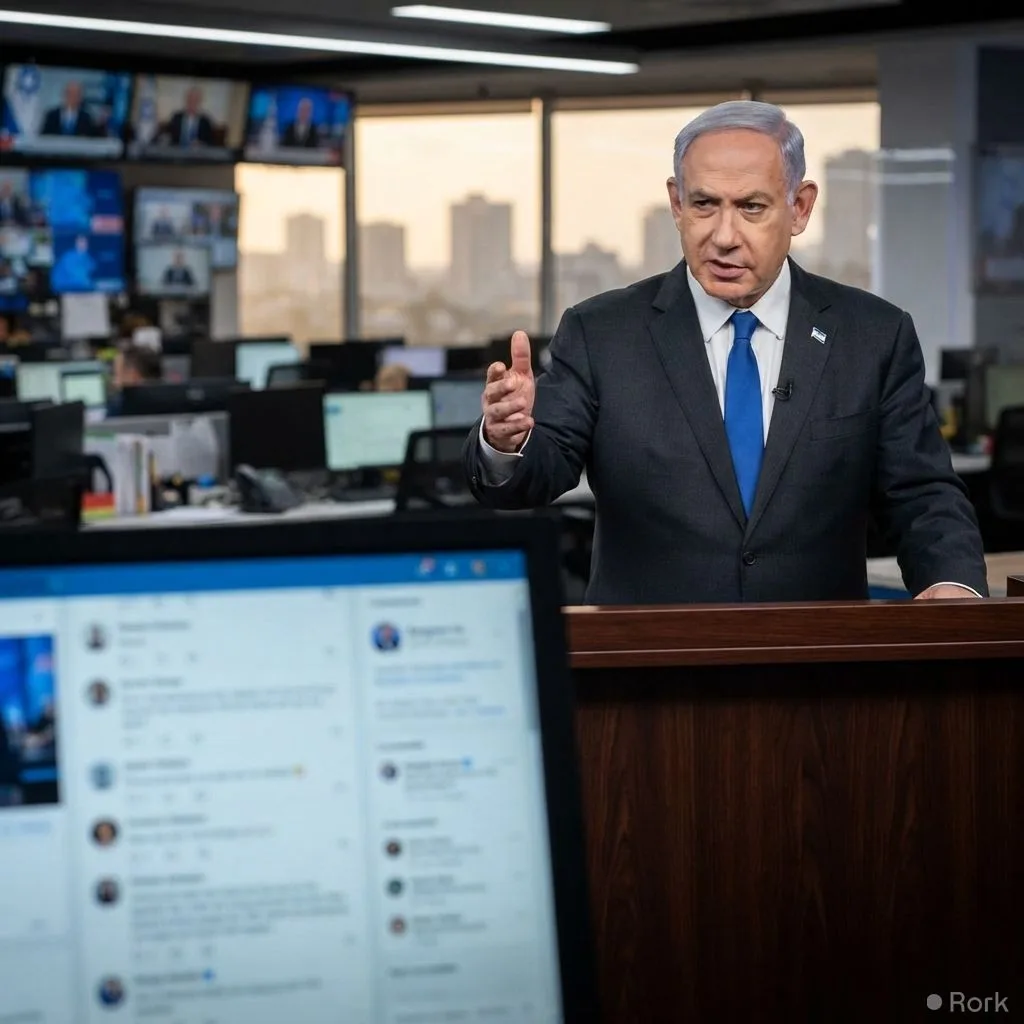
The skies over Dubai have become an unexpected arena for political sparring, as a routine Flydubai flight turned into a talking point for Israel’s premier. After a brief disturbance was reported from the aircraft’s cockpit, Prime Minister Benjamin Netanyahu took to X to claim the episode was a staged “fabrication,” prompting a flood of skeptical responses from users worldwide.
Netanyahu’s post, which dismissed the incident as a deliberate hoax, was swiftly met with doubt on the platform. Commentators highlighted gaps between the prime minister’s description and the limited footage that had circulated, demanding concrete proof to back the assertion. Many users mocked the phrasing “who buys this stuff?” and called for an independent inquiry, arguing that the lack of transparent evidence undermined the credibility of the claim.
The episode has reignited broader concerns about the reliability of political narratives shared on social media. In an era where leaders increasingly use X to bypass traditional media, the rapid backlash underscores the platform’s role as a real‑time fact‑checking arena. Analysts note that when high‑profile figures offer unverified explanations, the public’s appetite for verification grows, often outpacing official responses.
For Pakistan, the incident carries a subtle but relevant implication. With a sizable South Asian diaspora travelling frequently across the Gulf, any perceived safety or security lapses in regional airlines attract attention from families back home. Moreover, the episode adds to the ongoing discourse in Islamabad about the influence of foreign political statements on domestic public opinion, especially when they surface on globally accessible platforms.
As the debate continues, observers stress that transparent investigations remain essential to maintain trust—whether the incident was a genuine technical glitch, a miscommunication, or indeed a contrived event. Until verifiable details emerge, the discussion on X serves as a reminder that digital platforms can amplify both claims and counter‑claims, shaping public perception across borders.