
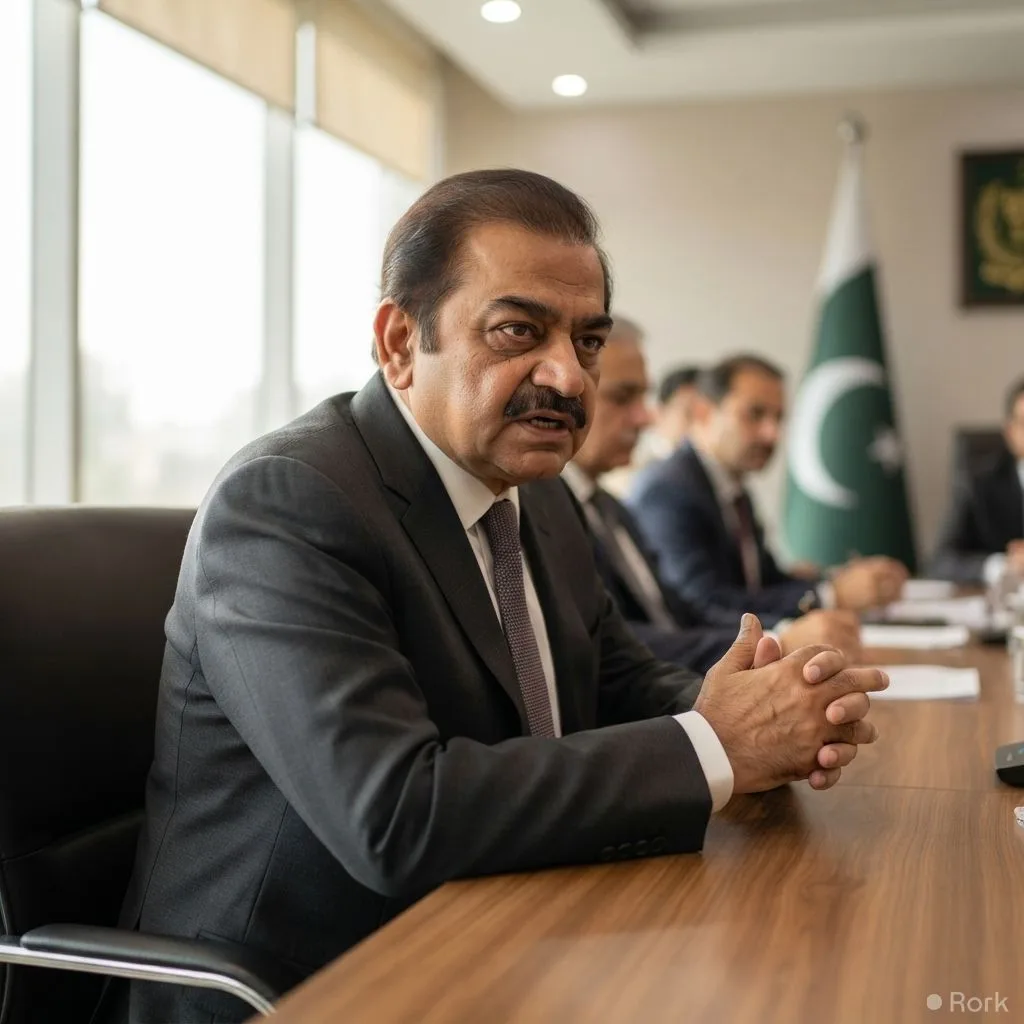
The political landscape in Khyber Pakhtunkhwa has been simmering for weeks, as the provincial coalition pushes forward a reform agenda that the federal centre views as increasingly confrontational. Amidst a backdrop of stalled development projects and heated debates over law‑and‑order policies, senior members of the ruling party have been meeting behind closed doors in an attempt to defuse the growing rift.
Prime Minister’s adviser Rana Sanaullah disclosed that informal, off‑the‑record discussions are currently underway with senior figures of the Pakistan Tehreek‑e‑Insaf. While he stopped short of revealing specific terms, the adviser warned that the federal government could resort to invoking governor’s rule in Khyber Pakhtunkhwa if the provincial administration continues to refuse compromise.
The prospect of governor’s rule—a constitutional provision that allows the centre to assume direct control of a province—has heightened anxieties among local politicians and business leaders. Should it be imposed, the provincial assembly would be dissolved, and a federally appointed governor would oversee all executive functions, effectively sidelining the elected provincial cabinet. Analysts note that such a move would not only interrupt ongoing projects but could also reshape the power balance between the centre and the provinces, a long‑standing flashpoint in Pakistan’s federal system.
Sources close to the negotiations say that PTI representatives are pressing for guarantees on their core policy priorities, including education reforms and the continuation of the “clean‑air” campaign in Peshawar. In return, the federal side is reportedly seeking concessions on security coordination and a more unified stance on the national budget. Both parties appear aware that a protracted standoff could trigger public protests, especially in the province’s urban centres where PTI retains a strong grassroots network.
Observers stress that behind‑the‑scenes talks are a customary feature of Pakistan’s political choreography, often serving as a pressure valve before constitutional tools are employed. The coming days will likely determine whether a negotiated settlement can be reached or whether Khyber Pakhtunkhwa will face an unprecedented shift in its governance structure.