
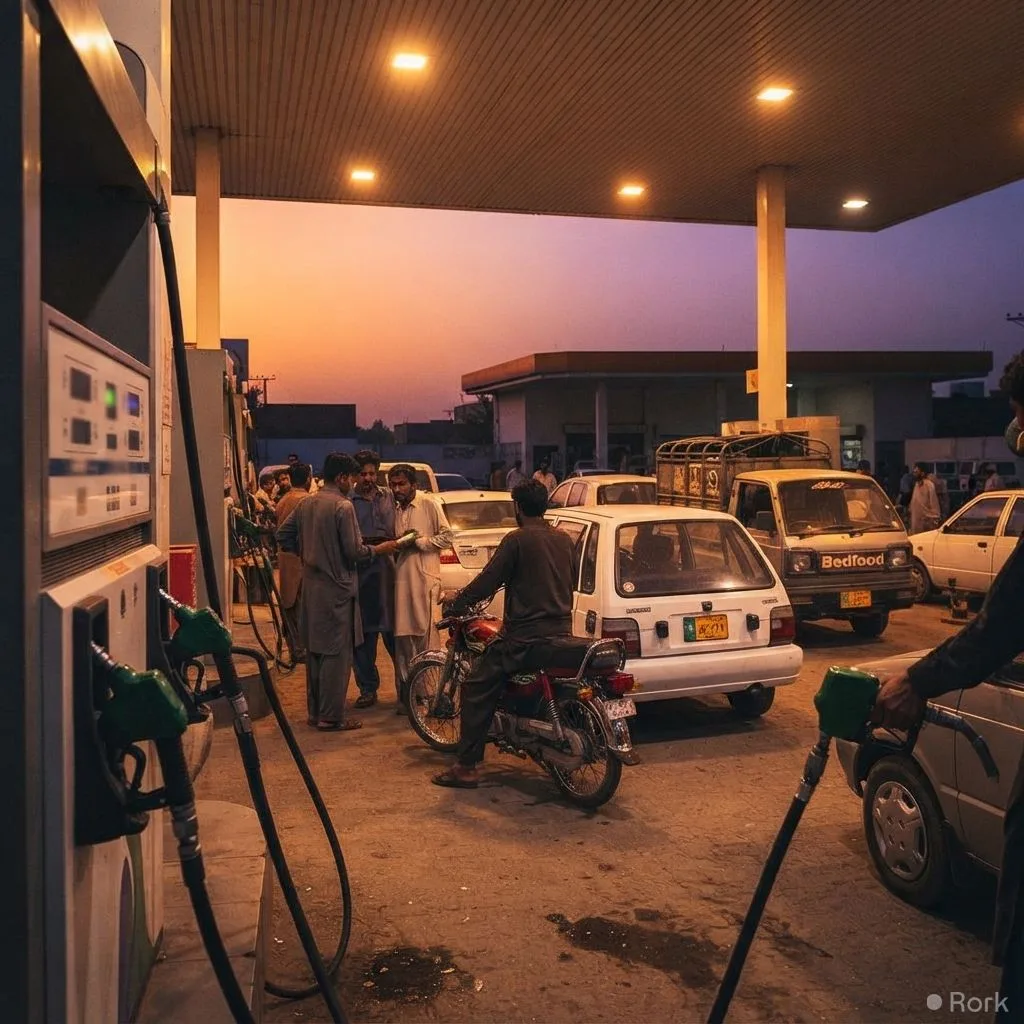
The federal government has announced a fresh increase in petroleum tariffs, adding Rs 2.10 per litre to the price of petrol and Rs 0.30 per litre to high‑speed diesel. The new rates will be in force from 3 October through 5 October.
The adjustment was issued by the Ministry of Energy and was presented as a response to the recent volatility in international crude‑oil markets. A modest rise in the global Brent benchmark over the past week translated into a higher import bill for Pakistan, prompting the authorities to revise the domestic fuel schedule for a brief three‑day period.
For commuters, the hike means that a typical fill‑up of 40 litres will now cost an additional Rs 84 for petrol and Rs 12 for diesel. While the increment may appear small in absolute terms, it adds to the cumulative pressure on household budgets that are already strained by rising food and utility costs. Public‑transport operators, especially those reliant on diesel‑powered buses and trucks, will see a modest uptick in operating expenses, which could be reflected in fare adjustments or higher freight rates.
The move follows a series of incremental fuel‑price changes over the past year, each aimed at narrowing the gap between subsidised domestic rates and the actual cost of imported oil. Analysts note that such step‑wise revisions are common in Pakistan’s pricing mechanism, allowing the government to smooth out sharp fluctuations while attempting to limit the shock to consumers.
Economists warn that even short‑term fuel hikes can feed into broader inflationary trends, given the pivotal role of transport costs in the supply chain of food and other essentials. With the country’s inflation rate still hovering above the central bank’s target, the latest increase is likely to be cited by consumer‑rights groups as evidence of the need for more comprehensive relief measures, such as targeted subsidies or cash assistance.
Political observers suggest that the timing—just before the upcoming parliamentary session—could intensify debates over fiscal policy and the sustainability of the current subsidy framework. The government, however, maintains that the adjustment is a technical response to market realities and assures the public that the rates will revert to the previous level after the three‑day window, unless further shifts in global oil prices dictate otherwise.