
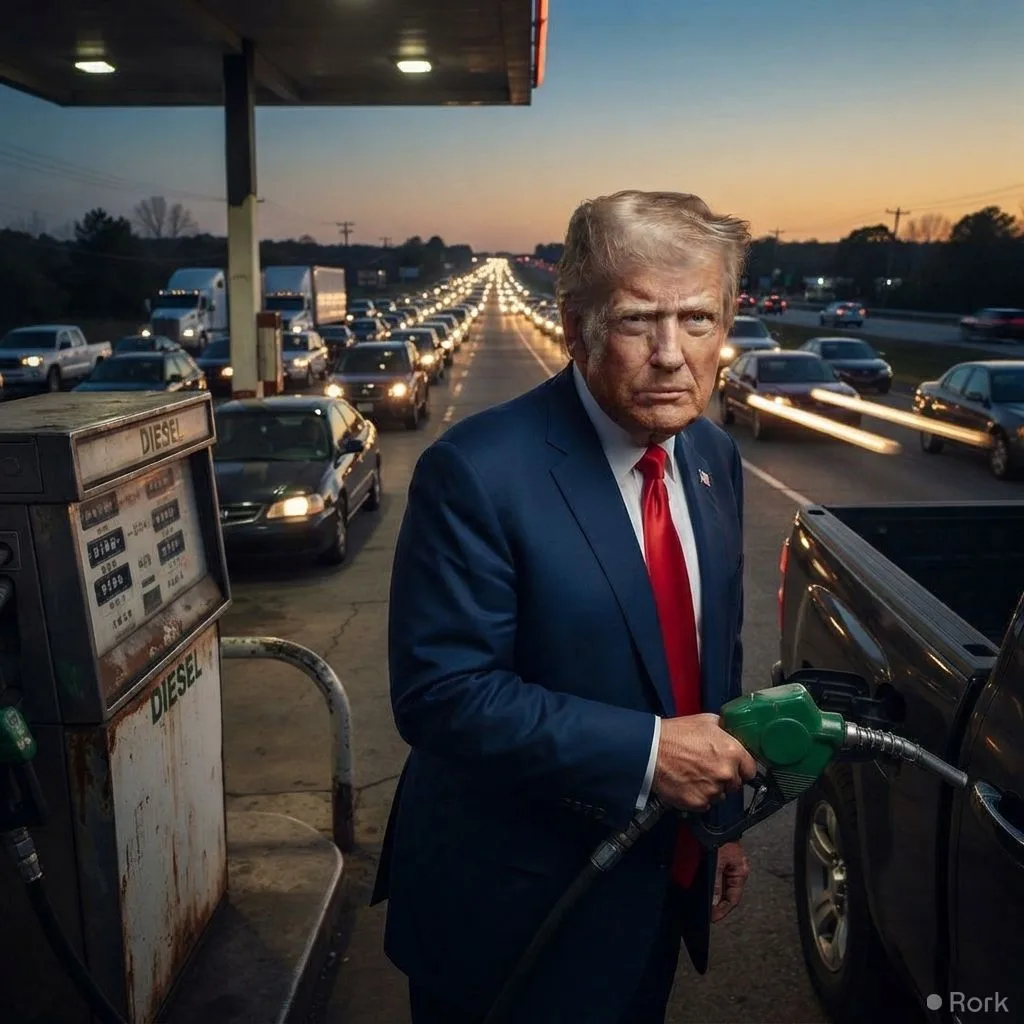
The roar of traffic on a typical American commuter route has been drowned out lately by a different kind of turbulence: headlines about a sudden spike in diesel prices that have surged to a historic $6.53 per gallon. The surge follows the escalation of hostilities between the United States and Iran, a conflict that has sent shockwaves through global energy markets and now threatens to reshape the economic narrative that former President Donald Trump has been trying to promote.
In a candid moment captured at a press briefing, Trump conceded that his administration has been unable to persuade voters that its economic record remains a success story. He pointed to the dramatic rise in fuel costs as a tangible example of how external shocks can quickly erode any narrative of prosperity. The comment comes as the American Consumer Confidence Index slipped to its lowest point in twelve and a half years, reflecting a growing unease among households already stretched by inflation and stagnant wages.
The war with Iran has throttled the flow of crude oil from the Persian Gulf, a region that supplies roughly a third of the world’s oil. With supply constraints tightening, U.S. refineries have faced higher feedstock costs, prompting retailers to pass the burden onto consumers. Diesel, the lifeblood of trucking and logistics, has been hit hardest, and the $6.53 per gallon price tag represents a near‑record level not seen since the early 2020s. Analysts warn that if the conflict persists, fuel prices could remain elevated, adding further pressure to an already fragile cost‑of‑living situation for American families and small businesses that rely on road transport.
For Pakistan, the ripple effects are equally concerning. The country imports a significant share of its petroleum needs, and any sustained increase in global oil prices translates directly into higher domestic fuel costs, feeding into inflation that already strains the budgets of ordinary Pakistanis. Moreover, higher energy prices can dampen demand for Pakistani exports that rely on affordable shipping rates, while remittances from overseas workers—many of whom are based in the United States—could be impacted if the American economy slows further. Policymakers in Islamabad are therefore watching the U.S.-Iran standoff closely, aware that a protracted conflict could complicate efforts to stabilise the nation’s own economic recovery.
The episode underscores how quickly geopolitical tensions can move from distant battlefields to the checkout lanes of everyday life. As fuel stations across the United States display ever‑higher price boards, the broader lesson for voters—and for economies worldwide—may be that the durability of any economic “record” depends not only on domestic policy but also on the ability to navigate an increasingly volatile international landscape.