
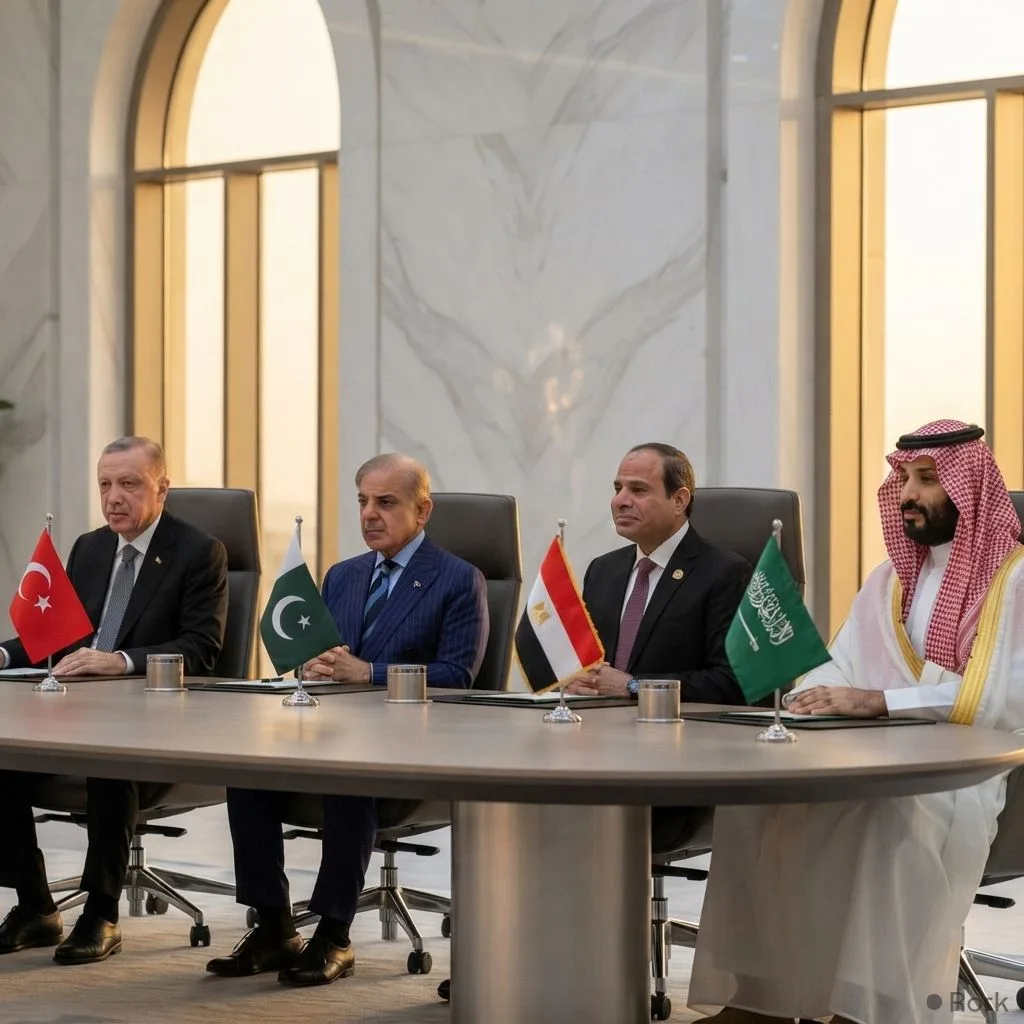
Foreign ministers from Pakistan, Türkiye, Egypt and Saudi Arabia issued a joint declaration on 22 September 2026, reaffirming that Riyadh has the right to defend its territory and security under international law. The statement was released after the four ministers met on the sidelines of the 81st United Nations General Assembly, where they addressed the surge in attacks launched by Yemen’s Houthi movement against Saudi targets.
The ministers stressed that any defensive measures taken by Saudi Arabia must respect the principles of state sovereignty and proportionality, warning that indiscriminate retaliation would be contrary to the norms of lawful self‑defence. They called for an immediate diplomatic pathway to resolve the conflict, while acknowledging the legitimacy of Riyadh’s security actions aimed at protecting its citizens, critical infrastructure and maritime routes in the Red Sea corridor.
The joint communiqué reflects a tightening of diplomatic alignment among the four nations, each of which shares strategic interests in the stability of the Gulf and the Red Sea. Türkiye’s foreign ministry highlighted the importance of safeguarding international shipping lanes that carry a substantial share of global oil and gas trade, while Egypt emphasized the need to prevent spill‑over effects that could destabilise the Suez Canal region. Pakistan, which relies heavily on Gulf oil imports and maintains a sizable expatriate workforce in Saudi Arabia, underscored that a secure maritime environment is essential for its energy security and economic ties with the Kingdom.
Regional observers note that the statement signals a collective pushback against the Houthi campaign, which has intensified since early 2026 with missile and drone strikes targeting Saudi ports, oil facilities and airbases. By invoking international law, the quartet aims to legitise any future Saudi military responses and deter external actors from providing further support to the Houthis. The emphasis on proportionality also seeks to pre‑empt criticism over civilian casualties, a concern that has shaped recent international discourse on the conflict.
In Islamabad, the declaration is expected to reinforce Pakistan’s broader foreign‑policy objective of maintaining strong bilateral relations with Saudi Arabia, a key source of remittances and investment. Analysts suggest that the coordinated stance may translate into closer security cooperation, including intelligence sharing and joint naval patrols, to protect Pakistani‑flagged vessels transiting the Red Sea. Likewise, the alignment could open avenues for Pakistan to play a mediating role in broader Gulf diplomatic initiatives, leveraging its ties with both Riyadh and Ankara.
Overall, the joint statement underscores a shared resolve among Pakistan, Türkiye, Egypt and Saudi Arabia to confront what they describe as external aggression, while urging a return to diplomatic negotiations. The unified front aims to uphold the rule‑based international order, safeguard vital trade arteries, and maintain regional stability amid an increasingly volatile security environment.