
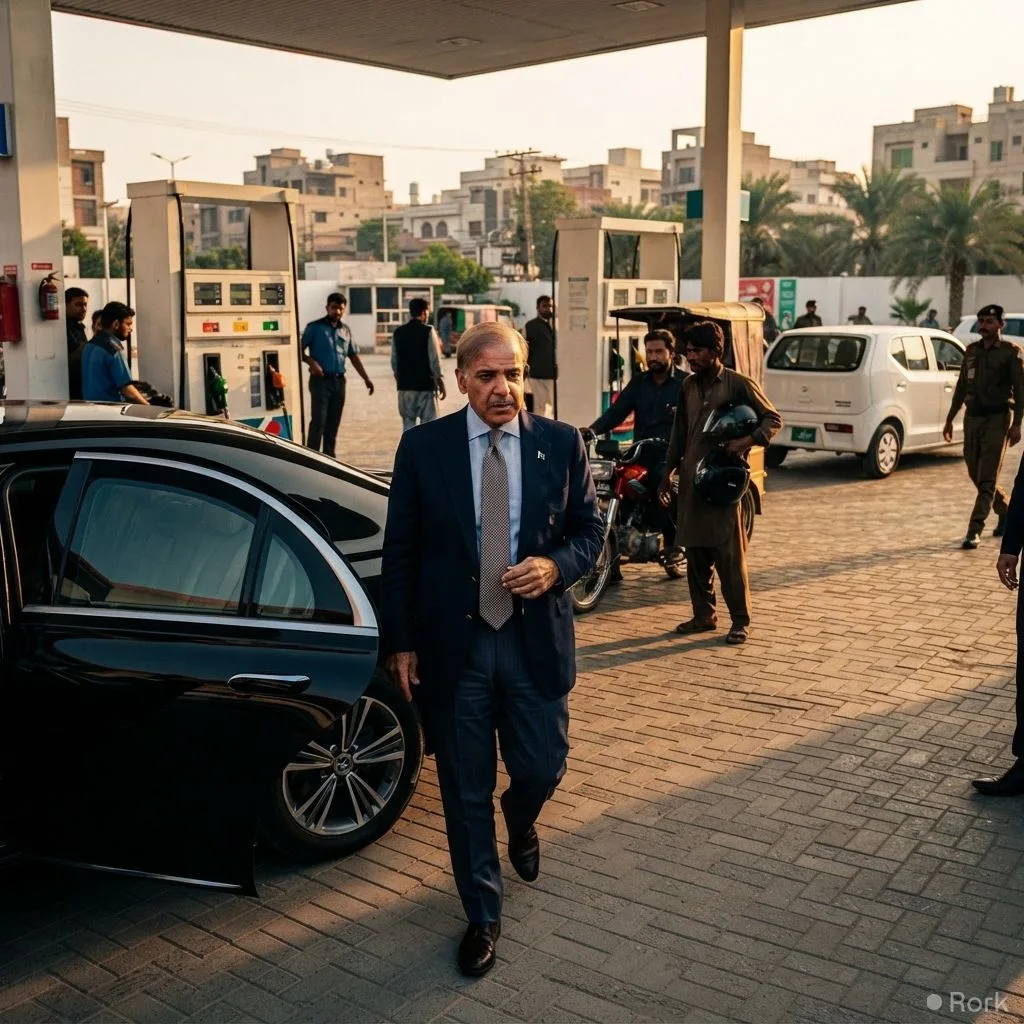
The federal government will subsidise Rs 100 per litre of petrol for 20 litres a month for motorcycles and rickshaws, and 30 litres for small cars.
Prime Minister Shehbaz Sharif unveiled the fuel‑price relief programme on Sunday, describing it as a “quick‑response” measure to soften the impact of the recent jump in gasoline prices. The scheme targets two‑wheelers, three‑wheelers and compact four‑wheelers – the segments that collectively carry the bulk of daily commuters in urban and semi‑urban areas across Pakistan.
Under the plan, each eligible rider will receive a monthly credit of Rs 2,000 for motorcycles and rickshaws (Rs 100 × 20 litres), while owners of cars with engine capacities up to 1,200 cc will be granted a Rs 3,000 credit (Rs 100 × 30 litres). The subsidies will be processed through the existing fuel‑subsidy framework, with payments automatically reflected at the pump once the beneficiary’s registration details are verified.
The government said the rollout was made possible by the provinces’ cooperation in sharing up‑to‑date vehicle registration data, allowing authorities to pinpoint genuine users and curb misuse. Analysts estimate that the scheme could benefit roughly 9 million motorcyclists, 1.5 million rickshaw operators and over 2 million small‑car owners, translating into a monthly fiscal outlay of around Rs 35 billion.
Economic observers note that the relief comes at a critical juncture, as transport costs have been feeding into broader inflationary pressures. By shaving a few hundred rupees off the fuel bill of low‑income commuters, the government hopes to ease household budgets and sustain mobility for the informal sector, which remains a backbone of the Pakistani economy. The administration has pledged close monitoring of the programme’s disbursement and said it will review the subsidy levels if fuel prices continue to fluctuate.