
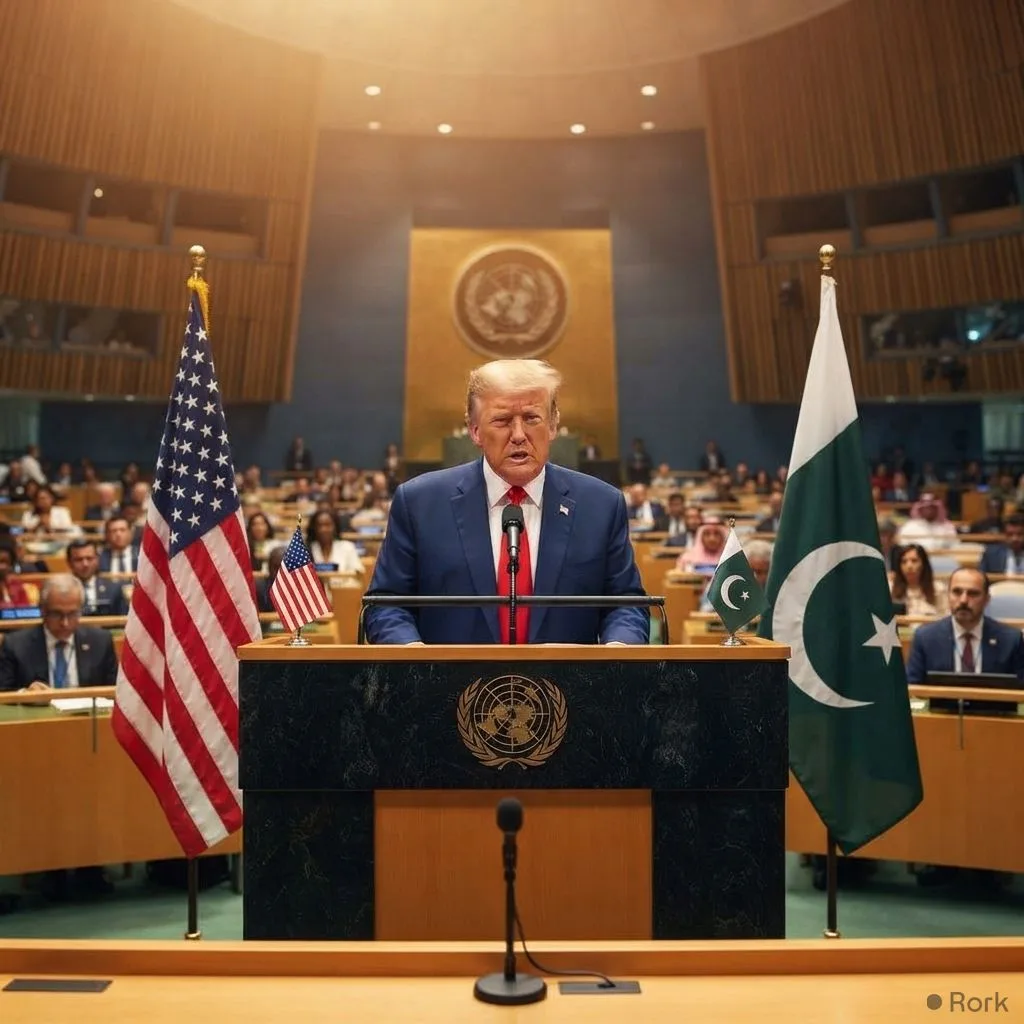
Former U.S. President Donald Trump lauded Prime Minister Shehbaz Sharif as “terrific” and called Pakistan a “great country” during his United Nations General Assembly address.
Trump’s remarks, delivered to a global audience in New York, singled out Pakistan’s leader for his perceived effectiveness and highlighted the nation’s strategic value. He praised Shehbaz Sharif’s governance, noting the prime minister’s role in steering Pakistan through a challenging economic recovery and in maintaining regional stability. The compliment arrives at a time when Islamabad is seeking renewed foreign investment and broader security cooperation, especially after the recent IMF-supported reforms.
In the same speech, Trump issued a stark warning to Iran, suggesting that the country could face “total destruction” if it persisted in its current path, while also hinting that a post‑November‑election agreement might be on the table. Tehran’s response could reverberate across South Asia, where Pakistan shares a long, porous border and has long been affected by fluctuations in Iranian oil supplies and cross‑border militancy. Analysts say any shift in Tehran’s posture could open space for Islamabad to deepen its ties with the United States, particularly in counter‑terrorism and energy security.
Trump also dismissed alarmist narratives about artificial intelligence posing an existential global threat, arguing that such fears are overstated. For Pakistan’s burgeoning tech sector, this stance may be read as an invitation to accelerate AI development without fearing immediate regulatory backlash, potentially spurring investment in local startups and university research programs.
The United States’ endorsement of Pakistan’s leadership, however, does not guarantee policy change. Pakistani officials, including Foreign Minister Bilawal Bhutto, welcomed the comments as a sign of “strengthening partnership” but cautioned that concrete assistance will depend on actionable agreements. Domestic observers note that while the praise may boost national morale, the real test lies in translating diplomatic goodwill into tangible economic aid, trade deals, and security cooperation that can address Pakistan’s pressing challenges.