
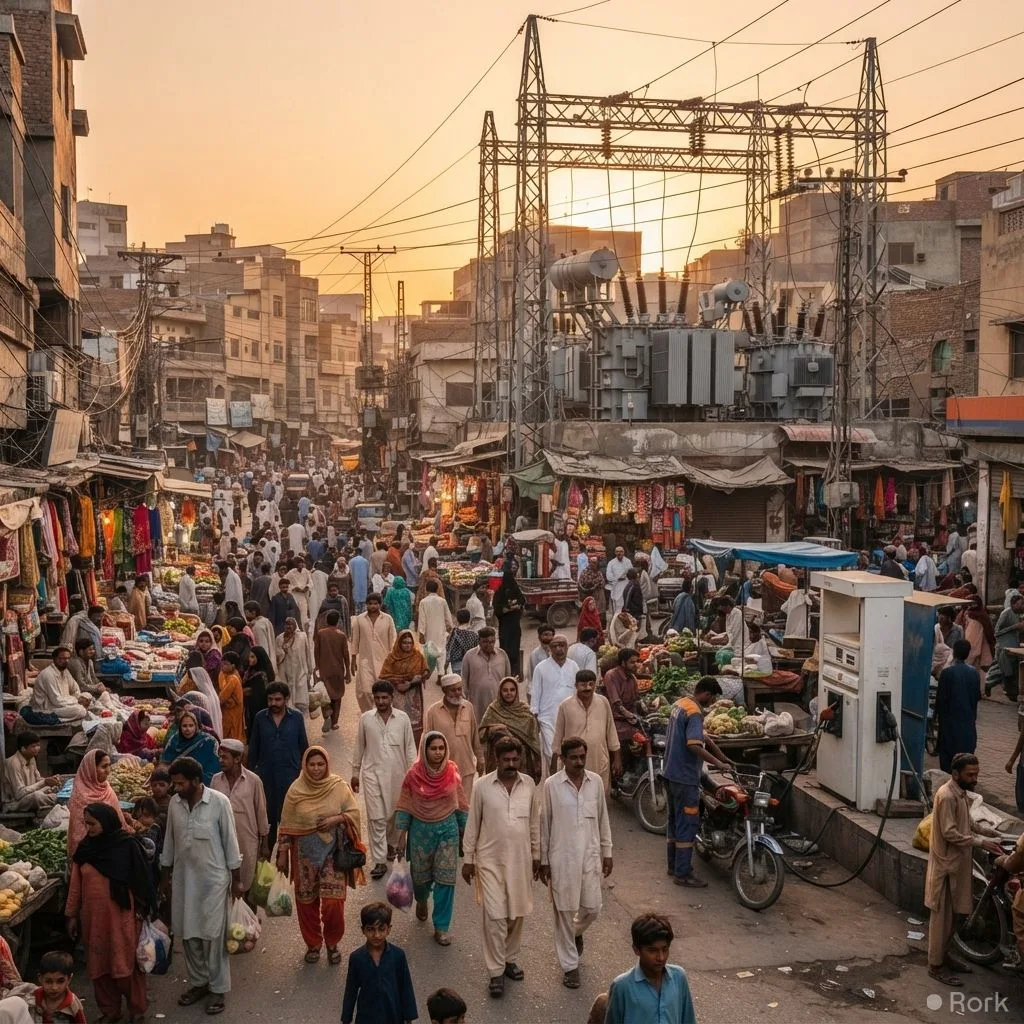
Almost half of South Asia’s poorest people live in Pakistan, according to the World Bank’s latest regional update.
The multilateral lender’s analysis shows that 48 % of the sub‑continent’s ultra‑low‑income population is concentrated within Pakistan’s borders, a share far higher than any neighboring country. This stark concentration comes at a time when the nation is grappling with soaring energy prices that are eroding the already fragile purchasing power of its most vulnerable households.
The report links the surge in fuel and electricity costs to geopolitical turmoil in the Persian Gulf, where heightened US‑Iran tensions have disrupted shipping through the Strait of Hormuz. The resulting volatility in global oil markets has translated into higher import bills for Pakistan, a net energy importer already burdened by a widening current‑account deficit and a precarious foreign‑exchange reserve position. The World Bank warns that these external shocks are amplifying domestic inflation, particularly in the energy sector, and could reverse recent gains in poverty reduction.
For Pakistani families living on less than $3.20 a day, the price hikes mean a larger share of income must be allocated to basic utilities, leaving less for food, education and health care. Rural labourers and urban informal‑sector workers—who together account for the bulk of the country’s poorest—are especially exposed, as many rely on diesel‑powered pumps and generators to sustain livelihoods. Existing safety‑net programmes such as the Ehsaas cash‑transfer scheme have provided some relief, but their reach remains limited relative to the scale of the problem.
The World Bank urges policymakers to adopt a two‑pronged approach: immediate relief through targeted energy subsidies or voucher systems for low‑income households, and a longer‑term shift toward affordable, renewable power sources to diminish dependence on imported fossil fuels. Strengthening social‑protection coverage, improving the efficiency of the national grid, and encouraging private investment in clean energy could together cushion the poorest from further shocks and set Pakistan on a more sustainable path out of extreme poverty.